 Skip to content
Einführung und Überblick
Diese Datenschutzerklärung (Version 30.12.2025-113092826) erläutert Ihnen gemäß den Anforderungen der Datenschutz-Grundverordnung (EU) 2016/679 und den geltenden nationalen Gesetzen, welche personenbezogenen Daten (nachfolgend „Daten“) wir als Verantwortliche – und die von uns beauftragten Auftragsverarbeiter (z. B. Dienstleister) – verarbeiten, zukünftig verarbeiten werden und welche rechtlichen Möglichkeiten Ihnen zustehen. Die verwendeten Begriffe sind geschlechtsneutral.
Kurz gesagt: Wir informieren Sie umfassend über die von uns verarbeiteten Daten.
Datenschutzrichtlinien klingen oft sehr technisch und verwenden juristische Fachsprache. Diese Datenschutzrichtlinie hingegen beschreibt die wichtigsten Aspekte so einfach und transparent wie möglich. Wo Transparenz gefördert wird, werden technische Begriffe verständlich erklärt , weiterführende Informationen verlinkt und Grafiken verwendet. Wir informieren Sie in klarer und einfacher Sprache darüber, dass wir personenbezogene Daten im Rahmen unserer Geschäftstätigkeit nur dann verarbeiten, wenn eine entsprechende Rechtsgrundlage vorliegt. Dies ist nicht möglich, wenn man die kürzesten, unklaren und übermäßig technischen juristischen Erklärungen liefert, die im Internet zum Thema Datenschutz leider üblich sind. Ich hoffe, die folgenden Erläuterungen sind für Sie interessant und informativ, und vielleicht entdecken Sie ja etwas Neues.
Sollten Sie noch Fragen haben, wenden Sie sich bitte an die unten oder im Impressum genannte verantwortliche Stelle, folgen Sie den bereitgestellten Links und informieren Sie sich auf externen Webseiten. Unsere Kontaktdaten finden Sie ebenfalls im Impressum.
Umfang
Diese Datenschutzerklärung gilt für alle personenbezogenen Daten, die wir innerhalb unseres Unternehmens verarbeiten, sowie für alle personenbezogenen Daten, die von uns beauftragten Unternehmen (Auftragsverarbeitern) verarbeitet werden. Personenbezogene Daten im Sinne von Art. 4 Nr. 1 DSGVO sind beispielsweise Name, E-Mail-Adresse und Postanschrift einer Person. Die Verarbeitung personenbezogener Daten ermöglicht es uns, unsere Dienstleistungen und Produkte online und offline anzubieten und abzurechnen. Der Geltungsbereich dieser Datenschutzerklärung umfasst:
- alle Online-Präsenzen (Websites, Online-Shops), die wir betreiben
- Präsenz in sozialen Medien und E-Mail-Kommunikation
- Mobile Apps für Smartphones und andere Geräte
Kurz gesagt: Diese Datenschutzerklärung gilt für alle Bereiche, in denen personenbezogene Daten innerhalb des Unternehmens über die oben genannten Kanäle strukturiert verarbeitet werden. Sollten wir außerhalb dieser Kanäle eine rechtliche Beziehung mit Ihnen eingehen, werden wir Sie gegebenenfalls gesondert informieren.
Rechtsgrundlage
In der folgenden Datenschutzerklärung informieren wir Sie transparent über die rechtlichen Grundlagen und Bestimmungen, insbesondere die Rechtsgrundlage der Datenschutz-Grundverordnung (DSGVO), die uns die Verarbeitung personenbezogener Daten ermöglichen.
Bezüglich des EU-Rechts verweisen wir auf die VERORDNUNG (EU) 2016/679 DES EUROPÄISCHEN PARLAMENTS UND DES RATES vom 27. April 2016. Sie können die EU-Datenschutz-Grundverordnung selbstverständlich online bei EUR-Lex, dem Portal für EU-Recht, unter https://eur-lex.europa.eu/legal-content/DE/ALL/?uri=celex%3A32016R0679 einsehen .
Wir verarbeiten Ihre Daten nur, wenn mindestens eine der folgenden Bedingungen erfüllt ist:
- Einwilligung (Art. 6 Abs. 1 lit. a DSGVO): Sie haben uns Ihre Einwilligung zur Verarbeitung Ihrer Daten für einen bestimmten Zweck erteilt. Ein Beispiel hierfür wäre die Speicherung Ihrer in einem Kontaktformular eingegebenen Daten.
- Vertrag (Art. 6 Abs. 1 lit. b DSGVO): Wir verarbeiten Ihre Daten zur Erfüllung eines Vertrags oder vorvertraglicher Verpflichtungen Ihnen gegenüber. Wenn wir beispielsweise einen Kaufvertrag mit Ihnen abschließen, benötigen wir im Vorfeld Ihre personenbezogenen Daten.
- Rechtliche Verpflichtung (Art. 6 Abs. 1 lit. c DSGVO): Wir verarbeiten Ihre Daten, wenn wir einer rechtlichen Verpflichtung unterliegen. Beispielsweise sind wir gesetzlich verpflichtet, Rechnungen für Buchhaltungszwecke aufzubewahren. Diese enthalten in der Regel personenbezogene Daten.
- Berechtigte Interessen (Art. 6 Abs. 1 lit. f DSGVO): Sofern berechtigte Interessen vorliegen, die Ihre Grundrechte nicht beeinträchtigen, behalten wir uns das Recht vor, personenbezogene Daten zu verarbeiten. Beispielsweise benötigen wir bestimmte Daten, um unsere Website sicher und wirtschaftlich zu betreiben. Diese Verarbeitung stellt daher ein berechtigtes Interesse dar.
Andere Bedingungen, wie etwa die Aufzeichnung von Bildern im öffentlichen Interesse, die Ausübung öffentlicher Gewalt oder der Schutz lebenswichtiger Interessen, treffen in unserem Fall in der Regel nicht zu. Sollte eine solche Rechtsgrundlage vorliegen, wird dies an der entsprechenden Stelle angegeben.
Zusätzlich zu den EU-Vorschriften gelten auch nationale Gesetze:
- In Österreich ist dies das Bundesgesetz über den Schutz natürlicher Personen bei der Verarbeitung personenbezogener Daten ( Datenschutzgesetz ), abgekürzt DSG .
- In Deutschland gilt das Bundesdatenschutzgesetz ( BDSG) .
Falls andere regionale oder nationale Gesetze gelten, werden wir Sie in den folgenden Abschnitten darüber informieren.
Kontaktdaten der verantwortlichen Partei
Sollten Sie Fragen zum Datenschutz oder zur Verarbeitung personenbezogener Daten haben, finden Sie die Kontaktdaten des Verantwortlichen gemäß Art. 4 Abs. 7 der EU-Datenschutz-Grundverordnung (DSGVO) nachfolgend:
barista.tools
Otto Hauck
Fraham 18,
5273 Roßbach bei Mauerkirchen,
Österreich.
Vertretungsberechtigter: Otto Hauck.
E-Mail: info@barista.tools.
Telefon: +43 650 944 00 50.
Impressum: https://www.barista.tools/pages/impressum
Lagerdauer
Wir halten uns grundsätzlich an den Grundsatz, personenbezogene Daten nur so lange zu speichern, wie es für die Erbringung unserer Dienstleistungen und Produkte unbedingt erforderlich ist. Das bedeutet, dass wir personenbezogene Daten löschen, sobald der Grund für ihre Verarbeitung entfällt. In einigen Fällen sind wir jedoch gesetzlich verpflichtet, bestimmte Daten auch nach Wegfall des ursprünglichen Zwecks aufzubewahren, beispielsweise für Buchhaltungszwecke.
Wenn Sie Ihre Daten löschen lassen möchten oder Ihre Einwilligung zur Datenverarbeitung widerrufen, werden die Daten so schnell wie möglich gelöscht, sofern keine Aufbewahrungspflicht besteht.
Über die konkrete Dauer der jeweiligen Datenverarbeitung werden wir Sie im Folgenden informieren, sofern uns hierzu weitere Informationen vorliegen.
Rechte gemäß der Datenschutz-Grundverordnung
Gemäß Artikel 13 und 14 der DSGVO informieren wir Sie über die Ihnen zustehenden Rechte, um eine faire und transparente Datenverarbeitung zu gewährleisten:
- Gemäß Artikel 15 der DSGVO haben Sie das Recht, Auskunft darüber zu erhalten, ob wir Ihre Daten verarbeiten. Ist dies der Fall, haben Sie das Recht, eine Kopie der Daten sowie folgende Informationen zu erhalten:
- zu welchem Zweck wir die Verarbeitung durchführen;
- die Kategorien, d. h. die Arten von Daten, die verarbeitet werden;
- Wer diese Daten erhält und, falls die Daten in Drittländer übermittelt werden, wie die Sicherheit gewährleistet werden kann;
- wie lange die Daten gespeichert werden;
- das Bestehen des Rechts auf Berichtigung, Löschung oder Einschränkung der Verarbeitung und des Widerspruchsrechts gegen die Verarbeitung;
- dass Sie eine Beschwerde bei einer Aufsichtsbehörde einreichen können (Links zu diesen Behörden finden Sie weiter unten);
- die Herkunft der Daten, falls wir sie nicht von Ihnen erhoben haben;
- ob eine Profilerstellung durchgeführt wird, d.h. ob Daten automatisch ausgewertet werden, um ein persönliches Profil von Ihnen zu erstellen.
- Gemäß Artikel 16 der DSGVO haben Sie ein Recht auf Berichtigung Ihrer Daten, was bedeutet, dass wir alle von Ihnen festgestellten fehlerhaften Daten berichtigen müssen.
- Gemäß Artikel 17 der DSGVO haben Sie das Recht auf Löschung („Recht auf Vergessenwerden“), was konkret bedeutet, dass Sie die Löschung Ihrer Daten verlangen können.
- Gemäß Artikel 18 DSGVO haben Sie das Recht, die Verarbeitung einzuschränken. Das bedeutet, dass wir die Daten zwar speichern, sie aber nicht weiter verwenden dürfen.
- Gemäß Artikel 20 der DSGVO haben Sie das Recht auf Datenübertragbarkeit, was bedeutet, dass wir Ihnen Ihre Daten auf Anfrage in einem gängigen Format zur Verfügung stellen.
- Gemäß Artikel 21 DSGVO haben Sie das Recht, Widerspruch einzulegen, was, wenn Sie dieses Recht ausüben, eine Änderung der Verarbeitung zur Folge hat.
- Wenn die Verarbeitung Ihrer Daten auf Artikel 6 Absatz 1 Buchstabe e (öffentliches Interesse, Ausübung öffentlicher Gewalt) oder Artikel 6 Absatz 1 Buchstabe f (berechtigtes Interesse) beruht, können Sie der Verarbeitung widersprechen. Wir werden dann schnellstmöglich prüfen, ob wir diesem Widerspruch rechtlich nachkommen können.
- Wenn Ihre Daten für Direktmarketingzwecke verwendet werden, können Sie dieser Datenverarbeitung jederzeit widersprechen. Wir dürfen Ihre Daten dann nicht mehr für Direktmarketing verwenden.
- Wenn Ihre Daten für Profiling-Zwecke verwendet werden, können Sie dieser Datenverarbeitung jederzeit widersprechen. Wir dürfen Ihre Daten dann nicht mehr für Profiling-Zwecke verwenden.
- Gemäß Artikel 22 der DSGVO haben Sie möglicherweise das Recht, nicht einer ausschließlich auf automatisierter Verarbeitung (z. B. Profiling) beruhenden Entscheidung unterworfen zu werden.
- Gemäß Artikel 77 der DSGVO haben Sie das Recht, eine Beschwerde einzureichen. Das bedeutet, dass Sie sich jederzeit an die Datenschutzbehörde wenden können, wenn Sie der Ansicht sind, dass die Verarbeitung Ihrer personenbezogenen Daten gegen die DSGVO verstößt.
Kurz gesagt: Sie haben Rechte – zögern Sie nicht, die oben genannte zuständige Stelle zu kontaktieren!
Wenn Sie der Ansicht sind, dass die Verarbeitung Ihrer Daten gegen das Datenschutzrecht verstößt oder Ihre Datenschutzrechte anderweitig verletzt wurden, können Sie eine Beschwerde bei der Aufsichtsbehörde einreichen. In Österreich ist dies die Datenschutzbehörde (DSB), deren Website Sie unter https://www.dsb.gv.at/ finden . In Deutschland gibt es für jedes Bundesland einen Datenschutzbeauftragten. Weitere Informationen erhalten Sie beim Bundesbeauftragten für den Datenschutz und die Informationsfreiheit (BfDI) . Für unser Unternehmen ist folgende lokale Datenschutzbehörde zuständig:
Österreichische Datenschutzbehörde
Leiter: Dr. Matthias Schmidl
Adresse: Barichgasse 40-42, 1030 Wien
Telefonnummer: +43 1 52 152-0
E-Mail-Adresse: dsb@dsb.gv.at
Website: https://www.dsb.gv.at/
Datentransfer in Drittländer
Wir übermitteln oder verarbeiten Daten in Ländern außerhalb des Geltungsbereichs der DSGVO (Drittländer) nur dann, wenn Sie in diese Verarbeitung einwilligen oder eine andere Rechtsgrundlage dafür besteht. Dies gilt insbesondere, wenn die Verarbeitung gesetzlich vorgeschrieben oder für die Erfüllung eines Vertrags erforderlich ist, und in jedem Fall nur im allgemein zulässigen Umfang. In den meisten Fällen ist Ihre Einwilligung der Hauptgrund für die Datenverarbeitung in Drittländern. Die Verarbeitung personenbezogener Daten in Drittländern wie den USA, wo viele Softwareunternehmen ihre Dienste anbieten und Server betreiben, kann dazu führen, dass personenbezogene Daten auf unerwartete Weise verarbeitet und gespeichert werden.
Wir möchten ausdrücklich darauf hinweisen, dass nach Ansicht des Europäischen Gerichtshofs derzeit nur dann ein angemessenes Schutzniveau für Datenübermittlungen in die USA besteht, wenn ein US-Unternehmen, das personenbezogene Daten von EU-Bürgern in den USA verarbeitet, aktiv am EU-US-Datenschutzrahmen beteiligt ist. Weitere Informationen finden Sie unter: https://commission.europa.eu/document/fa09cbad-dd7d-4684-ae60-be03fcb0fddf_en
Die Datenverarbeitung durch US-amerikanische Dienste, die nicht aktiv am EU-US-Datenschutzabkommen teilnehmen, kann dazu führen, dass Daten nicht anonymisiert verarbeitet und gespeichert werden. Darüber hinaus können US-amerikanische Regierungsbehörden unter Umständen auf einzelne Daten zugreifen. Die erhobenen Daten können außerdem mit Daten anderer Dienste desselben Anbieters verknüpft werden, sofern Sie über ein entsprechendes Benutzerkonto verfügen. Wir bemühen uns, nach Möglichkeit Serverstandorte innerhalb der EU zu nutzen.
Über Datenübermittlungen in Drittländer informieren wir Sie gegebenenfalls an den entsprechenden Stellen dieser Datenschutzerklärung detaillierter.
Datenverarbeitungssicherheit
Zum Schutz personenbezogener Daten haben wir sowohl technische als auch organisatorische Maßnahmen ergriffen. Wo immer möglich, verschlüsseln oder pseudonymisieren wir personenbezogene Daten. Dadurch wird es Dritten im Rahmen unserer Möglichkeiten so schwer wie möglich gemacht, aus unseren Daten auf personenbezogene Informationen zu schließen.
Artikel 25 der DSGVO spricht vom „Datenschutz durch Technikgestaltung und datenschutzfreundliche Voreinstellungen“. Das bedeutet, dass die Sicherheit stets berücksichtigt und geeignete Maßnahmen sowohl für Software (z. B. Formulare) als auch für Hardware (z. B. Zugang zum Serverraum) getroffen werden müssen. Konkrete Maßnahmen werden wir gegebenenfalls weiter unten erläutern.
TLS-Verschlüsselung mit HTTPS
TLS, Verschlüsselung und HTTPS klingen sehr technisch, und das sind sie auch. Wir verwenden HTTPS (Hypertext Transfer Protocol Secure), um Daten sicher über das Internet zu übertragen.
Das bedeutet, dass die gesamte Datenübertragung von Ihrem Browser zu unserem Webserver geschützt ist – niemand kann mithören.
Dies führt eine zusätzliche Sicherheitsebene ein und ermöglicht uns die Einhaltung des Datenschutzprinzips durch Technikgestaltung ( Art. 25 Abs. 1 DSGVO ). Durch die Verwendung von TLS (Transport Layer Security), einem Verschlüsselungsprotokoll für die sichere Datenübertragung im Internet, gewährleisten wir den Schutz vertraulicher Daten.
Sie erkennen diese Datenübertragungssicherheit am kleinen Schlosssymbol  oben links im Browser, links neben der Internetadresse (z. B. examplepage.de), und an der Verwendung von https (statt http) in unserer Internetadresse.
Wenn Sie mehr über Verschlüsselung erfahren möchten, empfehlen wir Ihnen, bei Google nach „Hypertext Transfer Protocol Secure Wiki“ zu suchen, um weiterführende Informationen zu finden.
Kommunikation
| Zusammenfassung der Kommunikation 👥 Betroffene: Alle, die mit uns per Telefon, E-Mail oder Online-Formular kommunizieren 📓 Verarbeitete Daten: z. B. Telefonnummer, Name, E-Mail-Adresse, eingegebene Formulardaten. Weitere Details finden Sie unter der jeweiligen Kontaktmethode. 🤝 Zweck: Kommunikation mit Kunden, Geschäftspartnern usw. 📅 Speicherdauer: Dauer der Geschäftsbeziehung und gesetzliche Bestimmungen ⚖️ Rechtsgrundlage: Art. 6 Abs. 1 lit. a DSGVO (Einwilligung), Art. 6 Abs. 1 lit. b DSGVO (Vertrag), Art. 6 Abs. 1 lit. f DSGVO (berechtigte Interessen) |
Wenn Sie mit uns Kontakt aufnehmen und per Telefon, E-Mail oder Online-Formular kommunizieren, können personenbezogene Daten verarbeitet werden.
Die Daten werden zur Bearbeitung Ihrer Anfrage und der damit verbundenen Geschäftsabwicklung verarbeitet. Die Daten werden so lange gespeichert, wie es gesetzlich vorgeschrieben ist.
Betroffene Personen
Die zuvor genannten Prozesse betreffen alle, die über die von uns bereitgestellten Kommunikationskanäle mit uns in Kontakt treten.
Telefon
Wenn Sie uns anrufen, werden die Anrufdaten pseudonymisiert auf Ihrem Gerät und bei Ihrem Telekommunikationsanbieter gespeichert. Zusätzlich können Daten wie Ihr Name und Ihre Telefonnummer per E-Mail übermittelt und zum Zweck der Beantwortung Ihrer Anfrage gespeichert werden. Diese Daten werden gelöscht, sobald Ihr Anliegen geklärt ist und die gesetzlichen Bestimmungen dies zulassen.
Wenn Sie per E-Mail mit uns kommunizieren, werden möglicherweise Daten auf Ihrem Gerät (Computer, Laptop, Smartphone usw.) und auf unserem E-Mail-Server gespeichert. Diese Daten werden gelöscht, sobald die Geschäftsabwicklung abgeschlossen ist und die gesetzlichen Bestimmungen dies zulassen.
Online-Formulare
Wenn Sie über unser Online-Formular mit uns kommunizieren, werden Ihre Daten auf unserem Webserver gespeichert und gegebenenfalls an eine von uns angegebene E-Mail-Adresse weitergeleitet. Die Daten werden gelöscht, sobald die Geschäftsabwicklung abgeschlossen ist und die gesetzlichen Bestimmungen dies zulassen.
Chatbot
Wir bieten Ihnen einen KI-gestützten Chat über Shopify Inbox an.
Dieser Chat dient dazu, Ihre Anfragen effizient zu beantworten und unseren Kundenservice zu unterstützen.
Verarbeitete Daten
Bei der Nutzung des Chats können insbesondere folgende Daten verarbeitet werden:
- Inhalt Ihrer Nachrichten (Chatverlauf)
- Von Ihnen angegebene Kontaktdaten (z. B. Name, E-Mail-Adresse)
- Bestell- oder Kundendaten, wenn Sie diese Informationen im Chat mitteilen oder wenn sie zur Bearbeitung Ihrer Anfrage erforderlich sind
- Technische Metadaten (z. B. Zeitstempel, Geräte- und Browserinformationen)
Bitte übermitteln Sie über den Chat keine sensiblen oder besonderen Kategorien personenbezogener Daten.
Zwecke der Datenverarbeitung
Die Daten werden zu folgenden Zwecken verarbeitet:
- Wir beantworten Ihre Support- und Serviceanfragen.
- Verbesserung der Servicequalität und effiziente Bearbeitung von Kundenanfragen
Rechtsgrundlage
Ihre Daten werden auf folgender Grundlage verarbeitet:
- Art. 6(1)(b) DSGVO (Erfüllung eines Vertrags oder vorvertraglicher Maßnahmen)
- Art. 6(1)(f) DSGVO (berechtigtes Interesse an der Bereitstellung eines effizienten Kundensupports)
Empfänger und Datenverarbeiter
Für die technische Bereitstellung des Chats nutzen wir Shopify Inbox, einen Dienst der Shopify Group.
Shopify verarbeitet die Daten in unserem Auftrag als Datenverarbeiter gemäß Art. 28 DSGVO und kann hierfür verbundene Unternehmen und Unterauftragnehmer einsetzen.
Datenübermittlung in Drittländer
Bei der Nutzung von Shopify Inbox können Daten in Ländern außerhalb der EU oder des EWR (z. B. Kanada oder USA) verarbeitet werden. Shopify trifft angemessene Datenschutzvorkehrungen für solche Übermittlungen.
Datenspeicherung:
Wir speichern Chatinhalte nur so lange, wie es zur Bearbeitung Ihrer Anfrage erforderlich ist.
Chatverläufe werden regelmäßig gelöscht oder anonymisiert, es sei denn, gesetzliche Aufbewahrungspflichten erfordern eine längere Speicherung. Technische System- und Protokolldaten können abweichenden Aufbewahrungsfristen unterliegen.
Automatisierte Verarbeitung:
Antworten im Chat können mithilfe künstlicher Intelligenz automatisch generiert werden.
Es findet jedoch keine ausschließlich automatisierte Entscheidungsfindung mit rechtlichen Folgen oder ähnlich erheblichen Auswirkungen auf Sie statt.
Rechtsgrundlage
Die Verarbeitung der Daten erfolgt auf folgenden Rechtsgrundlagen:
- Artikel 6 Absatz 1 Buchstabe a DSGVO (Einwilligung): Sie erteilen uns Ihre Einwilligung, Ihre Daten zu speichern und sie für Zwecke im Zusammenhang mit der Geschäftsabwicklung weiter zu verwenden;
- Artikel 6 Absatz 1 Buchstabe b DSGVO (Vertrag): Die Verarbeitung ist für die Erfüllung eines Vertrags mit Ihnen oder einem Auftragsverarbeiter wie dem Telefonanbieter erforderlich, oder wir benötigen die Daten für vorvertragliche Tätigkeiten, wie die Erstellung eines Angebots;
- Art. 6 Abs. 1 Buchst. f DSGVO (Berechtigte Interessen): Wir möchten Kundenanfragen und die Geschäftskommunikation professionell abwickeln. Dies erfordert bestimmte technische Ausrüstung wie E-Mail-Programme, Exchange-Server und Mobilfunknetzbetreiber, um eine effiziente Kommunikation zu gewährleisten.
Datenverarbeitungsvereinbarung (DPA)
In diesem Abschnitt möchten wir Ihnen erklären, was eine Auftragsverarbeitungsvereinbarung (AVV) ist und warum sie notwendig ist. Da der Begriff „Auftragsverarbeitungsvereinbarung“ recht sperrig ist, verwenden wir im Folgenden die Abkürzung AVV. Wie die meisten Unternehmen arbeiten auch wir nicht allein, sondern nutzen die Dienste anderer Unternehmen oder Einzelpersonen. Durch die Einbindung verschiedener Unternehmen oder Dienstleister können wir personenbezogene Daten zur Verarbeitung übermitteln. Diese Partner fungieren dann als Auftragsverarbeiter, mit denen wir einen Vertrag, die sogenannte Auftragsverarbeitungsvereinbarung (AVV), abschließen. Für Sie ist es besonders wichtig zu wissen, dass die Verarbeitung Ihrer personenbezogenen Daten ausschließlich nach unseren Weisungen erfolgen und durch die AVV geregelt sein muss.
Wer sind Datenverarbeiter?
Als Unternehmen und Website-Betreiber sind wir für alle Daten verantwortlich, die wir von Ihnen verarbeiten. Neben dem Verantwortlichen für die Datenverarbeitung können auch sogenannte Auftragsverarbeiter beteiligt sein. Dies umfasst jedes Unternehmen oder jede Person, die personenbezogene Daten in unserem Auftrag verarbeitet. Genauer gesagt, und gemäß der Definition der DSGVO: Jede natürliche oder juristische Person, Behörde, Einrichtung oder sonstige Stelle, die personenbezogene Daten in unserem Auftrag verarbeitet, gilt als Auftragsverarbeiter. Auftragsverarbeiter können daher Dienstleister wie Hosting- oder Cloud-Anbieter, Zahlungs- oder Newsletter-Anbieter oder große Unternehmen wie Google oder Microsoft sein.
Um die Terminologie besser zu verstehen, folgt hier ein Überblick über die drei Rollen in der DSGVO:
Betroffene Person (Sie als Kunde oder potenzieller Kunde) → Verantwortlicher (wir als Unternehmen und Kunde) → Auftragsverarbeiter (Dienstleister wie Webhoster oder Cloud-Anbieter)
Inhalt einer Datenverarbeitungsvereinbarung
Wie bereits erwähnt, haben wir mit unseren Partnern, die als Auftragsverarbeiter fungieren, eine Vereinbarung zur Auftragsverarbeitung (AVV) abgeschlossen. Diese Vereinbarung legt insbesondere fest, dass der Auftragsverarbeiter die zu verarbeitenden Daten ausschließlich im Einklang mit der DSGVO verarbeitet. Die Vereinbarung muss schriftlich erfolgen; in diesem Zusammenhang gilt jedoch auch eine elektronische Vereinbarung als „schriftlich“. Personenbezogene Daten werden ausschließlich auf Grundlage dieser Vereinbarung verarbeitet. Die Vereinbarung muss Folgendes enthalten:
- Loyalität uns gegenüber als dem Verantwortlichen
- Pflichten und Rechte des Verantwortlichen
- Kategorien der betroffenen Personen
- Art der personenbezogenen Daten
- Art und Zweck der Datenverarbeitung
- Gegenstand und Dauer der Datenverarbeitung
- Ort der Datenverarbeitung
Des Weiteren enthält der Vertrag alle Pflichten des Datenverarbeiters. Die wichtigsten Pflichten sind:
- Um Datensicherheitsmaßnahmen zu gewährleisten
- mögliche technische und organisatorische Maßnahmen zum Schutz der Rechte der betroffenen Person zu ergreifen
- um ein Datenverarbeitungsverzeichnis zu pflegen
- auf Anfrage mit der Datenschutzaufsichtsbehörde zusammenzuarbeiten.
- um eine Risikoanalyse hinsichtlich der erhaltenen personenbezogenen Daten durchzuführen
- Unterauftragnehmer dürfen nur mit der schriftlichen Zustimmung des Verantwortlichen für die Datenverarbeitung beauftragt werden.
Ein Beispiel für eine solche Datenverarbeitungsvereinbarung (AVV) finden Sie unter https://www.wko.at/service/wirtschaftsrecht-gewerberecht/eu-dsgvo-mustervertrag-auftragsverarbeitung.html . Dort ist ein Mustervertrag verfügbar.
Cookies
| Cookie-Übersicht 👥 Betroffene: Besucher der Website 🤝 Zweck: Abhängig vom jeweiligen Cookie. Weitere Informationen finden Sie unten oder auf der Website des Softwareanbieters, der den Cookie setzt. 📓 Verarbeitete Daten: Abhängig vom verwendeten Cookie. Weitere Informationen finden Sie unten oder auf der Website des Softwareanbieters, der den Cookie setzt. 📅 Speicherdauer: Abhängig vom jeweiligen Cookie und kann von Stunden bis zu Jahren variieren. ⚖️ Rechtsgrundlage: Art. 6 Abs. 1 lit. a DSGVO (Einwilligung), Art. 6 Abs. 1 lit. f DSGVO (berechtigte Interessen) |
Was sind Cookies?
Unsere Website verwendet HTTP-Cookies, um nutzerspezifische Daten zu speichern.
Im Folgenden erklären wir, was Cookies sind und wozu sie verwendet werden, damit Sie die folgende Datenschutzerklärung besser verstehen können.
Beim Surfen im Internet verwenden Sie immer einen Browser. Bekannte Browser sind beispielsweise Chrome, Safari, Firefox, Internet Explorer und Microsoft Edge. Die meisten Websites speichern kleine Textdateien in Ihrem Browser. Diese Dateien werden Cookies genannt.
Eines ist unbestreitbar: Cookies sind äußerst nützliche Werkzeuge. Fast alle Websites verwenden Cookies. Genauer gesagt handelt es sich um HTTP-Cookies, da es für verschiedene Anwendungen auch andere Cookie-Arten gibt. HTTP-Cookies sind kleine Dateien, die unsere Website auf Ihrem Computer speichert. Diese Cookie-Dateien werden automatisch im Cookie-Ordner abgelegt, dem „Gehirn“ Ihres Browsers. Ein Cookie besteht aus einem Namen und einem Wert. Beim Definieren eines Cookies müssen außerdem ein oder mehrere Attribute angegeben werden.
Cookies speichern bestimmte Nutzerdaten, wie beispielsweise Ihre Sprachpräferenzen oder Ihre persönlichen Website-Einstellungen. Wenn Sie unsere Website erneut besuchen, sendet Ihr Browser diese Informationen an uns zurück. Dank der Cookies erkennt unsere Website Sie wieder und stellt Ihre bevorzugten Einstellungen wieder her. In manchen Browsern hat jeder Cookie eine eigene Datei, während in anderen, wie beispielsweise Firefox, alle Cookies in einer einzigen Datei gespeichert werden.
Die folgende Grafik veranschaulicht eine mögliche Interaktion zwischen einem Webbrowser (z. B. Chrome) und einem Webserver. Der Webbrowser fordert eine Website an und erhält vom Server ein Cookie, das er dann bei jeder weiteren Seitenanforderung wiederverwendet.
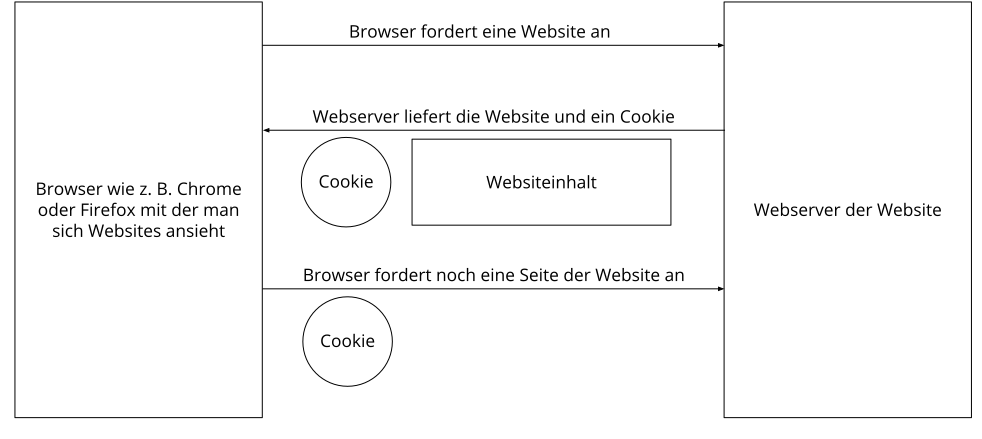
Es gibt sowohl Erstanbieter- als auch Drittanbieter-Cookies. Erstanbieter-Cookies werden direkt von unserer Website erstellt, während Drittanbieter-Cookies von Partner-Websites (z. B. Google Analytics) stammen. Jeder Cookie muss einzeln betrachtet werden, da er unterschiedliche Daten speichert. Die Gültigkeitsdauer eines Cookies variiert von wenigen Minuten bis zu mehreren Jahren. Cookies sind keine Softwareprogramme und enthalten keine Viren, Trojaner oder andere Schadsoftware. Cookies können nicht auf Informationen auf Ihrem Computer zugreifen.
So könnten Cookie-Daten beispielsweise aussehen:
Name: _ga
Wert: GA1.2.1326744211.152113092826-9
Zweck: Unterscheidung von Website-Besuchern
Ablaufdatum: nach 2 Jahren
Dies sind die Mindestgrößen, die ein Browser unterstützen sollte:
- Mindestens 4096 Bytes pro Cookie
- Mindestens 50 Cookies pro Domain
- Insgesamt mindestens 3000 Kekse.
Welche Arten von Keksen gibt es?
Welche Cookies wir konkret verwenden, hängt von den genutzten Diensten ab und wird in den folgenden Abschnitten unserer Datenschutzerklärung erläutert. An dieser Stelle möchten wir kurz auf die verschiedenen Arten von HTTP-Cookies eingehen.
Es gibt vier Arten von Keksen:
Essenzielle Cookies:
Diese Cookies sind notwendig, um die grundlegende Funktionalität der Website zu gewährleisten. Sie werden beispielsweise benötigt, wenn ein Nutzer ein Produkt in den Warenkorb legt, anschließend auf anderen Seiten navigiert und erst später zur Kasse geht. Diese Cookies verhindern, dass der Warenkorb geleert wird, selbst wenn der Nutzer das Browserfenster schließt.
Funktionale Cookies
Diese Cookies sammeln Informationen über das Nutzerverhalten und darüber, ob der Nutzer Fehlermeldungen erhält. Sie messen außerdem Ladezeiten und die Leistung der Website in verschiedenen Browsern.
Zielgerichtete Cookies
Diese Cookies verbessern die Benutzerfreundlichkeit. Sie speichern beispielsweise eingegebene Positionen, Schriftgrößen oder Formulardaten.
Werbe-Cookies
Diese Cookies werden auch Targeting-Cookies genannt. Sie dienen dazu, dem Nutzer individuell zugeschnittene Werbung anzuzeigen. Das kann sehr praktisch, aber auch sehr lästig sein.
Normalerweise werden Sie beim ersten Besuch einer Website gefragt, welche Arten von Cookies Sie zulassen möchten. Und selbstverständlich wird auch diese Entscheidung in einem Cookie gespeichert.
Wenn Sie mehr über Cookies erfahren möchten und keine Scheu vor technischer Dokumentation haben, empfehlen wir Ihnen https://datatracker.ietf.org/doc/html/rfc6265 , die Anfrage der Internet Engineering Task Force (IETF) mit dem Titel „HTTP State Management Mechanism“.
Zweck der Verarbeitung mittels Cookies
Der Zweck hängt letztendlich vom jeweiligen Cookie ab. Weitere Details finden Sie unten oder auf der Website des Softwareanbieters, der den Cookie setzt.
Welche Daten werden verarbeitet?
Cookies sind kleine Tools, die bei vielen verschiedenen Aufgaben helfen. Leider lässt sich nicht pauschal sagen, welche Daten in Cookies gespeichert werden. In der folgenden Datenschutzerklärung informieren wir Sie jedoch über die verarbeiteten und gespeicherten Daten.
Speicherdauer von Cookies
Die Speicherdauer hängt vom jeweiligen Cookie ab und wird weiter unten genauer erläutert. Manche Cookies werden nach weniger als einer Stunde gelöscht, während andere mehrere Jahre auf dem Computer gespeichert bleiben können.
Sie haben auch die Kontrolle über die Speicherdauer. Sie können alle Cookies jederzeit manuell über Ihren Browser löschen (siehe auch „Widerspruchsrecht“ weiter unten). Darüber hinaus werden Cookies, die auf Ihrer Einwilligung beruhen, spätestens nach Ihrem Widerruf gelöscht; die Rechtmäßigkeit der Speicherung bleibt bis dahin unberührt.
Widerspruchsrecht – Wie kann ich Cookies löschen?
Sie entscheiden selbst, wie und ob Sie Cookies verwenden möchten. Unabhängig davon, von welchem Dienst oder welcher Website die Cookies stammen, haben Sie jederzeit die Möglichkeit, Cookies zu löschen, zu deaktivieren oder teilweise zuzulassen. Beispielsweise können Sie Cookies von Drittanbietern blockieren, aber alle anderen zulassen.
Wenn Sie sehen möchten, welche Cookies in Ihrem Browser gespeichert wurden, oder wenn Sie die Cookie-Einstellungen ändern oder löschen möchten, finden Sie diese Informationen in Ihren Browsereinstellungen:
Chrome: Cookies in Chrome löschen, aktivieren und verwalten
Safari: Cookies und Website-Daten mit Safari verwalten
Internet Explorer: Cookies löschen und verwalten
Microsoft Edge: Cookies löschen und verwalten
Wenn Sie generell keine Cookies zulassen möchten, können Sie Ihren Browser so konfigurieren, dass er Sie benachrichtigt, sobald ein Cookie gesetzt werden soll. So können Sie für jeden einzelnen Cookie entscheiden, ob Sie ihn zulassen möchten. Die Vorgehensweise ist browserabhängig. Am besten finden Sie Anleitungen, indem Sie bei Google mit den Suchbegriffen „Cookies löschen Chrome“ oder „Cookies deaktivieren Chrome“ suchen, falls Sie den Chrome-Browser verwenden.
Rechtsgrundlage
Seit 2009 gilt die sogenannte Cookie-Richtlinie. Sie legt fest, dass das Speichern von Cookies Ihre Einwilligung erfordert (Art. 6 Abs. 1 lit. a DSGVO). Die Umsetzung dieser Richtlinie fällt in den EU-Ländern jedoch sehr unterschiedlich aus. In Österreich wurde sie in § 165 Abs. 3 des Telekommunikationsgesetzes (2021) umgesetzt. In Deutschland wurde die Cookie-Richtlinie nicht in nationales Recht umgesetzt. Stattdessen fand sie weitgehend Anwendung in § 15 Abs. 3 des Telemediengesetzes (TMG), das im Mai 2024 durch das Digitaldienstegesetz (DDG) ersetzt wurde.
Für unbedingt notwendige Cookies bestehen auch ohne Einwilligung berechtigte Interessen (Art. 6 Abs. 1 lit. f DSGVO), die in den meisten Fällen wirtschaftlicher Natur sind. Wir möchten den Besuchern unserer Website ein angenehmes Nutzererlebnis bieten, und bestimmte Cookies sind dafür oft unerlässlich.
Sofern nicht unbedingt erforderlich, werden Cookies nur mit Ihrer Einwilligung verwendet. Rechtsgrundlage hierfür ist Artikel 6 Absatz 1 Buchstabe a DSGVO.
In den folgenden Abschnitten erhalten Sie detailliertere Informationen zur Verwendung von Cookies, sofern die verwendete Software Cookies einsetzt.
Einführung ins Webhosting
| Zusammenfassung Webhosting 👥 Betroffene: Besucher der Website 🤝 Zweck: Professionelles Website-Hosting und Betriebssicherheit 📓 Verarbeitete Daten: IP-Adresse, Zeitpunkt des Website-Besuchs, verwendeter Browser und weitere Daten. Weitere Details finden Sie unten oder auf der Website Ihres Webhosting-Anbieters. 📅 Speicherdauer: Abhängig vom jeweiligen Anbieter, in der Regel 2 Wochen ⚖️ Rechtsgrundlage: Art. 6 Abs. 1 lit. f DSGVO (Berechtigte Interessen) |
Was ist Webhosting?
Beim Besuch von Websites werden heutzutage automatisch bestimmte Informationen – darunter auch personenbezogene Daten – generiert und gespeichert. Diese Website bildet da keine Ausnahme. Die Verarbeitung dieser Daten sollte so sparsam wie möglich und nur bei begründeter Berechtigung erfolgen. Mit „Website“ meinen wir alle Webseiten einer Domain, also alles von der Startseite bis zur letzten Unterseite (wie dieser hier). Mit „Domain“ meinen wir beispielsweise example.de oder sample.com.
Wenn Sie eine Website auf einem Computer, Tablet oder Smartphone ansehen möchten, verwenden Sie ein Programm namens Webbrowser. Sie kennen wahrscheinlich einige Webbrowser dem Namen nach: Google Chrome, Microsoft Edge, Mozilla Firefox und Apple Safari. Wir nennen sie einfach Browser oder Webbrowser.
Um die Website anzuzeigen, muss der Browser eine Verbindung zu einem anderen Computer herstellen, auf dem der Quellcode der Website gespeichert ist: dem Webserver. Der Betrieb eines Webservers ist komplex und ressourcenintensiv, weshalb er üblicherweise von professionellen Anbietern übernommen wird. Diese Anbieter bieten Webhosting an und gewährleisten die zuverlässige und fehlerfreie Speicherung der Website-Daten. Viele Fachbegriffe, aber keine Sorge, es wird verständlicher!
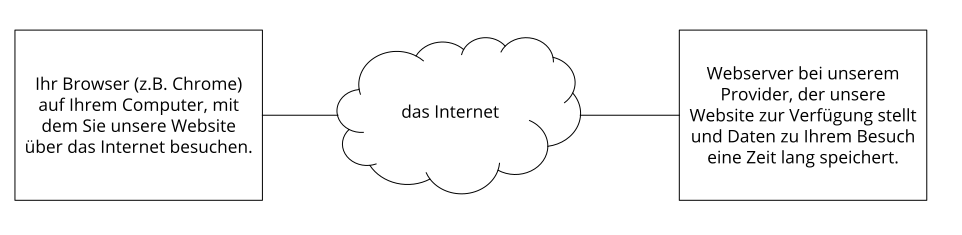
Wenn Ihr Browser eine Verbindung zum Webserver herstellt (Desktop-PC, Laptop, Tablet oder Smartphone) und während der Datenübertragung zum und vom Webserver können personenbezogene Daten verarbeitet werden. Einerseits speichert Ihr Computer Daten; andererseits muss auch der Webserver Daten für einen bestimmten Zeitraum speichern, um einen ordnungsgemäßen Betrieb zu gewährleisten.
Ein Bild sagt mehr als tausend Worte; deshalb veranschaulicht die folgende Grafik die Interaktion zwischen Browser, Internet und Hosting-Anbieter.
Warum verarbeiten wir personenbezogene Daten?
Die Zwecke der Datenverarbeitung sind:
- Professionelles Website-Hosting und operative Sicherheit
- zur Aufrechterhaltung der Betriebs- und IT-Sicherheit
- Anonyme Analyse des Zugriffsverhaltens zur Verbesserung unserer Dienste und, falls erforderlich, zur Strafverfolgung oder zur Geltendmachung von Ansprüchen.
Welche Daten werden verarbeitet?
Auch während Sie gerade unsere Website besuchen, speichert unser Webserver, also der Computer, auf dem diese Website gespeichert ist, normalerweise automatisch Daten wie zum Beispiel:
- die vollständige Internetadresse (URL) der aufgerufenen Website
- Browser und Browserversion (z. B. Chrome 87)
- das verwendete Betriebssystem (z. B. Windows 10)
- die Adresse (URL) der zuvor besuchten Seite (Referrer-URL) (z. B. https://www.examplesourcesite.de/fromwhereIcame/ )
- Hostname und IP-Adresse des Geräts, von dem aus der Zugriff erfolgt (z. B. COMPUTERNAME und 194.23.43.121)
- Datum und Uhrzeit
- in Dateien, den sogenannten Webserver-Protokolldateien
Wie lange werden die Daten gespeichert?
Die oben genannten Daten werden in der Regel zwei Wochen lang gespeichert und anschließend automatisch gelöscht. Wir geben diese Daten nicht weiter, können aber nicht ausschließen, dass Behörden im Falle rechtswidriger Aktivitäten darauf zugreifen können.
Kurz gesagt: Ihr Besuch wird von unserem Provider (dem Unternehmen, das unsere Website auf speziellen Computern (Servern) betreibt) protokolliert, aber wir werden Ihre Daten nicht ohne Ihre Zustimmung weitergeben!
Rechtsgrundlage
Die Rechtmäßigkeit der Verarbeitung personenbezogener Daten im Zusammenhang mit Webhosting basiert auf Art. 6 Abs. 1 lit. f DSGVO (Wahrung berechtigter Interessen), da die Nutzung professionellen Hostings eines Anbieters erforderlich ist, um das Unternehmen sicher und benutzerfreundlich im Internet darzustellen und um Angriffe und daraus resultierende Ansprüche verfolgen zu können.
Wir und der Hosting-Anbieter haben in der Regel eine Datenverarbeitungsvereinbarung gemäß Art. 28 f DSGVO, die die Einhaltung des Datenschutzes sicherstellt und die Datensicherheit gewährleistet.
Datenschutzerklärung des externen Webhosting-Anbieters
Nachfolgend finden Sie die Kontaktdaten unseres externen Hosting-Anbieters, bei dem Sie neben den oben genannten Informationen auch weitere Informationen zur Datenverarbeitung erhalten:
help.shopify.com
Weitere Informationen zur Datenverarbeitung bei diesem Anbieter finden Sie in der Datenschutzerklärung .
Einführung in die Webanalyse
| Zusammenfassung der Datenschutzerklärung für Webanalyse 👥 Betroffene: Besucher der Website 🤝 Zweck: Auswertung von Besucherinformationen zur Optimierung der Website. 📓 Verarbeitete Daten: Zugriffsstatistiken, einschließlich Daten wie Zugriffsstandorte, Gerätedaten, Zugriffsdauer und -zeitpunkt, Navigationsverhalten, Klickverhalten und IP-Adressen. Weitere Details finden Sie in der Dokumentation des jeweiligen Webanalyse-Tools. 📅 Speicherdauer: abhängig vom verwendeten Webanalyse-Tool . ⚖️ Rechtsgrundlage: Art. 6 Abs. 1 lit. a DSGVO (Einwilligung), Art. 6 Abs. 1 lit. f DSGVO (berechtigte Interessen) |
Was ist Webanalyse?
Wir nutzen auf unserer Website Software zur Analyse des Besucherverhaltens, die allgemein als Webanalyse bekannt ist. Dabei werden Daten erfasst, die vom jeweiligen Anbieter des Analysetools (auch Tracking-Tool genannt) gespeichert, verwaltet und verarbeitet werden. Diese Daten dienen der Erstellung von Analysen des Nutzerverhaltens auf unserer Website und werden uns als Websitebetreiber zur Verfügung gestellt. Die meisten Tools bieten zudem verschiedene Testoptionen. So können wir beispielsweise testen, welche Angebote oder Inhalte bei unseren Besuchern am besten ankommen. Dazu zeigen wir zwei unterschiedliche Angebote für einen begrenzten Zeitraum an. Nach dem Test (einem sogenannten A/B-Test) wissen wir, welches Produkt oder welchen Inhalt unsere Website-Besucher interessanter finden. Für solche Testverfahren sowie andere Analysemethoden können Nutzerprofile erstellt und die Daten in Cookies gespeichert werden.
Warum nutzen wir Webanalyse?
Mit unserer Website verfolgen wir ein klares Ziel: Wir möchten Ihnen das beste Online-Angebot unserer Branche bieten. Um dies zu erreichen, legen wir Wert auf erstklassige und ansprechende Inhalte und sorgen dafür, dass Sie sich auf unserer Website rundum wohlfühlen. Mithilfe von Webanalyse-Tools können wir das Verhalten unserer Website-Besucher genau analysieren und unser Online-Angebot entsprechend optimieren – zum Vorteil von Ihnen und uns. So können wir beispielsweise das Durchschnittsalter unserer Besucher, ihre geografische Herkunft, die Zeiten mit dem höchsten Besucheraufkommen und besonders beliebte Inhalte oder Produkte ermitteln. All diese Informationen helfen uns, die Website zu optimieren und perfekt auf Ihre Bedürfnisse, Interessen und Vorlieben zuzuschneiden.
Welche Daten werden verarbeitet?
Welche Daten genau gespeichert werden, hängt natürlich von den verwendeten Analysetools ab. Typischerweise umfassen sie jedoch Informationen wie die von Ihnen auf unserer Website angesehenen Inhalte, die von Ihnen angeklickten Schaltflächen oder Links, den Zeitpunkt Ihres Seitenaufrufs, Ihren Browser, Ihr Gerät (PC, Tablet, Smartphone usw.) und Ihr Computersystem. Wenn Sie der Erfassung von Standortdaten zugestimmt haben, können diese ebenfalls vom Anbieter des Webanalysetools verarbeitet werden.
Ihre IP-Adresse wird ebenfalls gespeichert. Gemäß der Datenschutz-Grundverordnung (DSGVO) gelten IP-Adressen als personenbezogene Daten. Ihre IP-Adresse wird jedoch in der Regel pseudonymisiert (d. h. in einer nicht identifizierbaren und gekürzten Form) gespeichert. Für Testzwecke, Webanalyse und Weboptimierung werden keine direkten Daten wie Ihr Name, Ihr Alter, Ihre Adresse oder Ihre E-Mail-Adresse gespeichert. Alle derartigen Daten werden, sofern erhoben, pseudonymisiert gespeichert. Dadurch wird sichergestellt, dass Sie nicht als Person identifiziert werden können.
Das folgende Beispiel veranschaulicht schematisch die Funktionsweise von Google Analytics als Beispiel für clientseitiges Web-Tracking mithilfe von JavaScript-Code.
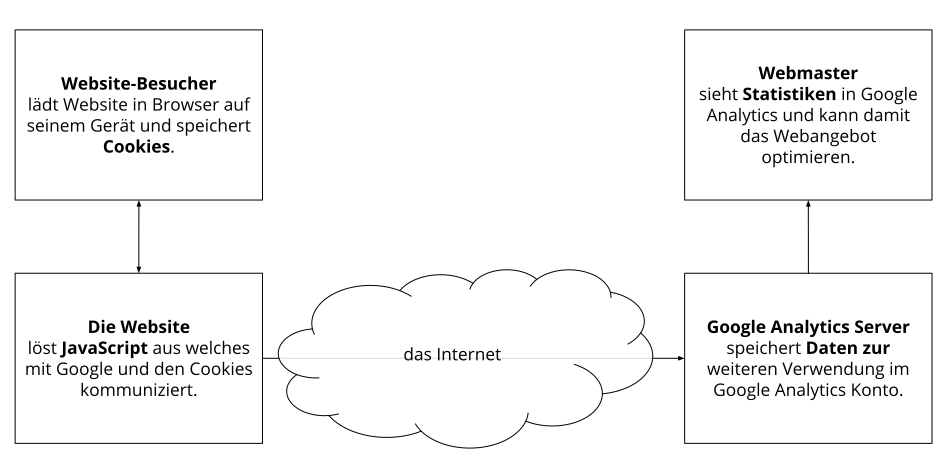
Wie lange die jeweiligen Daten gespeichert werden, hängt immer vom Anbieter ab. Manche Cookies speichern Daten nur wenige Minuten oder bis Sie die Website verlassen, während andere Cookies Daten über mehrere Jahre speichern können.
Dauer der Datenverarbeitung
Wir informieren Sie im Folgenden über die Dauer der Datenverarbeitung, sofern uns hierzu weitere Informationen vorliegen. Grundsätzlich verarbeiten wir personenbezogene Daten nur so lange, wie dies für die Erbringung unserer Dienstleistungen und Produkte unbedingt erforderlich ist. Ist dies gesetzlich vorgeschrieben, beispielsweise im Bereich der Buchhaltung, kann diese Speicherdauer überschritten werden.
Widerspruchsrecht
Sie haben jederzeit das Recht und die Möglichkeit, Ihre Einwilligung zur Verwendung von Cookies oder Drittanbietern zu widerrufen. Dies ist entweder über unser Cookie-Verwaltungstool oder über andere Opt-out-Funktionen möglich. Beispielsweise können Sie die Datenerfassung durch Cookies auch verhindern, indem Sie Cookies in Ihrem Browser verwalten, deaktivieren oder löschen.
Rechtsgrundlage
Die Nutzung von Webanalyse-Tools erfordert Ihre Einwilligung, die wir über unser Cookie-Popup eingeholt haben. Gemäß Art. 6 Abs. 1 lit. a DSGVO (Einwilligung) stellt diese Einwilligung die Rechtsgrundlage für die Verarbeitung personenbezogener Daten dar, wie sie beispielsweise durch Webanalyse-Tools erfasst werden.
Neben Ihrer Einwilligung haben wir ein berechtigtes Interesse daran, das Besucherverhalten auf unserer Website zu analysieren, um unsere Services technisch und wirtschaftlich zu verbessern. Webanalysen helfen uns, Website-Fehler zu identifizieren, Angriffe aufzudecken und die Effizienz zu steigern. Rechtsgrundlage hierfür ist Art. 6 Abs. 1 lit. f DSGVO (berechtigte Interessen) . Wir nutzen diese Tools jedoch nur mit Ihrer Einwilligung.
Da Webanalysetools Cookies verwenden, empfehlen wir Ihnen, auch unsere allgemeine Datenschutzerklärung bezüglich Cookies zu lesen. Um genau zu erfahren, welche Ihrer Daten gespeichert und verarbeitet werden, sollten Sie die Datenschutzrichtlinien der jeweiligen Tools lesen.
Informationen zu spezifischen Webanalyse-Tools finden Sie – sofern verfügbar – in den folgenden Abschnitten.
Datenschutzerklärung von Google Analytics
| Google Analytics Datenschutzerklärung – Zusammenfassung 👥 Betroffene: Website-Besucher 🤝 Zweck: Auswertung von Besucherinformationen zur Optimierung der Website. 📓 Verarbeitete Daten: Zugriffsstatistiken, einschließlich Daten wie Zugriffsstandorte, Gerätedaten, Zugriffsdauer und -zeitpunkt, Navigationsverhalten und Klickverhalten. Weitere Details finden Sie unten in dieser Datenschutzerklärung. 📅 Speicherdauer: individuell anpassbar; standardmäßig speichert Google Analytics 4 Datenpunkte für 14 Monate. ⚖️ Rechtsgrundlage: Art. 6 Abs. 1 lit. a DSGVO (Einwilligung), Art. 6 Abs. 1 lit. f DSGVO (berechtigte Interessen) |
Was ist Google Analytics?
Wir verwenden auf unserer Website das Tracking-Tool Google Analytics, Version 4 (GA4), des amerikanischen Unternehmens Google Inc. Für Europa ist Google Ireland Limited (Gordon House, Barrow Street, Dublin 4, Irland) für alle Google-Dienste verantwortlich. Google Analytics erfasst Daten über Ihre Aktivitäten auf unserer Website. Durch die Kombination verschiedener Technologien wie Cookies, Geräte-IDs und Anmeldeinformationen können Sie als Nutzer geräteübergreifend identifiziert werden. Dies ermöglicht die Analyse Ihrer Aktivitäten über verschiedene Plattformen hinweg.
Wenn Sie beispielsweise auf einen Link klicken, wird dieses Ereignis in einem Cookie gespeichert und an Google Analytics gesendet. Die Berichte von Google Analytics helfen uns, unsere Website und unsere Services besser auf Ihre Bedürfnisse abzustimmen. Im Folgenden erklären wir das Tracking-Tool genauer und gehen insbesondere darauf ein, welche Daten verarbeitet werden und wie Sie dies verhindern können.
Google Analytics ist ein Tracking-Tool zur Analyse des Website-Traffics. Diese Messungen und Analysen basieren auf einer pseudonymen Nutzer-ID. Diese ID enthält keine personenbezogenen Daten wie Name oder Adresse, sondern dient lediglich dazu, Ereignisse einem bestimmten Gerät zuzuordnen. GA4 verwendet ein ereignisbasiertes Modell, das detaillierte Informationen über Nutzerinteraktionen wie Seitenaufrufe, Klicks, Scrollvorgänge und Conversions erfasst. Darüber hinaus integriert GA4 verschiedene Funktionen des maschinellen Lernens, um das Nutzerverhalten und bestimmte Trends besser zu verstehen. GA4 nutzt maschinelles Lernen zur Modellgenerierung. Das bedeutet, dass fehlende Daten anhand der gesammelten Daten extrapoliert werden können, um die Analyse zu optimieren und Prognosen zu ermöglichen.
Damit Google Analytics korrekt funktioniert, ist ein Tracking-Code in den Quellcode unserer Website eingebettet. Wenn Sie unsere Website besuchen, zeichnet dieser Code verschiedene Aktionen auf, die Sie auf unserer Website durchführen. Mithilfe des ereignisgesteuerten Datenmodells von GA4 können wir als Website-Betreiber spezifische Ereignisse definieren und verfolgen, um die Interaktionen der Nutzer zu analysieren. So können wir nicht nur allgemeine Informationen wie Klicks und Seitenaufrufe erfassen, sondern auch spezifische Ereignisse, die für unser Geschäft wichtig sind. Zu diesen spezifischen Ereignissen gehören beispielsweise das Absenden eines Kontaktformulars oder der Kauf eines Produkts.
Sobald Sie unsere Website verlassen, werden diese Daten an die Server von Google Analytics gesendet und dort gespeichert.
Google verarbeitet die Daten und wir erhalten Berichte über Ihr Nutzerverhalten. Diese können unter anderem folgende Berichte umfassen:
- Zielgruppenberichte: Mithilfe von Zielgruppenberichten lernen wir unsere Nutzer besser kennen und erfahren genauer, wer an unserem Service interessiert ist.
- Anzeigenberichte: Anzeigenberichte helfen uns, unsere Online-Werbung einfacher zu analysieren und zu verbessern.
- Akquisitionsberichte: Akquisitionsberichte liefern uns hilfreiche Informationen darüber, wie wir mehr Menschen für unseren Service gewinnen können.
- Verhaltensberichte: Hier erfahren wir, wie Sie mit unserer Website interagieren. Wir können Ihren Weg auf unserer Website nachverfolgen und sehen, welche Links Sie anklicken.
- Conversion-Berichte: Eine Conversion ist der Vorgang, bei dem Sie als Reaktion auf eine Marketingbotschaft eine gewünschte Aktion ausführen. Zum Beispiel, wenn Sie von einem Website-Besucher zu einem Kunden oder Newsletter-Abonnenten werden. Diese Berichte helfen uns zu verstehen, wie unsere Marketingmaßnahmen für Sie funktionieren, und so können wir unsere Conversion-Rate steigern.
- Echtzeitberichte: Hier wissen wir immer sofort, was auf unserer Website passiert. Wir können beispielsweise sehen, wie viele Nutzer gerade diesen Text lesen.
Zusätzlich zu den oben genannten Analyseberichten bietet Google Analytics 4 auch die folgenden Funktionen:
- Ereignisbasiertes Datenmodell: Dieses Modell erfasst sehr spezifische Ereignisse, die auf unserer Website auftreten können. Zum Beispiel das Abspielen eines Videos, der Kauf eines Produkts oder die Anmeldung zu unserem Newsletter.
- Erweiterte Analysefunktionen: Diese Funktionen ermöglichen es uns, Ihr Verhalten auf unserer Website und bestimmte allgemeine Trends besser zu verstehen. Wir können beispielsweise Nutzergruppen segmentieren, vergleichende Analysen von Zielgruppen durchführen oder Ihren Weg durch unsere Website nachverfolgen.
- Prädiktive Modellierung: Basierend auf gesammelten Daten kann maschinelles Lernen fehlende Daten extrapolieren, um zukünftige Ereignisse und Trends vorherzusagen. Dies kann uns helfen, bessere Marketingstrategien zu entwickeln.
- Plattformübergreifende Analyse: Daten können sowohl von Websites als auch von Apps erfasst und analysiert werden. Dies ermöglicht uns die Analyse des Nutzerverhaltens über verschiedene Plattformen hinweg, vorausgesetzt natürlich, Sie haben der Datenverarbeitung zugestimmt.
Warum nutzen wir Google Analytics auf unserer Website?
Unser Ziel mit dieser Website ist klar: Wir möchten Ihnen den bestmöglichen Service bieten. Die Statistiken und Daten von Google Analytics helfen uns dabei, dieses Ziel zu erreichen.
Die statistisch ausgewerteten Daten zeigen uns klar die Stärken und Schwächen unserer Website. So können wir sie einerseits optimieren, damit sie von Interessenten leichter über Google gefunden wird. Andererseits helfen uns die Daten, Sie, unsere Besucher, besser zu verstehen. Wir wissen daher genau, was wir an unserer Website verbessern müssen, um Ihnen den bestmöglichen Service zu bieten. Die Daten unterstützen uns außerdem dabei, unsere Werbe- und Marketingmaßnahmen zielgerichteter und kosteneffizienter zu gestalten. Schließlich ist es nur sinnvoll, unsere Produkte und Dienstleistungen denjenigen Menschen zu präsentieren, die sich dafür interessieren.
Welche Daten speichert Google Analytics?
Google Analytics verwendet einen Tracking-Code, um eine zufällige, eindeutige ID zu erstellen, die mit Ihrem Browser-Cookie verknüpft wird. Dadurch erkennt Google Analytics Sie als neuen Nutzer und weist Ihnen eine Nutzer-ID zu. Bei Ihrem nächsten Besuch auf unserer Website werden Sie als wiederkehrender Nutzer erkannt. Alle erfassten Daten werden zusammen mit dieser Nutzer-ID gespeichert. Dies ist die einzige Möglichkeit, pseudonyme Nutzerprofile zu analysieren.
Um unsere Website mit Google Analytics zu analysieren, muss eine Property-ID in den Tracking-Code eingefügt werden. Die Daten werden dann in der entsprechenden Property gespeichert. Die Google Analytics 4-Property ist die Standard-Property für jede neu erstellte Property. Die Speicherdauer der Daten variiert je nach verwendeter Property.
Ihre Interaktionen werden plattformübergreifend mithilfe von Kennungen wie Cookies, App-Instanz-IDs, Nutzer-IDs oder benutzerdefinierten Ereignisparametern gemessen, sofern Sie Ihre Einwilligung erteilt haben. Interaktionen umfassen alle Aktionen, die Sie auf unserer Website durchführen. Wenn Sie auch andere Google-Systeme (z. B. ein Google-Konto) nutzen, können die über Google Analytics generierten Daten mit Cookies von Drittanbietern verknüpft werden. Google gibt Google Analytics-Daten nur dann weiter, wenn wir als Websitebetreiber dies genehmigen. Ausnahmen können sich ergeben, wenn dies gesetzlich vorgeschrieben ist.
Laut Google protokolliert oder speichert Google Analytics 4 keine IP-Adressen. Google verwendet IP-Adressdaten jedoch, um Standortdaten abzuleiten und löscht diese anschließend umgehend. Daher werden alle von Nutzern in der EU erfassten IP-Adressen gelöscht, bevor die Daten in einem Rechenzentrum oder auf einem Server gespeichert werden.
Da Google Analytics 4 auf ereignisbasierten Daten basiert, verwendet das Tool deutlich weniger Cookies als frühere Versionen (wie z. B. Google Universal Analytics). GA4 verwendet jedoch einige spezifische Cookies. Dazu gehören beispielsweise:
Name: _ga
Wert: 2.1326744211.152113092826-5
Zweck: Analytics.js verwendet standardmäßig den _ga-Cookie, um die Benutzer-ID zu speichern. Seine Hauptfunktion besteht darin, Website-Besucher zu unterscheiden.
Ablaufdatum: nach 2 Jahren
Name: _gid
Wert: 2.1687193234.152113092826-1
Zweck: Dieser Cookie dient auch dazu, Website-Besucher zu unterscheiden.
Ablaufdatum: nach 24 Stunden
Name: _gat_gtag_UA_<property-id>
Wert: 1
Zweck: Dient zur Reduzierung der Anfragerate. Wenn Google Analytics über den Google Tag Manager bereitgestellt wird, heißt dieser Cookie _dc_gtm_<property-id>.
Ablaufdatum: nach 1 Minute
Hinweis: Diese Liste ist nicht vollständig, da Google seine Cookie-Auswahl häufig ändert. GA4 zielt außerdem darauf ab, den Datenschutz zu verbessern. Daher bietet das Tool verschiedene Optionen zur Kontrolle der Datenerfassung. Beispielsweise können wir die Speicherdauer festlegen und die Datenerfassung selbst steuern.
Hier zeigen wir Ihnen einen Überblick über die wichtigsten Datentypen, die mit Google Analytics erfasst werden:
Heatmaps: Google erstellt sogenannte Heatmaps. Diese Heatmaps zeigen genau, auf welche Bereiche Sie klicken. Dadurch erhalten wir Informationen darüber, wo Sie sich auf unserer Website befinden.
Sitzungsdauer: Google definiert die Sitzungsdauer als die Zeit, die Sie auf unserer Website verbringen, ohne die Seite zu verlassen. Wenn Sie 20 Minuten lang inaktiv waren, endet die Sitzung automatisch.
Absprungrate : Ein Absprung liegt vor , wenn Sie nur eine Seite auf unserer Website ansehen und diese dann wieder verlassen.
Kontoerstellung: Wenn Sie ein Konto erstellen oder eine Bestellung auf unserer Website aufgeben, erfasst Google Analytics diese Daten.
Standort: IP-Adressen werden in Google Analytics weder protokolliert noch gespeichert. Es werden jedoch Rückschlüsse gezogen, um kurz vor der Löschung der IP-Adresse Standortdaten zu ermitteln.
Technische Informationen: Dazu gehören unter anderem Ihr Browsertyp, Ihr Internetdienstanbieter und Ihre Bildschirmauflösung.
Ursprungsquelle: Google Analytics; wir sind natürlich auch daran interessiert, über welche Website oder Anzeige Sie auf unsere Seite gelangt sind.
Zu den weiteren erfassten Daten gehören Kontaktinformationen, Bewertungen, Medienwiedergabe (z. B. wenn Sie ein Video auf unserer Website abspielen), das Teilen von Inhalten über soziale Medien oder das Hinzufügen von Elementen zu Ihren Favoriten. Diese Liste ist nicht vollständig und dient lediglich als allgemeine Orientierungshilfe zur Datenspeicherung durch Google Analytics.
Wie lange und wo werden die Daten gespeichert?
Google hat seine Server über die ganze Welt verteilt. Die genauen Standorte der Google-Rechenzentren finden Sie hier: https://datacenters.google/
Ihre Daten sind auf verschiedene physische Speichermedien verteilt. Dies ermöglicht einen schnelleren Datenzugriff und einen besseren Schutz vor Manipulation. Jedes Google-Rechenzentrum verfügt über entsprechende Notfall-Backup-Programme für Ihre Daten. Selbst wenn beispielsweise die Hardware von Google ausfällt oder Naturkatastrophen Server lahmlegen, bleibt das Risiko einer Serviceunterbrechung bei Google gering.
Die Datenaufbewahrungsdauer hängt von den verwendeten Eigenschaften ab. Die Speicherdauer wird immer für jede Eigenschaft individuell festgelegt. Google Analytics bietet vier Optionen zur Steuerung der Speicherdauer:
- 2 Monate: Das ist die kürzeste Lagerdauer.
- 14 Monate: Standardmäßig werden Daten in GA4 14 Monate lang gespeichert.
- 26 Monate: Die Daten können auch 26 Monate lang gespeichert werden.
- Daten werden nur dann gelöscht, wenn wir sie manuell löschen.
Zusätzlich besteht die Möglichkeit, Daten nur dann löschen zu lassen, wenn Sie unsere Website innerhalb des von uns gewählten Zeitraums nicht besuchen. In diesem Fall wird die Aufbewahrungsfrist bei jedem erneuten Besuch unserer Website innerhalb des festgelegten Zeitraums zurückgesetzt.
Nach Ablauf des festgelegten Zeitraums werden die Daten monatlich gelöscht. Diese Aufbewahrungsfrist gilt für Ihre Daten, die mit Cookies, Nutzererkennung und Werbe-IDs (z. B. Cookies der DoubleClick-Domain) verknüpft sind. Die Berichtsergebnisse basieren auf aggregierten Daten und werden getrennt von den Nutzerdaten gespeichert. Aggregierte Daten fassen einzelne Datenpunkte zu einer größeren Einheit zusammen.
Wie kann ich meine Daten löschen oder die Datenspeicherung verhindern?
Gemäß EU-Datenschutzrecht haben Sie das Recht auf Auskunft, Berichtigung, Löschung und Einschränkung der Verarbeitung Ihrer Daten. Durch die Deaktivierung des Google Analytics-JavaScript (analytics.js, gtag.js) mithilfe des Browser-Add-ons können Sie verhindern, dass Google Analytics 4 Ihre Daten verwendet. Sie können das Browser-Add-on unter https://tools.google.com/dlpage/gaoptout?hl=de herunterladen und installieren . Bitte beachten Sie, dass dieses Add-on ausschließlich die Datenerfassung durch Google Analytics deaktiviert.
Wenn Sie Cookies deaktivieren, löschen oder allgemein verwalten möchten, finden Sie die entsprechenden Links zu den jeweiligen Anleitungen für die bekanntesten Browser im Abschnitt „Cookies“.
Rechtsgrundlage
Die Nutzung von Google Analytics erfordert Ihre Einwilligung, die wir über unser Cookie-Popup eingeholt haben. Gemäß Art. 6 Abs. 1 lit. a DSGVO (Einwilligung) stellt diese Einwilligung die Rechtsgrundlage für die Verarbeitung personenbezogener Daten dar, wie sie beispielsweise bei der Erfassung durch Webanalysetools anfallen können.
Neben Ihrer Einwilligung haben wir ein berechtigtes Interesse daran, das Besucherverhalten auf unserer Website zu analysieren, um unsere Services technisch und wirtschaftlich zu verbessern. Mithilfe von Google Analytics können wir Website-Fehler identifizieren, Angriffe erkennen und die Effizienz steigern. Rechtsgrundlage hierfür ist Art. 6 Abs. 1 lit. f DSGVO (berechtigte Interessen) . Wir nutzen Google Analytics jedoch nur, wenn Sie Ihre Einwilligung dazu erteilt haben.
Google verarbeitet Ihre Daten unter anderem in den USA. Google ist aktiver Teilnehmer des EU-US-Datenschutzrahmens, der die korrekte und sichere Übermittlung personenbezogener Daten von EU-Bürgern in die USA regelt. Weitere Informationen finden Sie unter https://commission.europa.eu/document/fa09cbad-dd7d-4684-ae60-be03fcb0fddf_en .
Google verwendet darüber hinaus sogenannte Standardvertragsklauseln (Artikel 46 Absätze 2 und 3 der DSGVO). Standardvertragsklauseln (SCCs) sind von der Europäischen Kommission bereitgestellte Musterklauseln, die sicherstellen sollen, dass Ihre Daten auch bei der Übermittlung und Speicherung in Drittländern (wie den USA) den europäischen Datenschutzstandards entsprechen. Durch das EU-US-Datenschutzabkommen und die Standardvertragsklauseln verpflichtet sich Google, bei der Verarbeitung Ihrer relevanten Daten die europäischen Datenschutzstandards einzuhalten, selbst wenn diese in den USA gespeichert, verarbeitet und verwaltet werden. Diese Klauseln basieren auf einem Durchführungsbeschluss der Europäischen Kommission. Sie finden den Beschluss und die zugehörigen Standardvertragsklauseln unter anderem hier: https://eur-lex.europa.eu/eli/dec_impl/2021/914/oj?locale=de
Die Google Ads-Datenverarbeitungsbedingungen, die auf die Standardvertragsklauseln verweisen, finden Sie unter https://business.safety.google/intl/de/adsprocessorterms/ .
Wir hoffen, wir konnten Ihnen die wichtigsten Informationen zur Datenverarbeitung durch Google Analytics bereitstellen. Wenn Sie mehr über den Tracking-Dienst erfahren möchten, empfehlen wir Ihnen diese beiden Links: https://marketingplatform.google.com/about/analytics/terms/de/ und https://support.google.com/analytics/answer/6004245?hl=de .
Weitere Informationen zur Datenverarbeitung finden Sie in der Datenschutzerklärung von Google unter https://policies.google.com/privacy?hl=de .
Datenverarbeitungsvereinbarung (DPA) Google Analytics
Gemäß Artikel 28 der Datenschutz-Grundverordnung (DSGVO) haben wir mit Google eine Vereinbarung zur Auftragsverarbeitung (AVV) abgeschlossen. Was genau eine AVV ist und vor allem, was sie enthalten muss, erfahren Sie in unserem allgemeinen Abschnitt „Vereinbarung zur Auftragsverarbeitung (AVV)“.
Diese Vereinbarung ist rechtlich erforderlich, da Google in unserem Auftrag personenbezogene Daten verarbeitet. Sie legt fest, dass Google die von uns erhaltenen Daten nur gemäß unseren Anweisungen verarbeiten darf und die Bestimmungen der DSGVO einhalten muss. Den Link zur Datenverarbeitungsvereinbarung finden Sie unter https://business.safety.google/intl/de/adsprocessorterms/
Google Analytics berichtet über demografische Daten und Interessen.
Wir haben die Berichtsfunktionen für Werbeanzeigen in Google Analytics aktiviert. Die Berichte zu demografischen Merkmalen und Interessen enthalten Informationen zu Alter, Geschlecht und Interessen. Dadurch erhalten wir ein besseres Verständnis unserer Nutzer, ohne diese Daten einzelnen Personen zuordnen zu können. Weitere Informationen zu den Werbefunktionen finden Sie unter https://support.google.com/analytics/answer/3450482?hl=de_AT&utm_id=ad .
Sie können die Verwendung Ihrer Google-Kontoaktivitäten und -informationen deaktivieren, indem Sie das Kontrollkästchen unter „Anzeigeneinstellungen“ auf https://adssettings.google.com/authenticated deaktivieren .
Google Analytics im Einwilligungsmodus
Je nach Ihrer Einwilligung verarbeitet Google Analytics Ihre personenbezogenen Daten im sogenannten Einwilligungsmodus. Sie können entscheiden, ob Sie Google Analytics-Cookies zulassen möchten. Dies bestimmt auch, welche Ihrer Daten Google Analytics verarbeiten darf. Die erhobenen Daten werden hauptsächlich verwendet, um das Nutzerverhalten auf der Website zu messen, zielgerichtete Werbung anzuzeigen und uns Webanalyseberichte bereitzustellen. In der Regel erteilen Sie Ihre Einwilligung zur Datenverarbeitung durch Google über ein Cookie-Einwilligungstool. Wenn Sie der Datenverarbeitung nicht zustimmen, werden nur aggregierte Daten erhoben und verarbeitet. Das bedeutet, dass die Daten nicht einzelnen Nutzern zugeordnet werden können und somit kein Nutzerprofil erstellt wird. Sie können auch nur der statistischen Auswertung zustimmen. In diesem Fall werden keine personenbezogenen Daten verarbeitet und folglich auch nicht für Werbung oder die Erfolgsmessung von Werbemaßnahmen verwendet.
Google Analytics IP-Anonymisierung
Wir haben auf dieser Website die IP-Adressenanonymisierung für Google Analytics implementiert. Diese Funktion wurde von Google entwickelt, um sicherzustellen, dass diese Website den geltenden Datenschutzbestimmungen und den Empfehlungen der lokalen Datenschutzbehörden entspricht, insbesondere dort, wo die Speicherung vollständiger IP-Adressen verboten ist. Die Anonymisierung bzw. Maskierung der IP-Adresse erfolgt, sobald die IP-Adressen im Google Analytics-Datenerfassungsnetzwerk eintreffen und bevor Daten gespeichert oder verarbeitet werden.
Weitere Informationen zur IP-Anonymisierung finden Sie unter https://support.google.com/analytics/answer/2763052?hl=de .
Google Optimize Datenschutzrichtlinie
Wir nutzen auf unserer Website Google Optimize, ein Tool zur Website-Optimierung. Anbieter des Dienstes ist das amerikanische Unternehmen Google Inc. Für die europäische Region ist Google Ireland Limited (Gordon House, Barrow Street, Dublin 4, Irland) für alle Google-Dienste zuständig.
Google verarbeitet Ihre Daten unter anderem in den USA. Google ist aktiver Teilnehmer des EU-US-Datenschutzrahmens, der die korrekte und sichere Übermittlung personenbezogener Daten von EU-Bürgern in die USA regelt. Weitere Informationen finden Sie unter https://commission.europa.eu/document/fa09cbad-dd7d-4684-ae60-be03fcb0fddf_en .
Google verwendet darüber hinaus sogenannte Standardvertragsklauseln (Artikel 46 Absätze 2 und 3 der DSGVO). Standardvertragsklauseln (SCCs) sind von der Europäischen Kommission bereitgestellte Musterklauseln, die sicherstellen sollen, dass Ihre Daten auch bei der Übermittlung und Speicherung in Drittländern (wie den USA) den europäischen Datenschutzstandards entsprechen. Durch das EU-US-Datenschutzabkommen und die Standardvertragsklauseln verpflichtet sich Google, bei der Verarbeitung Ihrer relevanten Daten die europäischen Datenschutzstandards einzuhalten, selbst wenn diese in den USA gespeichert, verarbeitet und verwaltet werden. Diese Klauseln basieren auf einem Durchführungsbeschluss der Europäischen Kommission. Sie finden den Beschluss und die zugehörigen Standardvertragsklauseln unter anderem hier: https://eur-lex.europa.eu/eli/dec_impl/2021/914/oj?locale=de
Die Google Ads-Datenverarbeitungsbedingungen, die auf die Standardvertragsklauseln verweisen, finden Sie unter https://business.safety.google/intl/de/adsprocessorterms/ .
Weitere Informationen zu den durch die Nutzung von Google Optimize verarbeiteten Daten finden Sie in der Datenschutzerklärung unter https://policies.google.com/privacy?hl=de .
Datenverarbeitungsvereinbarung (DPA) Google Optimize
Gemäß Artikel 28 der Datenschutz-Grundverordnung (DSGVO) haben wir mit Google eine Vereinbarung zur Auftragsverarbeitung (AVV) abgeschlossen. Was genau eine AVV ist und vor allem, was sie enthalten muss, erfahren Sie in unserem allgemeinen Abschnitt „Vereinbarung zur Auftragsverarbeitung (AVV)“.
Diese Vereinbarung ist rechtlich erforderlich, da Google in unserem Auftrag personenbezogene Daten verarbeitet. Sie legt fest, dass Google die von uns erhaltenen Daten nur gemäß unseren Anweisungen verarbeiten darf und die Bestimmungen der DSGVO einhalten muss. Den Link zur Datenverarbeitungsvereinbarung finden Sie unter https://business.safety.google/intl/de/adsprocessorterms/
Datenschutzrichtlinie von Google Site Kit
| Google Site Kit – Datenschutzerklärung (Zusammenfassung) 👥 Betroffene: Website-Besucher 🤝 Zweck: Auswertung von Besucherinformationen zur Optimierung der Website. 📓 Verarbeitete Daten: Zugriffsstatistiken, einschließlich Daten wie Zugriffsstandorte, Gerätedaten, Zugriffsdauer und -zeitpunkt, Navigationsverhalten, Klickverhalten und IP-Adressen. Weitere Details finden Sie unten und in der Datenschutzerklärung von Google Analytics. 📅 Speicherdauer: abhängig von den verwendeten Eigenschaften ⚖️ Rechtsgrundlage: Art. 6 Abs. 1 lit. a DSGVO (Einwilligung), Art. 6 Abs. 1 lit. f DSGVO (berechtigte Interessen) |
Was ist Google Site Kit?
Wir haben das WordPress-Plugin Google Site Kit des US-amerikanischen Unternehmens Google Inc. in unsere Website integriert. Für Europa ist Google Ireland Limited (Gordon House, Barrow Street, Dublin 4, Irland) für alle Google-Dienste zuständig. Mit Google Site Kit können wir Statistiken verschiedener Google-Produkte, wie beispielsweise Google Analytics, direkt in unserem WordPress-Dashboard schnell und einfach einsehen. Dieses Tool bzw. die in Google Site Kit integrierten Tools erfassen auch Ihre personenbezogenen Daten. In dieser Datenschutzerklärung erläutern wir, warum wir Google Site Kit verwenden, wie lange und wo Daten gespeichert werden und welche weiteren datenschutzrechtlichen Informationen in diesem Zusammenhang für Sie relevant sind.
Google Site Kit ist ein Plugin für das Content-Management-System WordPress. Mit diesem Plugin lassen sich wichtige Website-Analysestatistiken direkt im Dashboard einsehen. Diese Statistiken werden von anderen Google-Produkten, insbesondere Google Analytics, erfasst. Neben Google Analytics kann Google Site Kit auch mit der Google Search Console, PageSpeed Insights, Google AdSense, Google Optimize und dem Google Tag Manager integriert werden.
Warum nutzen wir Google Site Kit auf unserer Website?
Als Dienstleister ist es unser Ziel, Ihnen die bestmögliche Nutzererfahrung auf unserer Website zu bieten. Wir möchten, dass Sie sich wohlfühlen und schnell und einfach genau das finden, wonach Sie suchen. Statistische Analysen helfen uns, Sie besser zu verstehen und unser Angebot an Ihre Bedürfnisse und Interessen anzupassen. Für diese Analysen nutzen wir verschiedene Google-Tools. Site Kit vereinfacht unsere Arbeit dabei erheblich, da wir die Statistiken der Google-Produkte direkt im Dashboard einsehen und analysieren können. Dadurch entfällt die separate Registrierung für jedes Tool. Site Kit bietet Ihnen somit stets einen klaren Überblick über die wichtigsten Analysedaten.
Welche Daten speichert Google Site Kit?
Wenn Sie in der Cookie-Benachrichtigung (auch Skript oder Banner genannt) aktiv der Verwendung von Tracking-Tools zugestimmt haben, setzen Google-Produkte wie Google Analytics Cookies und senden Daten über Sie, beispielsweise zu Ihrem Nutzerverhalten, an Google, wo diese gespeichert und verarbeitet werden. Dies umfasst auch personenbezogene Daten wie Ihre IP-Adresse.
Detailliertere Informationen zu den einzelnen Diensten finden Sie in den entsprechenden Abschnitten dieser Datenschutzerklärung. Beispielsweise finden Sie in unserer Datenschutzerklärung für Google Analytics detaillierte Informationen zu den erhobenen Daten. Dort erfahren Sie, wie lange Google Analytics Daten speichert, verwaltet und verarbeitet, welche Cookies verwendet werden und wie Sie die Datenspeicherung verhindern können. Für andere Google-Dienste wie Google Tag Manager und Google AdSense bieten wir separate Datenschutzerklärungen mit umfassenden Informationen an.
Nachfolgend zeigen wir Ihnen Beispiele für Google Analytics-Cookies, die in Ihrem Browser gesetzt werden können, sofern Sie der Datenverarbeitung durch Google grundsätzlich zugestimmt haben. Bitte beachten Sie, dass dies nur eine Auswahl an Cookies ist:
Name: _ga
Wert: 2.1326744211.152113092826-2
Zweck: Analytics.js verwendet standardmäßig den _ga-Cookie, um die Benutzer-ID zu speichern. Seine Hauptfunktion besteht darin, Website-Besucher zu unterscheiden.
Ablaufdatum: nach 2 Jahren
Name: _gid
Wert: 2.1687193234.152113092826-7
Zweck: Dieser Cookie dient auch dazu, Website-Besucher zu unterscheiden.
Ablaufdatum: nach 24 Stunden
Name: _gat_gtag_UA_<property-id>
Wert: 1
Zweck: Dieser Cookie dient zur Reduzierung der Anfragerate.
Ablaufdatum: nach 1 Minute
Wie lange und wo werden die Daten gespeichert?
Google speichert die gesammelten Daten auf eigenen Google-Servern, die weltweit verteilt sind. Die meisten dieser Server befinden sich in den USA, daher ist es sehr wahrscheinlich, dass auch Ihre Daten dort gespeichert sind. Die genauen Standorte der Server finden Sie unter https://datacenters.google/ .
Die über Google Analytics erfassten Daten werden standardmäßig 26 Monate lang gespeichert. Danach werden Ihre Nutzerdaten gelöscht. Diese Aufbewahrungsfrist gilt für alle Daten, die mit Cookies, Nutzererkennung und Werbe-IDs verknüpft sind.
Wie kann ich meine Daten löschen oder die Datenspeicherung verhindern?
Sie haben jederzeit das Recht, Ihre Daten einzusehen, zu löschen, zu berichtigen oder deren Verarbeitung einzuschränken. Darüber hinaus können Sie Cookies in Ihrem Browser jederzeit deaktivieren, löschen oder verwalten.
Wenn Sie Cookies deaktivieren, löschen oder allgemein verwalten möchten, finden Sie die entsprechenden Links zu den jeweiligen Anleitungen für die bekanntesten Browser im Abschnitt „Cookies“.
Rechtsgrundlage
Die Nutzung von Google Site Kit erfordert Ihre Einwilligung, die wir über unser Cookie-Popup eingeholt haben. Gemäß Art. 6 Abs. 1 lit. a DSGVO (Einwilligung) stellt diese Einwilligung die Rechtsgrundlage für die Verarbeitung personenbezogener Daten dar, wie sie beispielsweise bei der Erfassung durch Webanalysetools anfallen können.
Neben Ihrer Einwilligung haben wir ein berechtigtes Interesse daran, das Besucherverhalten auf unserer Website zu analysieren, um unsere Services technisch und wirtschaftlich zu verbessern. Mithilfe von Google Site Kit können wir Website-Fehler identifizieren, Angriffe erkennen und die Effizienz steigern. Rechtsgrundlage hierfür ist Art. 6 Abs. 1 lit. f DSGVO (berechtigte Interessen) . Wir verwenden Google Site Kit jedoch nur, wenn Sie Ihre Einwilligung dazu erteilt haben.
Google verarbeitet Ihre Daten unter anderem in den USA. Google ist aktiver Teilnehmer des EU-US-Datenschutzrahmens, der die korrekte und sichere Übermittlung personenbezogener Daten von EU-Bürgern in die USA regelt. Weitere Informationen finden Sie unter https://commission.europa.eu/document/fa09cbad-dd7d-4684-ae60-be03fcb0fddf_en .
Google verwendet darüber hinaus sogenannte Standardvertragsklauseln (Artikel 46 Absätze 2 und 3 der DSGVO). Standardvertragsklauseln (SCCs) sind von der Europäischen Kommission bereitgestellte Musterklauseln, die sicherstellen sollen, dass Ihre Daten auch bei der Übermittlung und Speicherung in Drittländern (wie den USA) den europäischen Datenschutzstandards entsprechen. Durch das EU-US-Datenschutzabkommen und die Standardvertragsklauseln verpflichtet sich Google, bei der Verarbeitung Ihrer relevanten Daten die europäischen Datenschutzstandards einzuhalten, selbst wenn diese in den USA gespeichert, verarbeitet und verwaltet werden. Diese Klauseln basieren auf einem Durchführungsbeschluss der Europäischen Kommission. Sie finden den Beschluss und die zugehörigen Standardvertragsklauseln unter anderem hier: https://eur-lex.europa.eu/eli/dec_impl/2021/914/oj?locale=de
Die Google Ads-Datenverarbeitungsbedingungen, die auf die Standardvertragsklauseln verweisen, finden Sie unter https://business.safety.google/intl/de/adsprocessorterms/ .
Um mehr über die Datenverarbeitung durch Google zu erfahren, empfehlen wir Ihnen, die umfassende Datenschutzerklärung von Google unter https://policies.google.com/privacy?hl=de zu lesen .
Datenschutzrichtlinie von GoSquared Analytics
| GoSquared Analytics – Datenschutzerklärung (Zusammenfassung) 👥 Betroffene: Unternehmen, die unsere Website besuchen 🤝 Zweck: Auswertung von Besucherinformationen zur Optimierung der Website. 📓 Verarbeitete Daten: Technische Informationen zu Browser, Betriebssystem und Gerät, Verweildauer auf der Website, Interaktionen auf der Website 📅 Speicherdauer: Solange die Daten für den vorgesehenen Zweck benötigt werden. ⚖️ Rechtsgrundlage: Art. 6 Abs. 1 lit. a DSGVO (Einwilligung), Art. 6 Abs. 1 lit. f DSGVO (berechtigte Interessen) |
Was ist GoSquared Analytics?
Wir nutzen auf unserer Website GoSquared Analytics, eine Webanalyse-Software. Anbieter des Dienstes ist das britische Unternehmen Go Squared Ltd, 3 Barn Hawe, High Street, Edenbridge, Kent, UK.
GoSquared Analytics wurde 2006 mit dem Ziel gegründet, eine einfachere Alternative zu Google Analytics anzubieten. GoSquared Analytics ist eine Software, die Daten über Ihre Aktivitäten auf unserer Website erfasst und analysiert. Die Datenerfassung mit GoSquared erfolgt in Echtzeit. Wir erhalten direkte Analyseberichte darüber, wie Sie unsere Website nutzen, wodurch wir unser Angebot kontinuierlich verbessern und besser auf Ihre Bedürfnisse abstimmen können. In dieser Datenschutzerklärung erläutern wir das Analysetool genauer und zeigen Ihnen insbesondere, welche Daten wann, wie und wo gespeichert werden.
Warum nutzen wir GoSquared Analytics?
Wir nutzen dieses Softwaretool, um die Qualität unserer Website und unseres Angebots zu verbessern. Unser Ziel ist es, Ihnen den bestmöglichen Service zu bieten. Wir möchten, dass Sie sich auf unserer Website wohlfühlen und genau das finden, was Sie erwarten. Um dies zu erreichen, müssen wir unser Angebot natürlich so genau wie möglich auf Ihre Wünsche und Bedürfnisse abstimmen. Die Daten helfen uns außerdem, unser Online-Marketing und unsere Werbung kosteneffizienter und personalisierter zu gestalten. Denn wir möchten unsere Angebote nur denjenigen präsentieren, die wirklich daran interessiert sind.
Welche Daten werden von GoSquared Analytics gespeichert?
GoSquared Analytics ist ein Analysetool, das die Performance unserer Website und Online-Kampagnen misst und auswertet. Die Software verwendet Cookies, um Daten wie Ihre Verweildauer auf unserer Website, die Anzahl der Besucher und Ihre Herkunft zu erfassen. Wir erhalten außerdem detaillierte Berichte zum Besucherverhalten auf unserer Website. So können wir beispielsweise sehen, welche Schaltflächen Sie am häufigsten anklicken, welche Unterseiten Sie bevorzugen und welche Sie eher meiden. Ihre IP-Adresse, Standortdaten, Gerätetyp und Betriebssystem werden ebenfalls gespeichert und verarbeitet. Durch Echtzeitanalyse liefert die Software aktuelle Informationen zum Besucherverhalten. Welche Daten konkret verarbeitet werden, hängt von Ihren individuellen Einstellungen im Tool ab.
Wie lange und wo werden die Daten gespeichert?
Die Daten können auch an Server in den USA, also außerhalb des Europäischen Wirtschaftsraums (EWR), übertragen werden. Laut GoSquared sind jedoch angemessene Sicherheitsvorkehrungen getroffen, um Ihre personenbezogenen Daten zu schützen. GoSquared speichert Daten grundsätzlich so lange, wie es für Geschäftszwecke erforderlich ist und solange GoSquared vertraglich und gesetzlich dazu verpflichtet ist. Genaue Aufbewahrungsfristen können wir hier leider nicht angeben, da diese von den individuellen Einstellungen abhängen.
Wie kann ich meine Daten löschen oder die Datenspeicherung verhindern?
Sie haben jederzeit das Recht auf Auskunft, Berichtigung, Löschung und Einschränkung der Verarbeitung Ihrer personenbezogenen Daten. Sie können Ihre Einwilligung zur Datenverarbeitung jederzeit widerrufen.
Wenn Sie Cookies deaktivieren, löschen oder allgemein verwalten möchten, finden Sie die entsprechenden Links zu den jeweiligen Anleitungen für die bekanntesten Browser im Abschnitt „Cookies“.
Rechtsgrundlage
Die Nutzung von GoSquared erfordert Ihre Einwilligung, die wir über unser Cookie-Popup eingeholt haben. Gemäß Art. 6 Abs. 1 lit. a DSGVO (Einwilligung) stellt diese Einwilligung die Rechtsgrundlage für die Verarbeitung personenbezogener Daten dar, wie sie beispielsweise durch Webanalysetools erfasst werden.
Neben Ihrer Einwilligung haben wir ein berechtigtes Interesse daran, das Besucherverhalten auf unserer Website zu analysieren, um unsere Services technisch und wirtschaftlich zu verbessern. GoSquared unterstützt uns dabei, Optimierungspotenziale auf der Website zu identifizieren, mögliche Angriffe aufzudecken und die Effizienz zu steigern. Rechtsgrundlage hierfür ist Art. 6 Abs. 1 lit. f DSGVO (berechtigte Interessen) . Wir nutzen GoSquared jedoch nur, wenn Sie Ihre Einwilligung dazu erteilt haben.
Mit dem Austritt des Vereinigten Königreichs aus der Europäischen Union gilt die DSGVO nicht mehr für Datenübermittlungen ins Vereinigte Königreich. Die Europäische Kommission hat jedoch auf Grundlage von Artikel 45 DSGVO entschieden, dass das Vereinigte Königreich ein im Vergleich zur DSGVO angemessenes Schutzniveau bietet. Datenübermittlungen ins Vereinigte Königreich sind daher zulässig. Sie können die Entscheidung hier einsehen (Download): https://eur-lex.europa.eu/legal-content/DE/TXT/PDF/?uri=CELEX:32021D1772
Weitere Informationen zu den durch GoSquared Analytics verarbeiteten Daten finden Sie in der Datenschutzerklärung unter https://www.gosquared.com/legal/privacy/ .
Einführung ins E-Mail-Marketing
| E-Mail-Marketing-Zusammenfassung 👥 Betroffene: Newsletter-Abonnenten 🤝 Zweck: Direktmarketing per E-Mail, Benachrichtigung über systemrelevante Ereignisse 📓 Verarbeitete Daten: Bei der Registrierung eingegebene Daten, mindestens jedoch die E-Mail-Adresse. Weitere Details finden Sie in der Dokumentation des verwendeten E-Mail-Marketing-Tools. 📅 Speicherdauer: Dauer des Abonnements ⚖️ Rechtsgrundlage: Art. 6 Abs. 1 lit. a DSGVO (Einwilligung), Art. 6 Abs. 1 lit. f DSGVO (berechtigte Interessen) |
Was ist E-Mail-Marketing?
Um Sie auf dem Laufenden zu halten, nutzen wir auch E-Mail-Marketing. Wenn Sie dem Empfang unserer E-Mails oder Newsletter zugestimmt haben, werden Ihre Daten verarbeitet und gespeichert. E-Mail-Marketing ist ein Teilbereich des Online-Marketings. Dabei werden Neuigkeiten oder allgemeine Informationen über ein Unternehmen, Produkte oder Dienstleistungen per E-Mail an eine bestimmte Gruppe von Personen versendet, die daran interessiert sind.
Wenn Sie an unserem E-Mail-Marketing (in der Regel per Newsletter) teilnehmen möchten, genügt normalerweise die Angabe Ihrer E-Mail-Adresse. Dazu füllen Sie einfach ein Online-Formular aus und senden es ab. Gegebenenfalls fragen wir Sie aber auch nach weiteren Informationen wie Ihrem Titel und Namen, um Sie persönlich ansprechen zu können.
Newsletter-Abonnements funktionieren in der Regel über das sogenannte Double-Opt-in-Verfahren. Nach Ihrer Anmeldung zu unserem Newsletter auf unserer Website erhalten Sie eine E-Mail zur Bestätigung Ihrer Anmeldung. Dadurch wird sichergestellt, dass die E-Mail-Adresse Ihnen gehört und sich niemand mit einer fremden E-Mail-Adresse angemeldet hat. Wir oder ein von uns verwendetes Benachrichtigungstool protokollieren jede einzelne Anmeldung. Dies ist notwendig, um den rechtskonformen Anmeldeprozess nachweisen zu können. Typischerweise werden der Zeitpunkt der Anmeldung, der Zeitpunkt der Bestätigung und Ihre IP-Adresse erfasst. Zusätzlich werden alle Änderungen, die Sie an Ihren gespeicherten Daten vornehmen, protokolliert.
Warum nutzen wir E-Mail-Marketing?
Wir möchten selbstverständlich mit Ihnen in Kontakt bleiben und Sie über Neuigkeiten aus unserem Unternehmen auf dem Laufenden halten. Dafür nutzen wir E-Mail-Marketing – oft einfach „Newsletter“ genannt – als wichtigen Bestandteil unserer Online-Marketing-Strategie. Mit Ihrer Einwilligung oder sofern dies rechtlich zulässig ist, senden wir Ihnen Newsletter, System-E-Mails oder andere Benachrichtigungen per E-Mail. Wenn wir im Folgenden den Begriff „Newsletter“ verwenden, meinen wir in erster Linie regelmäßig versendete E-Mails. Selbstverständlich möchten wir Sie mit unseren Newslettern keinesfalls belästigen. Deshalb sind wir stets bestrebt, Ihnen nur relevante und interessante Inhalte anzubieten. So erfahren Sie beispielsweise mehr über unser Unternehmen, unsere Dienstleistungen oder unsere Produkte. Da wir unser Angebot kontinuierlich verbessern, informiert Sie unser Newsletter auch über neue Entwicklungen und attraktive Sonderaktionen. Wir nutzen einen Dienstleister mit einem professionellen E-Mail-Marketing-Tool, um Ihnen unsere Newsletter schnell und sicher zustellen zu können. Ziel unseres E-Mail-Marketings ist es, Sie über neue Angebote zu informieren und unsere Geschäftsziele zu erreichen.
Welche Daten werden verarbeitet?
Wenn Sie unseren Newsletter über unsere Website abonnieren, bestätigen Sie Ihre Mitgliedschaft in unserer E-Mail-Liste per E-Mail. Neben Ihrer IP-Adresse und E-Mail-Adresse können auch Ihr Titel, Name, Ihre Adresse und Telefonnummer gespeichert werden. Dies geschieht jedoch nur, wenn Sie in diese Datenspeicherung einwilligen. Die so gekennzeichneten Daten sind für Ihre Teilnahme am angebotenen Service erforderlich. Die Angabe dieser Informationen ist freiwillig; ohne diese Angaben können Sie den Service jedoch nicht nutzen. Informationen über Ihr Gerät oder Ihre bevorzugten Inhalte auf unserer Website können ebenfalls gespeichert werden. Weitere Informationen zur Datenspeicherung beim Besuch einer Website finden Sie im Abschnitt „Automatische Datenspeicherung“. Wir protokollieren Ihre Einwilligungserklärung, um jederzeit nachweisen zu können, dass diese unseren rechtlichen Verpflichtungen entspricht.
Dauer der Datenverarbeitung
Wenn Sie sich von unserem E-Mail-/Newsletter-Verteiler abmelden, speichern wir Ihre Adresse unter Umständen bis zu drei Jahre lang aufgrund unserer berechtigten Interessen, um Ihre damalige Einwilligung nachweisen zu können. Wir verarbeiten diese Daten nur, wenn dies zur Abwehr potenzieller Ansprüche erforderlich ist.
Wenn Sie uns jedoch Ihre Einwilligung zum Bezug unseres Newsletters erteilt haben, können Sie jederzeit einen Antrag auf Löschung Ihrer E-Mail-Adresse stellen. Sollten Sie Ihre Einwilligung endgültig widerrufen, behalten wir uns das Recht vor, Ihre E-Mail-Adresse in einer Sperrliste zu speichern. Solange Sie unseren Newsletter freiwillig abonniert haben, speichern wir Ihre E-Mail-Adresse selbstverständlich.
Widerspruchsrecht
Sie können unseren Newsletter jederzeit abbestellen. Widerrufen Sie einfach Ihre Einwilligung zum Empfang. Das dauert in der Regel nur wenige Sekunden oder ein bis zwei Klicks. Sie finden normalerweise am Ende jeder E-Mail einen Abmeldelink. Sollten Sie den Link im Newsletter nicht finden, kontaktieren Sie uns bitte per E-Mail. Wir melden Sie dann umgehend ab.
Rechtsgrundlage
Wir versenden unseren Newsletter auf Grundlage Ihrer Einwilligung (Art. 6 Abs. 1 lit. a DSGVO). Das bedeutet, dass wir Ihnen nur dann einen Newsletter zusenden können, wenn Sie sich zuvor aktiv dafür angemeldet haben. Wir senden Ihnen gegebenenfalls auch Werbemitteilungen, sofern Sie Kunde bei uns sind und der Nutzung Ihrer E-Mail-Adresse für Direktmarketingzwecke nicht widersprochen haben.
Informationen zu spezifischen E-Mail-Marketing-Diensten und deren Umgang mit personenbezogenen Daten finden Sie – sofern verfügbar – in den folgenden Abschnitten.
Einführung in Push-Benachrichtigungen
| Zusammenfassung der Push-Benachrichtigungen 👥 Betroffene: Abonnenten von Push-Benachrichtigungen 🤝 Zweck: Benachrichtigung über systemrelevante und interessante Ereignisse 📓 Verarbeitete Daten: Bei der Registrierung eingegebene Daten, in der Regel auch Standortdaten. Weitere Details finden Sie in der Dokumentation des jeweiligen Push-Benachrichtigungstools. 📅 Speicherdauer: Daten werden in der Regel so lange gespeichert, wie es zur Erbringung der Dienste erforderlich ist. ⚖️ Rechtsgrundlage: Art. 6 Abs. 1 lit. a DSGVO (Einwilligung), Art. 6 Abs. 1 lit. b DSGVO (Vertrag) |
Was sind Push-Benachrichtigungen?
Wir nutzen auf unserer Website Push-Benachrichtigungen, um unsere Nutzer auf dem Laufenden zu halten. Wenn Sie dem Empfang von Push-Benachrichtigungen zugestimmt haben, senden wir Ihnen kurze Nachrichten-Updates per Software. Push-Benachrichtigungen sind Textnachrichten, die direkt auf Ihrem Smartphone oder anderen Geräten wie Tablets oder PCs erscheinen, sofern Sie diese abonniert haben. Sie erhalten diese Nachrichten auch dann, wenn Sie sich nicht auf unserer Website befinden oder unsere Dienste nicht aktiv nutzen. Daten zu Ihrem Standort und Ihrem Nutzungsverhalten können ebenfalls erfasst und gespeichert werden.
Warum nutzen wir Push-Benachrichtigungen?
Einerseits nutzen wir Push-Benachrichtigungen, um Ihnen die vertraglich vereinbarten Leistungen vollständig zu erbringen. Andererseits dienen diese Benachrichtigungen auch unseren Online-Marketing-Zwecken. Wir können sie nutzen, um Sie über unsere Dienstleistungen und Produkte zu informieren. Insbesondere können wir Sie umgehend über Neuigkeiten aus unserem Unternehmen auf dem Laufenden halten. Wir möchten die Präferenzen und Gewohnheiten all unserer Nutzer bestmöglich verstehen, um unser Angebot kontinuierlich zu verbessern.
Welche Daten werden verarbeitet?
Um Push-Benachrichtigungen zu erhalten, müssen Sie deren Empfang bestätigen. Die im Rahmen des Einwilligungsprozesses erhobenen Daten werden gespeichert, verwaltet und verarbeitet. Dies ist notwendig, um nachzuweisen, dass Sie dem Empfang von Push-Benachrichtigungen zugestimmt haben. Zu diesem Zweck wird ein sogenanntes Geräte- oder Push-Token in Ihrem Browser gespeichert. In der Regel werden auch Ihre Standortdaten bzw. der Standort Ihres Geräts gespeichert.
Um sicherzustellen, dass wir Ihnen stets interessante und wichtige Push-Benachrichtigungen senden, analysieren wir statistisch, wie Sie mit diesen Benachrichtigungen interagieren. So können wir beispielsweise sehen, ob und wann Sie die Nachricht öffnen. Mithilfe dieser Erkenntnisse können wir unsere Kommunikationsstrategie an Ihre Präferenzen und Interessen anpassen. Obwohl diese gespeicherten Daten mit Ihnen in Verbindung gebracht werden können, beabsichtigen wir nicht, Sie als Einzelperson zu überwachen. Vielmehr sind wir an den von allen unseren Nutzern gesammelten Daten interessiert, um Verbesserungen vorzunehmen. Welche Daten genau gespeichert werden, erfahren Sie in den Datenschutzrichtlinien der jeweiligen Dienstanbieter.
Dauer der Datenverarbeitung
Wie lange Ihre Daten verarbeitet und gespeichert werden, hängt primär vom verwendeten Tool ab. Weiter unten finden Sie Informationen zu den Datenverarbeitungspraktiken der einzelnen Tools. Die Datenschutzrichtlinien der Anbieter legen in der Regel genau fest, welche Daten wie lange gespeichert und verarbeitet werden. Personenbezogene Daten werden grundsätzlich nur so lange verarbeitet, wie es für die Erbringung unserer Dienstleistungen erforderlich ist. Werden Daten in Cookies gespeichert, variiert die Speicherdauer erheblich. Die Daten können unmittelbar nach Verlassen einer Website gelöscht werden oder mehrere Jahre gespeichert bleiben. Daher sollten Sie jeden einzelnen Cookie detailliert prüfen, wenn Sie mehr über die Datenspeicherung erfahren möchten. Detaillierte Informationen zu den einzelnen Cookies finden Sie üblicherweise in den Datenschutzrichtlinien der jeweiligen Anbieter.
Rechtsgrundlage
Push-Benachrichtigungen können auch zur Erfüllung bestimmter vertraglicher Verpflichtungen erforderlich sein, beispielsweise um Sie über technische oder organisatorische Aktualisierungen zu informieren. In diesem Fall ist die Rechtsgrundlage Art. 6 Abs. 1 lit. b DSGVO.
Andernfalls werden Push-Benachrichtigungen nur mit Ihrer Einwilligung versendet. Unsere Push-Benachrichtigungen können Werbung enthalten. Sie können auch standortbezogen versendet werden. Die genannten Analyse-Daten basieren ebenfalls auf Ihrer Einwilligung zum Empfang solcher Benachrichtigungen. Rechtsgrundlage hierfür ist Art. 6 Abs. 1 lit. a DSGVO. Selbstverständlich können Sie Ihre Einwilligung jederzeit in den Geräteeinstellungen widerrufen oder verschiedene Einstellungen ändern.
Einführung in Push-Benachrichtigungen
| Zusammenfassung der Push-Benachrichtigungen 👥 Betroffene: Abonnenten von Push-Benachrichtigungen 🤝 Zweck: Benachrichtigung über systemrelevante und interessante Ereignisse 📓 Verarbeitete Daten: Bei der Registrierung eingegebene Daten, in der Regel auch Standortdaten. Weitere Details finden Sie in der Dokumentation des jeweiligen Push-Benachrichtigungstools. 📅 Speicherdauer: Daten werden in der Regel so lange gespeichert, wie es zur Erbringung der Dienste erforderlich ist. ⚖️ Rechtsgrundlage: Art. 6 Abs. 1 lit. a DSGVO (Einwilligung), Art. 6 Abs. 1 lit. b DSGVO (Vertrag) |
Einführung in Messenger & Kommunikation
| Zusammenfassung der Datenschutzrichtlinie für Messenger & Kommunikation 👥 Betroffene: Besucher der Website 🤝 Zweck: Kontaktanfragen und allgemeine Kommunikation zwischen Ihnen und uns 📓 Verarbeitete Daten: Daten wie Name, Adresse, E-Mail-Adresse, Telefonnummer, allgemeine Inhaltsdaten und gegebenenfalls IP-Adresse. Weitere Details finden Sie in den Beschreibungen der verwendeten Tools. 📅 Speicherdauer: abhängig von den verwendeten Messenger- und Kommunikationsfunktionen ⚖️ Rechtsgrundlage: Art. 6 Abs. 1 lit. a DSGVO (Einwilligung), Art. 6 Abs. 1 lit. f DSGVO (berechtigte Interessen), Art. 6 Abs. 1 Satz 1 lit. b DSGVO (vertragliche oder vorvertragliche Verpflichtungen) |
Was sind Messenger- und Kommunikationsfunktionen?
Wir bieten Ihnen auf unserer Website verschiedene Möglichkeiten, mit uns in Kontakt zu treten (z. B. Messenger- und Chatfunktionen, Online- und Kontaktformulare, E-Mail und Telefon). Ihre Daten werden im erforderlichen Umfang verarbeitet und gespeichert, um Ihre Anfrage zu beantworten und die weiteren Schritte mit Ihnen zu besprechen.
Neben traditionellen Kommunikationsmethoden wie E-Mail, Kontaktformularen und Telefon nutzen wir auch Chat- und Messaging-Apps. WhatsApp ist derzeit der am häufigsten genutzte Messengerdienst, aber es gibt natürlich viele verschiedene Anbieter, die Messaging-Funktionen speziell für Webseiten anbieten. Wenn Inhalte Ende-zu-Ende-verschlüsselt sind, wird dies in den jeweiligen Datenschutzrichtlinien oder Datenschutzerklärungen des Anbieters angegeben. Ende-zu-Ende-Verschlüsselung bedeutet, dass der Inhalt einer Nachricht selbst für den Anbieter nicht sichtbar ist. Informationen über Ihr Gerät, Standorteinstellungen und andere technische Daten können jedoch weiterhin verarbeitet und gespeichert werden.
Warum nutzen wir Messenger- und Kommunikationsfunktionen?
Die Kommunikation mit Ihnen ist uns sehr wichtig. Wir möchten mit Ihnen sprechen und Ihre Fragen zu unserem Service bestmöglich beantworten. Effektive Kommunikation ist ein zentraler Bestandteil unseres Angebots. Mit unserem praktischen Messenger und unseren Kommunikationsfunktionen können Sie die für Sie passende Methode wählen. In Ausnahmefällen können wir jedoch bestimmte Fragen möglicherweise nicht per Chat oder Messenger beantworten. Dies ist beispielsweise bei internen Vertragsangelegenheiten der Fall. In diesen Fällen empfehlen wir Ihnen, andere Kommunikationswege wie E-Mail oder Telefon zu nutzen.
Wir gehen grundsätzlich davon aus, dass wir auch bei der Nutzung von Social-Media-Plattformen datenschutzrechtlich verantwortlich bleiben. Der Europäische Gerichtshof hat jedoch entschieden, dass der Betreiber der Social-Media-Plattform in bestimmten Fällen im Sinne von Artikel 26 DSGVO gemeinsam mit uns verantwortlich sein kann. In diesen Fällen weisen wir gesondert darauf hin und arbeiten auf Grundlage einer entsprechenden Vereinbarung. Die wichtigsten Punkte dieser Vereinbarung sind nachfolgend unter der jeweiligen Plattform zusammengefasst.
Bitte beachten Sie, dass Ihre Daten bei der Nutzung unserer integrierten Funktionen auch außerhalb der Europäischen Union verarbeitet werden können, da viele Anbieter wie Facebook Messenger oder WhatsApp amerikanische Unternehmen sind. Dies kann es Ihnen erschweren, Ihre Rechte in Bezug auf Ihre personenbezogenen Daten geltend zu machen oder durchzusetzen.
Welche Daten werden verarbeitet?
Welche Daten genau gespeichert und verarbeitet werden, hängt vom jeweiligen Anbieter der Messenger- und Kommunikationsfunktionen ab. In der Regel gehören dazu Daten wie Name, Adresse, Telefonnummer, E-Mail-Adresse und Inhaltsdaten, beispielsweise alle Informationen, die Sie in ein Kontaktformular eingeben. Informationen über Ihr Gerät und Ihre IP-Adresse werden üblicherweise ebenfalls gespeichert. Daten, die über einen Messenger und eine Kommunikationsfunktion erfasst werden, werden auch auf den Servern der Anbieter gespeichert.
Wenn Sie genau wissen möchten, welche Daten von den jeweiligen Anbietern gespeichert und verarbeitet werden und wie Sie der Datenverarbeitung widersprechen können, sollten Sie die jeweilige Datenschutzerklärung des Unternehmens sorgfältig lesen.
Wie lange werden die Daten gespeichert?
Wie lange Daten verarbeitet und gespeichert werden, hängt primär von den verwendeten Tools ab. Weitere Informationen zu den Datenverarbeitungspraktiken der einzelnen Tools finden Sie weiter unten. Die Datenschutzrichtlinien der Anbieter legen in der Regel genau fest, welche Daten wie lange gespeichert und verarbeitet werden. Personenbezogene Daten werden grundsätzlich nur so lange verarbeitet, wie es für die Erbringung unserer Dienstleistungen erforderlich ist. Werden Daten in Cookies gespeichert, variiert die Speicherdauer erheblich. Die Daten können unmittelbar nach Verlassen einer Website gelöscht werden oder mehrere Jahre gespeichert bleiben. Daher sollten Sie jeden einzelnen Cookie detailliert prüfen, wenn Sie mehr über die Datenspeicherung erfahren möchten. Detaillierte Informationen zu den einzelnen Cookies finden Sie üblicherweise in den Datenschutzrichtlinien der jeweiligen Anbieter.
Widerspruchsrecht
Sie haben jederzeit das Recht und die Möglichkeit, Ihre Einwilligung zur Verwendung von Cookies oder Drittanbietern zu widerrufen. Dies ist entweder über unser Cookie-Verwaltungstool oder über andere Opt-out-Funktionen möglich. Beispielsweise können Sie die Datenerfassung durch Cookies auch verhindern, indem Sie Cookies in Ihrem Browser verwalten, deaktivieren oder löschen. Weitere Informationen finden Sie im Abschnitt zur Einwilligung.
Da Messenger- und Kommunikationsfunktionen Cookies verwenden können, empfehlen wir Ihnen, auch unsere allgemeine Datenschutzerklärung zu Cookies zu lesen. Um genau zu erfahren, welche Ihrer Daten gespeichert und verarbeitet werden, sollten Sie die Datenschutzrichtlinien der jeweiligen Tools lesen.
Rechtsgrundlage
Wenn Sie der Verarbeitung und Speicherung Ihrer Daten über integrierte Messenger- und Kommunikationsfunktionen zugestimmt haben, dient diese Einwilligung als Rechtsgrundlage für die Datenverarbeitung (Art. 6 Abs. 1 lit. a DSGVO) . Wir bearbeiten Ihre Anfrage und verwalten Ihre Daten im Rahmen vertraglicher oder vorvertraglicher Beziehungen, um unsere vorvertraglichen und vertraglichen Pflichten zu erfüllen und/oder Anfragen zu beantworten. Rechtsgrundlage hierfür ist Art. 6 Abs. 1 Satz 1 lit. b DSGVO . Grundsätzlich werden Ihre Daten, sofern Sie Ihre Einwilligung erteilt haben, auch auf Grundlage unseres berechtigten Interesses (Art. 6 Abs. 1 lit. f DSGVO) an einer schnellen und effektiven Kommunikation mit Ihnen oder anderen Kunden und Geschäftspartnern gespeichert und verarbeitet.
Facebook Messenger-Datenschutzrichtlinie
| Zusammenfassung der Facebook Messenger-Datenschutzrichtlinie 👥 Betroffene: Facebook Messenger-Nutzer 🤝 Zweck: Kommunikation 📓 Verarbeitete Daten: Kontaktdaten, Nachrichten, Medien 📅 Speicherdauer: nach Kontolöschung ⚖️ Rechtsgrundlage: Art. 6 Abs. 1 lit. a DSGVO (Einwilligung), Art. 6 Abs. 1 lit. f DSGVO (berechtigte Interessen) |
Was ist Facebook Messenger?
Wir nutzen auf unserer Website den Instant-Messaging-Dienst Facebook Messenger. Anbieter des Dienstes ist das amerikanische Unternehmen Meta Platforms Inc. Für die europäische Region ist Meta Platforms Ireland Limited (4 Grand Canal Square, Grand Canal Harbour, Dublin 2, Irland) zuständig.
Facebook Messenger ist ein von Facebook entwickelter Chat-Dienst, mit dem Sie Textnachrichten, Sprach- und Videoanrufe, Fotos und andere Mediendateien an andere Facebook-Nutzer senden und empfangen können.
Bei der Nutzung von Facebook Messenger werden Ihre personenbezogenen Daten auch auf Facebook-Servern verarbeitet. Dazu gehören neben Ihrer Telefonnummer und Ihren Chat-Nachrichten auch gesendete Fotos, Videos, Profildaten, Ihre Adresse und Ihr Standort.
Warum nutzen wir Facebook Messenger?
Wir möchten mit Ihnen in Kontakt bleiben, und am besten geht das über Messenger-Dienste wie Facebook Messenger. Erstens, weil der Dienst einwandfrei funktioniert, und zweitens, weil Facebook nach wie vor eine der beliebtesten Social-Media-Plattformen ist. Der Dienst ist praktisch und ermöglicht eine schnelle und einfache Kommunikation mit Ihnen.
Welche Daten werden von Facebook Messenger verarbeitet?
Die Nutzung von Facebook Messenger kann die Verarbeitung verschiedener Datenarten, einschließlich personenbezogener Daten, zur Folge haben. Dazu gehören Kontoinformationen wie Ihre Telefonnummer, Ihr Profilbild, Ihr Benutzername und weitere Informationen, die Sie Facebook bei der Erstellung und Verwaltung Ihres Kontos mitteilen. Facebook speichert außerdem den Inhalt Ihrer Nachrichten (Texte, Fotos, Videos, Sprachnachrichten) sowie Metadaten wie Datum und Uhrzeit des Sendens und Empfangens. Facebook Messenger kann zudem auf Ihre Kontakte zugreifen, um die Kommunikation mit ihnen zu erleichtern. Darüber hinaus werden technische Daten wie Gerätetyp, Betriebssystem und Standortdaten gespeichert.
Wie lange und wo werden die Daten gespeichert?
Facebook speichert Daten grundsätzlich so lange, bis sie für die eigenen Dienste und Produkte nicht mehr benötigt werden. Facebook betreibt weltweit verteilte Server, auf denen die Daten gespeichert werden. Kundendaten werden jedoch innerhalb von 48 Stunden gelöscht, nachdem sie mit den eigenen Nutzerdaten des Unternehmens abgeglichen wurden.
Wie kann ich meine Daten löschen oder die Datenspeicherung verhindern?
Sie haben jederzeit das Recht, auf Ihre personenbezogenen Daten zuzugreifen, diese zu berichtigen, zu löschen und deren Verarbeitung einzuschränken. Sie können Ihre Einwilligung zur Datenverarbeitung jederzeit widerrufen. Ihre Daten werden nur dann endgültig gelöscht, wenn Sie Ihr Facebook-Konto löschen.
Befolgen Sie diese Schritte, um Ihr Facebook-Konto vollständig zu löschen:
1) Melde dich bei Facebook an und klicke dann oben rechts auf „Einstellungen“.
2) Klicken Sie anschließend in der linken Spalte auf „Ihre Facebook-Informationen“.
3) Klicken Sie nun auf „Deaktivierung und Löschung“.
4) Wählen Sie nun „Konto löschen“ und klicken Sie dann auf „Weiter und Konto löschen“.
5) Geben Sie nun Ihr Passwort ein, klicken Sie auf „Weiter“ und dann auf „Konto löschen“.
Rechtsgrundlage
Die Nutzung von Facebook Messenger erfordert Ihre Einwilligung, die wir mithilfe unseres Einwilligungstools (Popup) eingeholt haben. Gemäß Art. 6 Abs. 1 lit. a DSGVO (Einwilligung) stellt diese Einwilligung die Rechtsgrundlage für die Verarbeitung personenbezogener Daten dar, wie sie bei der Erhebung durch Facebook Messenger erfolgen kann.
Neben Ihrer Einwilligung haben wir ein berechtigtes Interesse daran, unseren Service zu verbessern. Die Nutzung von Facebook Messenger ermöglicht uns eine schnellere und effektivere Kommunikation mit Ihnen. Rechtsgrundlage hierfür ist Art. 6 Abs. 1 lit. f DSGVO (berechtigte Interessen) . Wir nutzen Facebook Messenger jedoch nur, wenn Sie Ihre Einwilligung dazu erteilt haben.
Facebook verarbeitet Ihre Daten unter anderem in den USA. Facebook, genauer gesagt Meta Platforms, ist aktiver Teilnehmer des EU-US-Datenschutzrahmens, der die korrekte und sichere Übermittlung personenbezogener Daten von EU-Bürgern in die USA regelt. Weitere Informationen finden Sie unter https://commission.europa.eu/document/fa09cbad-dd7d-4684-ae60-be03fcb0fddf_en .
Facebook verwendet außerdem sogenannte Standardvertragsklauseln (Artikel 46 Absätze 2 und 3 der DSGVO). Standardvertragsklauseln (SCCs) sind von der Europäischen Kommission bereitgestellte Musterklauseln, die sicherstellen sollen, dass Ihre Daten auch bei der Übermittlung und Speicherung in Drittländern (wie den USA) den europäischen Datenschutzstandards entsprechen. Mithilfe des EU-US-Datenschutzrahmens und der Standardvertragsklauseln verpflichtet sich Facebook, die europäischen Datenschutzstandards bei der Verarbeitung Ihrer relevanten Daten einzuhalten, selbst wenn diese in den USA gespeichert, verarbeitet und verwaltet werden. Diese Klauseln basieren auf einem Durchführungsbeschluss der Europäischen Kommission. Sie finden den Beschluss und die zugehörigen Standardvertragsklauseln unter anderem hier: https://eur-lex.europa.eu/eli/dec_impl/2021/914/oj?locale=de
Die Datenschutzbestimmungen von Facebook, die sich auf die Standardvertragsklauseln beziehen, finden Sie unter https://www.facebook.com/legal/terms/dataprocessing .
Mehr Informationen über die bei der Nutzung von Facebook verarbeiteten Daten finden Sie in der Datenschutzerklärung unter https://www.facebook.com/about/privacy .
Einführung in Chatbots
| Zusammenfassung der Datenschutzrichtlinie für Chatbots 👥 Betroffene: Besucher der Website 🤝 Zweck: Kontaktanfragen und allgemeine Kommunikation zwischen Ihnen und uns 📓 Verarbeitete Daten: Daten wie Name, Adresse, E-Mail-Adresse, Telefonnummer, allgemeine Inhaltsdaten und gegebenenfalls IP-Adresse. Weitere Details finden Sie in den Beschreibungen der verwendeten Tools. 📅 Speicherdauer: Abhängig von den verwendeten Chatbots und Chatfunktionen. ⚖️ Rechtsgrundlage: Art. 6 Abs. 1 lit. a DSGVO (Einwilligung), Art. 6 Abs. 1 lit. f DSGVO (berechtigte Interessen), Art. 6 Abs. 1 Satz 1 lit. b DSGVO (vertragliche oder vorvertragliche Verpflichtungen) |
Was sind Chatbots?
Sie können auch über Chatbots oder ähnliche Chatfunktionen mit uns kommunizieren. Ein Chat ermöglicht die nahezu verzögerungsfreie Kommunikation per Text oder Text. Ein Chatbot ist eine Software, die versucht, Ihre Fragen zu beantworten und Sie gegebenenfalls über Neuigkeiten zu informieren. Bei der Nutzung dieser Kommunikationsmethoden können Ihre personenbezogenen Daten verarbeitet und gespeichert werden.
Warum nutzen wir Chatbots?
Die Kommunikation mit Ihnen ist uns wichtig. Wir möchten mit Ihnen sprechen und Ihre Fragen zu unserem Service bestmöglich beantworten. Effektive Kommunikation ist ein zentraler Bestandteil unserer Arbeit. Chatbots bieten den großen Vorteil, dass wir häufig gestellte Fragen automatisch beantworten können. Das spart uns Zeit und ermöglicht es uns dennoch, Ihnen umfassende und hilfreiche Antworten zu geben. Sollte der Chatbot Ihnen nicht weiterhelfen können, können Sie uns selbstverständlich jederzeit direkt kontaktieren.
Bitte beachten Sie, dass Ihre Daten bei der Nutzung unserer integrierten Elemente auch außerhalb der Europäischen Union verarbeitet werden können, da viele Anbieter amerikanische Unternehmen sind. Dies kann es Ihnen erschweren, Ihre Rechte in Bezug auf Ihre personenbezogenen Daten geltend zu machen oder durchzusetzen.
Welche Daten werden verarbeitet?
Es ist möglich, dass Sie die Chat-Dienste auch auf anderen Websites/Plattformen nutzen. In diesem Fall wird Ihre Benutzer-ID ebenfalls auf den Servern dieser Website gespeichert. Wir erhalten gegebenenfalls auch Informationen darüber, welcher Nutzer den Chat wann genutzt hat. Der Inhalt der Konversationen wird ebenfalls gespeichert. Welche Daten genau gespeichert werden, hängt vom jeweiligen Dienst ab. In der Regel umfassen sie jedoch Kontaktinformationen wie E-Mail-Adresse oder Telefonnummer, IP-Adresse und verschiedene Nutzungsdaten.
Wenn Sie der Nutzung der Chatfunktion zugestimmt haben, wird diese Zustimmung zusammen mit Ihrer Registrierung gespeichert und protokolliert. Dies dient dazu, Ihnen bei Bedarf einen Nachweis über Ihre Registrierung oder Zustimmung vorlegen zu können.
Der Anbieter einer Chat-Plattform kann erkennen, wann Sie chatten, und erhält technische Informationen über Ihr Gerät. Welche Informationen genau gespeichert und verarbeitet werden, hängt von Ihren Computereinstellungen ab. In vielen Fällen werden Daten zu Ihrem ungefähren Standort erfasst. Dies dient einerseits der Optimierung der Chat-Dienste und andererseits der Gewährleistung einer höheren Sicherheit. Darüber hinaus können die Informationen auch für personalisierte Werbung und Marketingmaßnahmen genutzt werden.
Wenn Sie dem Empfang von Nachrichten durch einen Chatbot zugestimmt haben, können Sie diese Funktion selbstverständlich jederzeit deaktivieren. Der Chatbot führt Sie durch den Vorgang und zeigt Ihnen, wie Sie sich abmelden können. Alle Ihre zugehörigen Daten werden anschließend aus der Empfängerliste gelöscht.
Wir nutzen die oben genannten Daten beispielsweise, um Sie persönlich im Chat anzusprechen, Ihre Fragen und Anfragen zu beantworten oder Ihnen relevante Inhalte zuzusenden. Dies ermöglicht es uns auch, unsere Chat-Dienste allgemein zu verbessern.
Wie lange werden die Daten gespeichert?
Wie lange Daten verarbeitet und gespeichert werden, hängt primär von den verwendeten Tools ab. Weitere Informationen zu den Datenverarbeitungspraktiken der einzelnen Tools finden Sie weiter unten. Die Datenschutzrichtlinien der Anbieter legen in der Regel genau fest, welche Daten wie lange gespeichert und verarbeitet werden. Personenbezogene Daten werden grundsätzlich nur so lange verarbeitet, wie es für die Erbringung unserer Dienstleistungen erforderlich ist. Werden Daten in Cookies gespeichert, variiert die Speicherdauer erheblich. Die Daten können unmittelbar nach Verlassen einer Website gelöscht werden oder mehrere Jahre gespeichert bleiben. Daher sollten Sie jeden einzelnen Cookie detailliert prüfen, wenn Sie mehr über die Datenspeicherung erfahren möchten. Detaillierte Informationen zu den einzelnen Cookies finden Sie üblicherweise in den Datenschutzrichtlinien der jeweiligen Anbieter.
Widerspruchsrecht
Sie haben jederzeit das Recht und die Möglichkeit, Ihre Einwilligung zur Verwendung von Cookies oder Drittanbietern zu widerrufen. Dies ist entweder über unser Cookie-Verwaltungstool oder über andere Opt-out-Funktionen möglich. Beispielsweise können Sie die Datenerfassung durch Cookies auch verhindern, indem Sie Cookies in Ihrem Browser verwalten, deaktivieren oder löschen.
Da Chatdienste möglicherweise Cookies verwenden, empfehlen wir Ihnen, auch unsere allgemeine Datenschutzrichtlinie zu Cookies zu lesen. Um genau zu erfahren, welche Daten über Sie gespeichert und verarbeitet werden, sollten Sie die Datenschutzrichtlinien der jeweiligen Tools lesen.
Rechtsgrundlage
Wir bitten Sie über ein Pop-up-Fenster um Ihre Einwilligung zur Verarbeitung Ihrer Daten im Rahmen unserer Chat-Dienste. Ihre Einwilligung dient gleichzeitig als Rechtsgrundlage (Art. 6 Abs. 1 lit. a DSGVO) für die Datenverarbeitung. Darüber hinaus bearbeiten wir Ihre Anfragen und verwalten Ihre Daten im Rahmen vertraglicher oder vorvertraglicher Beziehungen, um unsere vorvertraglichen und vertraglichen Pflichten zu erfüllen und/oder Anfragen zu beantworten. Rechtsgrundlage hierfür ist Art. 6 Abs. 1 Satz 1 lit. b DSGVO . Ihre Daten werden grundsätzlich auch aufgrund unseres berechtigten Interesses (Art. 6 Abs. 1 lit. f DSGVO) an einer schnellen und effektiven Kommunikation mit Ihnen oder anderen Kunden und Geschäftspartnern gespeichert und verarbeitet. Diese Tools nutzen wir jedoch nur, wenn Sie Ihre Einwilligung dazu erteilt haben.
Datenschutzrichtlinie für LiveChat
Wir nutzen die LiveChat-Chat-Software für unsere Website. Anbieter des Dienstes ist das amerikanische Unternehmen LiveChat Inc., 101 Arch Street, 8th Floor, Boston, MA 02110, USA.
Was ist LiveChat?
Dieses Tool ermöglicht uns die Kommunikation mit Ihnen über eine Chat-Oberfläche. LiveChat ist sowohl auf Websites als auch in mobilen Apps nutzbar und bietet Ihnen und uns eine benutzerfreundliche Plattform für Marketing, Kundensupport und Vertrieb. Darüber hinaus lässt es sich in zahlreiche andere Plattformen und Tools integrieren, beispielsweise in Projektmanagement- oder CRM-Systeme. Laut Unternehmen haben Sicherheit und Datenschutz höchste Priorität.
Warum nutzen wir LiveChat?
Wir haben uns für LiveChat entschieden, weil uns der Schutz Ihrer persönlichen Daten wichtig ist. Mit LiveChat können Sie uns schnell und einfach Fragen stellen, Probleme lösen oder allgemeine Informationen zu unseren Dienstleistungen und Produkten erhalten. Die Benutzeroberfläche ist benutzerfreundlich, und unser Support-Team steht Ihnen jederzeit für Fragen zur Verfügung.
Wie sicher ist die Datenübertragung mit LiveChat?
LiveChat verarbeitet Ihre Daten unter anderem in den USA. LiveChat ist aktiver Teilnehmer des EU-US-Datenschutzrahmens, der die korrekte und sichere Übermittlung personenbezogener Daten von EU-Bürgern in die USA regelt. Weitere Informationen finden Sie unter https://commission.europa.eu/document/fa09cbad-dd7d-4684-ae60-be03fcb0fddf_en .
LiveChat verwendet außerdem sogenannte Standardvertragsklauseln (Artikel 46 Absätze 2 und 3 der DSGVO). Standardvertragsklauseln (SCCs) sind von der Europäischen Kommission bereitgestellte Musterklauseln, die sicherstellen sollen, dass Ihre Daten auch bei der Übermittlung und Speicherung in Drittländern (wie den USA) den europäischen Datenschutzstandards entsprechen. Durch das EU-US-Datenschutzabkommen und die Standardvertragsklauseln verpflichtet sich LiveChat, die europäischen Datenschutzstandards bei der Verarbeitung Ihrer relevanten Daten einzuhalten, selbst wenn diese in den USA gespeichert, verarbeitet und verwaltet werden. Diese Klauseln basieren auf einem Durchführungsbeschluss der Europäischen Kommission. Sie finden den Beschluss und die zugehörigen Standardvertragsklauseln hier: https://eur-lex.europa.eu/eli/dec_impl/2021/914/oj?locale=de
Weitere Informationen zu den Standardvertragsklauseln bei LiveChat finden Sie unter https://www.livechat.com/legal/gdpr-faq/ .
Weitere Informationen zu den durch die Nutzung von LiveChat verarbeiteten Daten finden Sie in der Datenschutzerklärung unter https://www.livechat.com/legal/privacy-policy/ .
Einführung in soziale Medien
| Datenschutzerklärung für soziale Medien (Zusammenfassung) 👥 Betroffene: Besucher der Website 🤝 Zweck: Präsentation und Optimierung unserer Dienste, Kontaktaufnahme mit Besuchern, potenziellen Kunden usw. sowie Werbung. 📓 Verarbeitete Daten: Daten wie Telefonnummern, E-Mail-Adressen, Kontaktdaten, Nutzerverhaltensdaten, Geräteinformationen und IP-Adresse. Weitere Details finden Sie in der jeweiligen Beschreibung des verwendeten sozialen Netzwerks. 📅 Speicherdauer: Abhängig von der jeweiligen Plattform ⚖️ Rechtsgrundlage: Art. 6 Abs. 1 lit. a DSGVO (Einwilligung), Art. 6 Abs. 1 lit. f DSGVO (berechtigte Interessen) |
Was sind soziale Medien?
Neben unserer Website sind wir auch auf verschiedenen Social-Media-Plattformen aktiv. Dies kann die Verarbeitung von Nutzerdaten beinhalten, um Nutzer, die sich für unsere Inhalte interessieren, gezielt über soziale Netzwerke anzusprechen. Darüber hinaus können Elemente einer Social-Media-Plattform direkt in unsere Website eingebunden sein. Dies ist beispielsweise der Fall, wenn Sie auf unserer Website auf einen „Social-Media-Button“ klicken und direkt zu unserem Social-Media-Profil weitergeleitet werden. Social-Media-Plattformen sind Websites und Apps, über die registrierte Mitglieder Inhalte erstellen, öffentlich oder in bestimmten Gruppen teilen und sich mit anderen Mitgliedern vernetzen können.
Warum nutzen wir soziale Medien?
Seit Jahren sind soziale Medien der Ort, an dem Menschen online kommunizieren und sich vernetzen. Unsere Präsenz in den sozialen Medien ermöglicht es uns, potenziellen Kunden unsere Produkte und Dienstleistungen vorzustellen. Die in unsere Website integrierten Social-Media-Elemente helfen Ihnen, schnell und einfach auf unsere Inhalte zuzugreifen.
Die durch Ihre Nutzung eines Social-Media-Kanals erhobenen und verarbeiteten Daten dienen primär der Webanalyse. Ziel dieser Analysen ist die Entwicklung präziserer und personalisierter Marketing- und Werbestrategien. Abhängig von Ihrem Verhalten auf einer Social-Media-Plattform können die analysierten Daten genutzt werden, um Rückschlüsse auf Ihre Interessen zu ziehen und Nutzerprofile zu erstellen. Dadurch können Ihnen die Plattformen maßgeschneiderte Werbung anzeigen. Zu diesem Zweck werden üblicherweise Cookies in Ihrem Browser gespeichert, die Daten über Ihr Surfverhalten erfassen.
Wir gehen grundsätzlich davon aus, dass wir auch bei der Nutzung von Social-Media-Plattformen datenschutzrechtlich verantwortlich bleiben. Der Europäische Gerichtshof hat jedoch entschieden, dass der Betreiber der Social-Media-Plattform in bestimmten Fällen im Sinne von Art. 26 DSGVO mit uns gemeinsam verantwortlich sein kann. In diesen Fällen weisen wir gesondert darauf hin und arbeiten auf Grundlage einer entsprechenden Vereinbarung. Die wesentlichen Punkte dieser Vereinbarung sind im Folgenden unter der jeweiligen Plattform aufgeführt.
Bitte beachten Sie, dass Ihre Daten bei der Nutzung von Social-Media-Plattformen oder unseren eingebetteten Elementen auch außerhalb der Europäischen Union verarbeitet werden können, da viele Social-Media-Kanäle wie Facebook oder Twitter amerikanische Unternehmen sind. Dies kann es Ihnen erschweren, Ihre Rechte in Bezug auf Ihre personenbezogenen Daten geltend zu machen oder durchzusetzen.
Welche Daten werden verarbeitet?
Welche Daten genau gespeichert und verarbeitet werden, hängt vom jeweiligen Anbieter der Social-Media-Plattform ab. Typischerweise handelt es sich dabei jedoch um Daten wie Telefonnummern, E-Mail-Adressen, Informationen aus Kontaktformularen, Nutzerdaten wie angeklickte Schaltflächen, gefolgte Profile, besuchte Seiten, Geräteinformationen und die IP-Adresse. Die meisten dieser Daten werden in Cookies gespeichert. Insbesondere wenn Sie ein Profil auf dem besuchten Social-Media-Kanal besitzen und dort angemeldet sind, können Daten mit Ihrem Profil verknüpft werden.
Alle über eine Social-Media-Plattform erfassten Daten werden auch auf den Servern des Anbieters gespeichert. Daher haben nur die Anbieter Zugriff auf die Daten und können Ihnen die entsprechenden Informationen bereitstellen oder Änderungen vornehmen.
Wenn Sie genau wissen möchten, welche Daten von Social-Media-Anbietern gespeichert und verarbeitet werden und wie Sie dieser Datenverarbeitung widersprechen können, sollten Sie die Datenschutzerklärung des jeweiligen Unternehmens sorgfältig lesen. Bei Fragen zur Datenspeicherung und -verarbeitung oder zur Ausübung Ihrer Rechte empfehlen wir Ihnen außerdem, sich direkt an den Anbieter zu wenden.
Dauer der Datenverarbeitung
Wir informieren Sie im Folgenden über die Dauer der Datenverarbeitung, sofern uns weitere Informationen vorliegen. Die Social-Media-Plattform Facebook speichert beispielsweise Daten so lange, bis sie für ihre eigenen Zwecke nicht mehr benötigt werden. Kundendaten, die mit unseren eigenen Nutzerdaten abgeglichen werden, werden jedoch innerhalb von zwei Tagen gelöscht. Grundsätzlich verarbeiten wir personenbezogene Daten nur so lange, wie dies für die Erbringung unserer Dienstleistungen und Produkte unbedingt erforderlich ist. In Fällen gesetzlicher Verpflichtungen, wie beispielsweise im Bereich der Buchhaltung, kann diese Speicherdauer überschritten werden.
Widerspruchsrecht
Sie haben jederzeit das Recht und die Möglichkeit, Ihre Einwilligung zur Verwendung von Cookies oder Diensten von Drittanbietern, wie z. B. eingebetteten Social-Media-Elementen, zu widerrufen. Dies ist entweder über unser Cookie-Verwaltungstool oder über andere Opt-out-Funktionen möglich. Beispielsweise können Sie die Datenerfassung durch Cookies auch verhindern, indem Sie Cookies in Ihrem Browser verwalten, deaktivieren oder löschen.
Da Social-Media-Tools möglicherweise Cookies verwenden, empfehlen wir Ihnen außerdem, unsere allgemeine Datenschutzrichtlinie zu Cookies zu lesen. Um genau zu erfahren, welche Daten über Sie gespeichert und verarbeitet werden, sollten Sie die Datenschutzrichtlinien der jeweiligen Tools lesen.
Rechtsgrundlage
Wenn Sie der Verarbeitung und Speicherung Ihrer Daten über integrierte Social-Media-Elemente zugestimmt haben, dient diese Einwilligung als Rechtsgrundlage für die Datenverarbeitung (Art. 6 Abs. 1 lit. a DSGVO) . Grundsätzlich werden Ihre Daten, sofern Sie Ihre Einwilligung erteilt haben, auch aufgrund unseres berechtigten Interesses (Art. 6 Abs. 1 lit. f DSGVO) an einer schnellen und effektiven Kommunikation mit Ihnen oder anderen Kunden und Geschäftspartnern gespeichert und verarbeitet. Wir nutzen diese Tools jedoch nur, wenn Sie Ihre Einwilligung dazu erteilt haben. Die meisten Social-Media-Plattformen verwenden zudem Cookies in Ihrem Browser, um Daten zu speichern. Daher empfehlen wir Ihnen, unsere Datenschutzerklärung bezüglich Cookies sowie die Datenschutzerklärung oder Cookie-Richtlinie des jeweiligen Dienstanbieters sorgfältig zu lesen.
Informationen zu spezifischen Social-Media-Plattformen finden Sie – sofern verfügbar – in den folgenden Abschnitten.
AddThis-Datenschutzrichtlinie
| AddThis-Datenschutzrichtlinie – Zusammenfassung 👥 Betroffene: Besucher der Website 🤝 Zweck: Optimierung unserer Serviceleistung 📓 Verarbeitete Daten: Daten wie Nutzerverhaltensdaten, Geräteinformationen und Ihre IP-Adresse. Weitere Details finden Sie unten in der Datenschutzrichtlinie. 📅 Speicherdauer: Die erhobenen Daten werden 13 Monate ab dem Datum der Datenerhebung gespeichert. ⚖️ Rechtsgrundlage: Art. 6 Abs. 1 lit. a DSGVO (Einwilligung), Art. 6 Abs. 1 lit. f DSGVO (berechtigte Interessen) |
Was ist AddThis?
Wir verwenden auf unserer Website AddThis-Plugins von Oracle America, Inc. (500 Oracle Parkway, Redwood Shores, CA 94065, USA). Mit diesen Plugins können Sie Inhalte unserer Website schnell und einfach mit anderen teilen. Wenn Sie eine Webseite mit einer AddThis-Funktion besuchen, werden Ihre Daten möglicherweise an AddThis übertragen, dort gespeichert und verarbeitet. Diese Datenschutzerklärung erläutert, warum wir AddThis verwenden, welche Daten verarbeitet werden und wie Sie diese Datenübertragung verhindern können.
AddThis entwickelt Software-Tools, die in Websites integriert werden und es Nutzern ermöglichen, Inhalte über verschiedene soziale Medien oder per E-Mail zu teilen. Zusätzlich bietet AddThis Website-Analysefunktionen. Die gesammelten Daten werden auch verwendet, um Internetnutzern interessenbasierte Werbung anzuzeigen. Der Dienst wird von über 15 Millionen Website-Betreibern weltweit genutzt.
Warum verwenden wir AddThis auf unserer Website?
Mit den AddThis-Buttons können Sie interessante Inhalte unserer Website auf verschiedenen Social-Media-Kanälen wie Facebook, Twitter, Instagram oder Pinterest teilen. Wenn Ihnen unsere Inhalte gefallen, freuen wir uns, wenn Sie sie mit Ihren Kontakten teilen. Am einfachsten geht das über die AddThis-Buttons.
Welche Daten speichert AddThis?
Wenn Sie Inhalte mit AddThis teilen und in Ihrem jeweiligen Social-Media-Konto angemeldet sind, können Daten wie Ihr Besuch auf unserer Website und das Teilen von Inhalten Ihrem Benutzerkonto des entsprechenden Social-Media-Kanals zugeordnet werden. AddThis verwendet Cookies, Pixel, HTTP-Header und Browser-IDs, um Daten über Ihr Surfverhalten zu erfassen. Einige dieser Daten werden nach Pseudonymisierung an Dritte weitergegeben.
Hier ist eine beispielhafte Liste der Daten, die verarbeitet werden können:
- Eindeutige ID eines im Webbrowser platzierten Cookies
- Adresse der besuchten Website
- Zeitpunkt des Website-Besuchs
- Suchanfragen, die einen Besucher auf die Seite mit AddThis geführt haben
- Auf einer Website verbrachte Zeit
- Die IP-Adresse des Computers oder Mobilgeräts
- Mobile Werbe-IDs (Apple IDFA oder Google AAID)
- Informationen, die in HTTP-Headern oder anderen verwendeten Übertragungsprotokollen enthalten sind
- Welches Programm wurde auf dem Computer (Browser) oder welches Betriebssystem (iOS) verwendet?
AddThis verwendet Cookies, von denen wir einige unten beispielhaft auflisten. Weitere Informationen zu AddThis-Cookies finden Sie unter https://www.oracle.com/legal/privacy/addthis-privacy-policy.html .
Name: bt2
Wert: 8961a7f179d87qq69V69113092826-3
Zweck : Dieser Cookie speichert besuchte Bereiche der Website, um Ihnen weitere Bereiche empfehlen zu können.
Ablaufdatum: nach 255 Tagen
Name: bku
Wert: ra/99nTmYN+fZWX7113092826-4
Zweck: Dieser Cookie speichert anonymisierte Nutzerdaten wie Ihre IP-Adresse, Ihren geografischen Standort, besuchte Websites und angeklickte Anzeigen.
Ablaufdatum: nach 179 Tagen
Hinweis: Bitte beachten Sie, dass es sich hierbei um eine Beispielliste handelt und wir keinen Anspruch auf Vollständigkeit erheben können.
AddThis teilt die gesammelten Informationen auch mit anderen Unternehmen. Weitere Details finden Sie unter https://www.oracle.com/legal/privacy/addthis-privacy-policy.html . AddThis verwendet die Daten außerdem, um Zielgruppen und Interessenprofile zu erstellen und Nutzern interessenbasierte Werbung innerhalb desselben Werbenetzwerks anzubieten.
Wie lange und wo werden die Daten gespeichert?
AddThis speichert die erhobenen Daten 13 Monate lang ab dem Erhebungsdatum. Ein Prozent der Daten wird als „Vorlage“ für maximal 24 Monate aufbewahrt, um die Geschäftsbeziehung aufrechtzuerhalten. In dieser Vorlage werden jedoch direkte und indirekte Identifikatoren (wie Ihre IP-Adresse und Cookie-ID) gehasht. Das bedeutet, dass die personenbezogenen Daten ohne zusätzliche Informationen nicht mehr mit Ihnen in Verbindung gebracht werden können. Da AddThis seinen Hauptsitz in den USA hat, werden die erhobenen Daten auch auf amerikanischen Servern gespeichert.
Wie kann ich meine Daten löschen oder die Datenspeicherung verhindern?
Sie haben jederzeit das Recht, Ihre personenbezogenen Daten einzusehen und zu löschen. Wenn Sie keine Werbung mehr sehen möchten, die auf den von AddThis erfassten Daten basiert, können Sie dies über den Opt-out-Button unter https://datacloudoptout.oracle.com/?tid=113092826 tun . Dadurch wird ein Opt-out-Cookie gesetzt, den Sie nicht löschen dürfen, um diese Einstellung beizubehalten.
Sie können Ihre Präferenzen für nutzungsbasierte Online-Werbung auch über https://www.youronlinechoices.com/at/ im Bereich „Präferenzverwaltung“ festlegen.
Ihr Browser bietet Ihnen die Möglichkeit, die Datenverarbeitung zu verhindern oder sie Ihren Präferenzen entsprechend zu verwalten. Die Datenverarbeitung funktioniert je nach Browser etwas anders. Im Abschnitt „Cookies“ finden Sie Links zu den Anleitungen für die gängigsten Browser.
Rechtsgrundlage
Wenn Sie der Verarbeitung und Speicherung Ihrer Daten über eingebettete Social-Media-Elemente zugestimmt haben, dient diese Einwilligung als Rechtsgrundlage für die Datenverarbeitung (Art. 6 Abs. 1 lit. a DSGVO) . Ihre Daten werden grundsätzlich auch aufgrund unseres berechtigten Interesses (Art. 6 Abs. 1 lit. f DSGVO) an einer schnellen und effektiven Kommunikation mit Ihnen oder anderen Kunden und Geschäftspartnern gespeichert und verarbeitet. Wir verwenden die eingebetteten Social-Media-Elemente jedoch nur, wenn Sie Ihre Einwilligung dazu erteilt haben. Die meisten Social-Media-Plattformen verwenden zudem Cookies in Ihrem Browser, um Daten zu speichern. Daher empfehlen wir Ihnen, unsere Datenschutzerklärung bezüglich Cookies sowie die Datenschutzerklärung oder Cookie-Richtlinie des jeweiligen Dienstanbieters sorgfältig zu lesen.
AddThis verarbeitet auch Daten in den USA. Wir möchten darauf hinweisen, dass laut Europäischem Gerichtshof derzeit kein angemessenes Schutzniveau für Datenübermittlungen in die USA besteht. Dies kann verschiedene Risiken für die Rechtmäßigkeit und Sicherheit der Datenverarbeitung mit sich bringen.
Als Grundlage für die Datenverarbeitung durch Empfänger in Drittländern (außerhalb der Europäischen Union, Islands, Liechtensteins und Norwegens, insbesondere in den USA) oder für Datenübermittlungen in solche Länder verwendet AddThis von der EU-Kommission genehmigte Standardvertragsklauseln (Artikel 46 Absätze 2 und 3 DSGVO). Diese Klauseln verpflichten AddThis, das EU-Datenschutzniveau auch bei der Verarbeitung relevanter Daten außerhalb der EU aufrechtzuerhalten. Sie basieren auf einem Durchführungsbeschluss der EU-Kommission. Diesen Beschluss und die Klauseln finden Sie unter anderem hier: https://eur-lex.europa.eu/eli/dec_impl/2021/914/oj?locale=de
Wenn Sie mehr darüber erfahren möchten, wie AddThis Ihre Daten verarbeitet, finden Sie weitere Informationen unter https://www.oracle.com/legal/privacy/ .
Facebook-Datenschutzrichtlinie
| Zusammenfassung der Facebook-Datenschutzrichtlinie 👥 Betroffene: Besucher der Website 🤝 Zweck: Optimierung unserer Serviceleistung 📓 Verarbeitete Daten: Daten wie Kundendaten, Nutzerverhaltensdaten, Informationen über Ihr Gerät und Ihre IP-Adresse. Weitere Details finden Sie unten in der Datenschutzrichtlinie. 📅 Speicherdauer: bis die Daten für Facebooks Zwecke nicht mehr benötigt werden ⚖️ Rechtsgrundlage: Art. 6 Abs. 1 lit. a DSGVO (Einwilligung), Art. 6 Abs. 1 lit. f DSGVO (berechtigte Interessen) |
Was sind Facebook-Tools?
Wir nutzen auf unserer Website ausgewählte Tools von Facebook. Facebook ist ein soziales Netzwerk, das von Meta Platforms Inc. bzw. für Europa von Meta Platforms Ireland Limited, 4 Grand Canal Square, Grand Canal Harbour, Dublin 2, Irland, betrieben wird. Mithilfe dieser Tools können wir Ihnen und allen, die sich für unsere Produkte und Dienstleistungen interessieren, ein optimales Nutzererlebnis bieten.
Werden Ihre Daten über unsere eingebetteten Facebook-Elemente oder unsere Facebook-Seite (Fanpage) erfasst und weitergeleitet, sind sowohl wir als auch Facebook Ireland Ltd. dafür verantwortlich. Facebook allein ist für die weitere Verarbeitung dieser Daten zuständig. Unsere gemeinsamen Pflichten sind in einer öffentlich zugänglichen Vereinbarung unter https://www.facebook.com/legal/controller_addendum festgehalten . Diese Vereinbarung legt beispielsweise fest, dass wir Sie klar über die Nutzung von Facebook-Tools auf unserer Website informieren müssen. Darüber hinaus sind wir dafür verantwortlich, dass die Tools datenschutzkonform in unsere Website integriert sind. Facebook hingegen ist für die Datensicherheit seiner Produkte verantwortlich. Bei Fragen zur Datenerfassung und -verarbeitung durch Facebook können Sie sich direkt an das Unternehmen wenden. Wenn Sie Ihre Frage an uns richten, sind wir verpflichtet, diese an Facebook weiterzuleiten.
Nachfolgend geben wir einen Überblick über die verschiedenen Facebook-Tools, welche Daten an Facebook gesendet werden und wie Sie diese Daten löschen können.
Neben vielen anderen Produkten bietet Facebook auch die sogenannten „Facebook Business Tools“ an. Dies ist die offizielle Bezeichnung von Facebook. Da der Begriff jedoch kaum bekannt ist, nennen wir sie einfach Facebook-Tools. Dazu gehören unter anderem:
- Facebook-Pixel
- Social-Media-Plugins (wie zum Beispiel die Schaltflächen „Gefällt mir“ oder „Teilen“)
- Facebook-Login
- Account Kit
- APIs (Anwendungsprogrammierschnittstellen)
- SDKs (Sammlung von Programmierwerkzeugen)
- Plattformintegrationen
- Plugins
- Codes
- Spezifikationen
- Dokumentation
- Technologien und Dienstleistungen
Mithilfe dieser Tools kann Facebook seine Dienste erweitern und Informationen über die Aktivitäten der Nutzer außerhalb von Facebook erhalten.
Warum nutzen wir Facebook-Tools auf unserer Website?
Wir möchten unsere Dienstleistungen und Produkte nur Personen präsentieren, die wirklich Interesse daran haben. Facebook-Anzeigen ermöglichen es uns, genau diese Personen zu erreichen. Um Nutzern relevante Anzeigen anzuzeigen, benötigt Facebook jedoch Informationen über deren Bedürfnisse und Wünsche. Daher stellen wir dem Unternehmen Informationen zum Nutzerverhalten (und Kontaktdaten) auf unserer Website zur Verfügung. Dies ermöglicht es Facebook, bessere Nutzerdaten zu sammeln und interessierten Personen relevante Anzeigen für unsere Produkte und Dienstleistungen anzuzeigen. Diese Tools ermöglichen somit personalisierte Werbekampagnen auf Facebook.
Facebook bezeichnet Daten über Ihr Verhalten auf unserer Website als „Ereignisdaten“. Diese Daten werden auch für Mess- und Analysedienste verwendet. Facebook kann in unserem Auftrag „Kampagnenberichte“ über die Effektivität unserer Werbekampagnen erstellen. Darüber hinaus ermöglichen uns diese Analysen ein besseres Verständnis Ihrer Nutzung unserer Dienste, Website oder Produkte. Wir nutzen einige dieser Tools, um Ihre Nutzererfahrung auf unserer Website zu optimieren. Beispielsweise können Sie Social Plugins verwenden, um Inhalte von unserer Website direkt auf Facebook zu teilen.
Welche Daten werden von Facebook-Tools gespeichert?
Die Nutzung bestimmter Facebook-Tools kann dazu führen, dass personenbezogene Daten (Kundendaten) an Facebook übermittelt werden. Je nach verwendetem Tool können Kundendaten wie Name, Adresse, Telefonnummer und IP-Adresse übertragen werden.
Facebook verwendet diese Informationen, um sie mit den bereits über Sie gespeicherten Daten abzugleichen (sofern Sie Facebook-Mitglied sind). Bevor Kundendaten an Facebook übermittelt werden, durchlaufen sie einen Prozess namens „Hashing“. Dabei wird jeder Datensatz, unabhängig von seiner Größe, in eine Zeichenkette umgewandelt. Dies dient gleichzeitig der Datenverschlüsselung.
Neben den Kontaktdaten werden auch „Ereignisdaten“ übermittelt. „Ereignisdaten“ sind Informationen, die wir über Sie auf unserer Website erhalten, beispielsweise welche Unterseiten Sie besuchen oder welche Produkte Sie kaufen. Facebook gibt diese Informationen nicht an Dritte (z. B. Werbetreibende) weiter, es sei denn, es liegt eine ausdrückliche Einwilligung vor oder eine gesetzliche Verpflichtung dazu. „Ereignisdaten“ können auch mit Kontaktdaten verknüpft werden. Dadurch kann Facebook personalisierte Werbung anbieten. Nach diesem Abgleich werden die Kontaktdaten von Facebook gelöscht.
Zur Optimierung der Anzeigenauslieferung nutzt Facebook Ereignisdaten nur in Kombination mit anderen Daten (die Facebook auf anderem Wege erhebt). Facebook verwendet diese Ereignisdaten außerdem für Sicherheits-, Schutz-, Entwicklungs- und Forschungszwecke. Ein Großteil dieser Daten wird über Cookies an Facebook übertragen. Cookies sind kleine Textdateien, die Daten und Informationen im Browser speichern. Je nach verwendetem Tool und Ihrer Facebook-Mitgliedschaft wird eine unterschiedliche Anzahl von Cookies in Ihrem Browser platziert. Detailliertere Informationen zu den einzelnen Facebook-Cookies finden Sie in den Beschreibungen der jeweiligen Facebook-Tools. Allgemeine Informationen zur Verwendung von Facebook-Cookies finden Sie unter https://www.facebook.com/policies/cookies .
Wie lange und wo werden die Daten gespeichert?
Facebook speichert Daten grundsätzlich so lange, bis sie für die eigenen Dienste und Produkte nicht mehr benötigt werden. Facebook betreibt weltweit verteilte Server, auf denen die Daten gespeichert werden. Kundendaten werden jedoch innerhalb von 48 Stunden gelöscht, nachdem sie mit den eigenen Nutzerdaten des Unternehmens abgeglichen wurden.
Wie kann ich meine Daten löschen oder die Datenspeicherung verhindern?
Gemäß der Datenschutz-Grundverordnung (DSGVO) haben Sie das Recht auf Auskunft, Berichtigung, Übertragbarkeit und Löschung Ihrer Daten.
Ihre Daten werden nur dann vollständig gelöscht, wenn Sie Ihr Facebook-Konto komplett löschen. So löschen Sie Ihr Facebook-Konto:
1) Klicken Sie auf der rechten Seite von Facebook auf Einstellungen.
2) Klicken Sie anschließend in der linken Spalte auf „Ihre Facebook-Informationen“.
3) Klicken Sie nun auf „Deaktivierung und Löschung“.
4) Wählen Sie nun „Konto löschen“ und klicken Sie dann auf „Weiter und Konto löschen“.
5) Geben Sie nun Ihr Passwort ein, klicken Sie auf „Weiter“ und dann auf „Konto löschen“.
Die Daten, die Facebook über unsere Website erhält, werden unter anderem mithilfe von Cookies gespeichert (z. B. für Social Plugins). Sie können einzelne oder alle Cookies in Ihrem Browser deaktivieren, löschen oder verwalten. Die Vorgehensweise ist je nach Browser unterschiedlich. Im Abschnitt „Cookies“ finden Sie Links zu den Anleitungen für die gängigsten Browser.
Wenn Sie Cookies generell nicht zulassen möchten, können Sie Ihren Browser so konfigurieren, dass er Sie immer benachrichtigt, wenn ein Cookie gesetzt werden soll. So können Sie entscheiden, ob Sie jeden einzelnen Cookie zulassen möchten oder nicht.
Rechtsgrundlage
Wenn Sie der Verarbeitung und Speicherung Ihrer Daten durch integrierte Facebook-Tools zugestimmt haben, dient diese Einwilligung als Rechtsgrundlage für die Datenverarbeitung (Art. 6 Abs. 1 lit. a DSGVO) . Ihre Daten werden grundsätzlich auch aufgrund unseres berechtigten Interesses (Art. 6 Abs. 1 lit. f DSGVO) an einer schnellen und effektiven Kommunikation mit Ihnen oder anderen Kunden und Geschäftspartnern gespeichert und verarbeitet. Wir verwenden diese Tools jedoch nur, wenn Sie Ihre Einwilligung dazu erteilt haben. Die meisten Social-Media-Plattformen verwenden zudem Cookies in Ihrem Browser, um Daten zu speichern. Daher empfehlen wir Ihnen, unsere Datenschutzrichtlinie bezüglich Cookies sorgfältig zu lesen und die Datenschutzerklärung bzw. Cookie-Richtlinie von Facebook einzusehen.
Facebook verarbeitet Ihre Daten unter anderem in den USA. Facebook, genauer gesagt Meta Platforms, ist aktiver Teilnehmer des EU-US-Datenschutzrahmens, der die korrekte und sichere Übermittlung personenbezogener Daten von EU-Bürgern in die USA regelt. Weitere Informationen finden Sie unter https://commission.europa.eu/document/fa09cbad-dd7d-4684-ae60-be03fcb0fddf_en .
Facebook verwendet außerdem sogenannte Standardvertragsklauseln (Artikel 46 Absätze 2 und 3 der DSGVO). Standardvertragsklauseln (SCCs) sind von der Europäischen Kommission bereitgestellte Musterklauseln, die sicherstellen sollen, dass Ihre Daten auch bei der Übermittlung und Speicherung in Drittländern (wie den USA) den europäischen Datenschutzstandards entsprechen. Mithilfe des EU-US-Datenschutzrahmens und der Standardvertragsklauseln verpflichtet sich Facebook, die europäischen Datenschutzstandards bei der Verarbeitung Ihrer relevanten Daten einzuhalten, selbst wenn diese in den USA gespeichert, verarbeitet und verwaltet werden. Diese Klauseln basieren auf einem Durchführungsbeschluss der Europäischen Kommission. Sie finden den Beschluss und die zugehörigen Standardvertragsklauseln unter anderem hier: https://eur-lex.europa.eu/eli/dec_impl/2021/914/oj?locale=de
Die Datenschutzbestimmungen von Facebook, die sich auf die Standardvertragsklauseln beziehen, finden Sie unter https://www.facebook.com/legal/terms/dataprocessing .
Wir hoffen, wir konnten Ihnen die wichtigsten Informationen zur Nutzung und Verarbeitung von Daten durch Facebook-Tools bereitstellen. Wenn Sie mehr darüber erfahren möchten, wie Facebook Ihre Daten verwendet, empfehlen wir Ihnen, die Datenrichtlinie unter https://www.facebook.com/privacy/policy/ zu lesen .
Facebook-Anmeldedatenschutzrichtlinie
Wir haben die praktische Facebook-Anmeldung in unsere Website integriert. So können Sie sich ganz einfach mit Ihrem Facebook-Konto anmelden, ohne ein separates Benutzerkonto erstellen zu müssen. Wenn Sie sich für die Anmeldung über Facebook entscheiden, werden Sie zum sozialen Netzwerk Facebook weitergeleitet. Dort melden Sie sich mit Ihren Facebook-Zugangsdaten an. Bei diesem Anmeldevorgang werden Daten über Sie und Ihr Nutzerverhalten an Facebook gespeichert und übermittelt.
Facebook verwendet verschiedene Cookies zur Datenspeicherung. Im Folgenden zeigen wir Ihnen die wichtigsten Cookies, die in Ihrem Browser gesetzt werden oder bereits vorhanden sind, wenn Sie sich über Facebook auf unserer Website anmelden:
Name: fr
Wert: 0jieyh4c2GnlufEJ9..Bde09j…1.0.Bde09j
Zweck: Dieser Cookie dient dazu, die optimale Funktion des Social-Media-Plugins auf unserer Website sicherzustellen.
Ablaufdatum: nach 3 Monaten
Name: datr
Wert: 4Jh7XUA2113092826SEmPsSfzCOO4JFFl
Zweck: Facebook setzt den „datr“-Cookie, wenn ein Webbrowser auf facebook.com zugreift. Dieser Cookie hilft, Anmeldeaktivitäten zu identifizieren und Nutzer zu schützen.
Ablaufdatum: nach 2 Jahren
Name: _js_datr
Wert: gelöscht
Zweck: Dieser Session-Cookie wird von Facebook zu Tracking-Zwecken gesetzt, auch wenn Sie kein Facebook-Konto besitzen oder abgemeldet sind.
Ablaufdatum: nach Ende der Sitzung
Hinweis: Die aufgeführten Cookies stellen nur eine kleine Auswahl der von Facebook verwendeten Cookies dar. Weitere Cookies sind beispielsweise _fbp, sb oder wd. Eine vollständige Liste ist nicht möglich, da Facebook eine Vielzahl von Cookies verwendet und diese unterschiedlich einsetzt.
Facebook Login bietet Ihnen eine schnelle und einfache Registrierung und ermöglicht uns gleichzeitig, Daten mit Facebook zu teilen. Dadurch können wir unsere Angebote und Aktionen besser auf Ihre Interessen und Bedürfnisse abstimmen. Die Daten, die wir auf diesem Weg von Facebook erhalten, sind öffentliche Daten wie beispielsweise…
- Dein Facebook-Name
- Dein Profilbild
- eine registrierte E-Mail-Adresse
- Freundeslisten
- Schaltflächeninformationen (z. B. „Gefällt mir“-Schaltfläche)
- Geburtsdatum
- Sprache
- Wohnort
Im Gegenzug übermitteln wir Facebook Informationen über Ihre Aktivitäten auf unserer Website. Dazu gehören Informationen über Ihr Gerät, die von Ihnen besuchten Unterseiten und die von Ihnen bei uns gekauften Produkte.
Mit der Nutzung von Facebook Login stimmen Sie der Verarbeitung Ihrer Daten zu. Diese Einwilligung können Sie jederzeit widerrufen. Weitere Informationen zur Datenverarbeitung durch Facebook finden Sie in der Facebook-Datenrichtlinie unter https://www.facebook.com/privacy/policy/ .
Wenn Sie bei Facebook angemeldet sind, können Sie Ihre Anzeigeneinstellungen selbst unter https://www.facebook.com/adpreferences/advertisers/?entry_product=ad_settings_screen ändern .
Datenschutzrichtlinie für Facebook Social Plugins
Unsere Website verwendet Social Plugins von Meta Platforms Inc. Sie erkennen diese Schaltflächen am klassischen Facebook-Logo, wie zum Beispiel dem „Gefällt mir“-Button (die Hand mit erhobenem Daumen), oder an der Kennzeichnung „Facebook Plugin“. Ein Social Plugin ist ein kleiner Teil von Facebook, der in unsere Website integriert ist. Jedes Plugin hat seine eigene Funktion. Am häufigsten werden die bekannten „Gefällt mir“- und „Teilen“-Buttons verwendet.
Facebook bietet folgende Social-Media-Plugins an:
- „Speichern“-Schaltfläche
- „Gefällt mir“-Button, teilen, senden und zitieren
- Seiten-Plug-in
- Kommentare
- Messenger-Plugin
- Eingebettete Beiträge und Videoplayer
- Gruppen-Plug-in
Weitere Informationen zur Verwendung der einzelnen Plugins finden Sie unter https://developers.facebook.com/docs/plugins . Wir nutzen Social Plugins, um Ihnen ein besseres Nutzererlebnis auf unserer Website zu bieten und weil Facebook diese zur Optimierung unserer Werbung verwenden kann.
Wenn Sie ein Facebook-Konto besitzen oder zuvor https://www.facebook.com/ besucht haben , hat Facebook bereits mindestens einen Cookie in Ihrem Browser gespeichert. In diesem Fall sendet Ihr Browser über diesen Cookie Informationen an Facebook, sobald Sie unsere Website besuchen oder mit Social Plugins interagieren (z. B. mit dem „Gefällt mir“-Button).
Die erhobenen Daten werden innerhalb von 90 Tagen gelöscht oder anonymisiert. Laut Facebook umfassen diese Daten Ihre IP-Adresse, die besuchte Website, Datum, Uhrzeit und weitere Informationen zu Ihrem Browser.
Um zu verhindern, dass Facebook während Ihres Besuchs auf unserer Website viele Daten sammelt und verknüpft, müssen Sie sich während Ihres Besuchs auf der Website von Facebook abmelden.
Wenn Sie nicht bei Facebook angemeldet sind oder kein Facebook-Konto besitzen, sendet Ihr Browser weniger Informationen an Facebook, da weniger Facebook-Cookies gespeichert sind. Daten wie Ihre IP-Adresse oder die von Ihnen besuchte Website können jedoch weiterhin an Facebook übermittelt werden. Wir weisen ausdrücklich darauf hin, dass wir keine genauen Kenntnisse über den Inhalt dieser Daten haben. Wir bemühen uns jedoch, Sie nach bestem Wissen und Gewissen über die Datenverarbeitung zu informieren. Weitere Informationen zur Datennutzung durch Facebook finden Sie in der Datenschutzrichtlinie des Unternehmens unter https://www.facebook.com/about/privacy/update .
Die folgenden Cookies werden mindestens in Ihrem Browser gesetzt, wenn Sie eine Website mit Social-Plugins von Facebook besuchen:
Name: dpr
Wert: nicht angegeben
Zweck: Dieser Cookie wird verwendet, um die Social-Media-Plugins auf unserer Website funktionsfähig zu machen.
Ablaufdatum: nach Ende der Sitzung
Name: fr
Wert: 0jieyh4113092826c2GnlufEJ9..Bde09j…1.0.Bde09j
Zweck: Dieser Cookie ist auch für die ordnungsgemäße Funktion der Plug-ins erforderlich.
Ablaufdatum: nach 3 Monaten
Hinweis: Diese Cookies wurden nach einem Test gesetzt, auch wenn Sie kein Facebook-Mitglied sind.
Wenn Sie bei Facebook angemeldet sind, können Sie Ihre Werbeeinstellungen unter https://www.facebook.com/adpreferences/advertisers/ ändern . Falls Sie kein Facebook-Nutzer sind, können Sie Ihre verhaltensbasierte Online-Werbung allgemein unter https://www.youronlinechoices.com/de/praferenzmanagement/?tid=113092826 verwalten . Dort haben Sie die Möglichkeit, Anbieter zu deaktivieren oder zu aktivieren.
Wenn Sie mehr über die Datenschutzpraktiken von Facebook erfahren möchten, empfehlen wir Ihnen, die Datenschutzrichtlinie des Unternehmens unter https://www.facebook.com/privacy/policy/ einzusehen .
Instagram-Datenschutzrichtlinie
| Zusammenfassung der Instagram-Datenschutzrichtlinie 👥 Betroffene: Besucher der Website 🤝 Zweck: Optimierung unserer Serviceleistung 📓 Verarbeitete Daten: Daten wie Nutzerverhaltensdaten, Informationen über Ihr Gerät und Ihre IP-Adresse. Weitere Details finden Sie unten in der Datenschutzrichtlinie. 📅 Speicherdauer: Bis Instagram die Daten nicht mehr für seine Zwecke benötigt ⚖️ Rechtsgrundlage: Art. 6 Abs. 1 lit. a DSGVO (Einwilligung), Art. 6 Abs. 1 lit. f DSGVO (berechtigte Interessen) |
Was ist Instagram?
Wir haben Instagram-Funktionen in unsere Website integriert. Instagram ist eine Social-Media-Plattform, die von der Instagram LLC, 1601 Willow Rd, Menlo Park, CA 94025, USA, betrieben wird. Seit 2012 ist Instagram eine Tochtergesellschaft von Meta Platforms Inc. und gehört zur Facebook-Gruppe. Durch die Einbettung von Instagram-Inhalten auf unserer Website können wir Inhalte wie Schaltflächen, Fotos oder Videos von Instagram direkt auf unserer Seite anzeigen. Wenn Sie Seiten unserer Website besuchen, die eine integrierte Instagram-Funktion enthalten, werden Daten an Instagram übermittelt, dort gespeichert und verarbeitet. Instagram verwendet dieselben Systeme und Technologien wie Facebook. Daher werden Ihre Daten über alle Facebook-Unternehmen hinweg verarbeitet.
Im Folgenden erläutern wir detaillierter, warum Instagram Daten erhebt, welche Daten erhoben werden und wie Sie deren Verarbeitung weitgehend kontrollieren können. Da Instagram zu Meta Platforms Inc. gehört, beziehen wir unsere Informationen sowohl aus den Richtlinien von Instagram als auch aus der Datenschutzerklärung von Meta.
Instagram ist eines der weltweit beliebtesten sozialen Netzwerke. Es vereint die Vorteile eines Blogs mit denen audiovisueller Plattformen wie YouTube oder Vimeo. Auf „Insta“ (wie viele Nutzer die Plattform umgangssprachlich nennen) kann man Fotos und kurze Videos hochladen, sie mit verschiedenen Filtern bearbeiten und in anderen sozialen Netzwerken teilen. Und wer selbst nicht aktiv sein möchte, kann einfach anderen interessanten Nutzern folgen.
Warum nutzen wir Instagram auf unserer Website?
Instagram ist die Social-Media-Plattform, die in den letzten Jahren einen regelrechten Boom erlebt hat. Und natürlich haben auch wir auf diesen Trend reagiert. Wir möchten, dass Sie sich auf unserer Website rundum wohlfühlen. Deshalb legen wir großen Wert auf eine abwechslungsreiche Präsentation unserer Inhalte. Dank der integrierten Instagram-Funktionen können wir unsere Inhalte mit hilfreichen, unterhaltsamen oder spannenden Beiträgen aus der Instagram-Welt bereichern. Da Instagram zu Facebook gehört, können die gesammelten Daten auch für personalisierte Werbung auf Facebook genutzt werden. So stellen wir sicher, dass unsere Anzeigen nur Nutzern angezeigt werden, die sich tatsächlich für unsere Produkte oder Dienstleistungen interessieren.
Instagram nutzt die gesammelten Daten auch zu Mess- und Analysezwecken. Wir erhalten aggregierte Statistiken, die uns einen besseren Einblick in Ihre Vorlieben und Interessen geben. Wichtig ist, dass diese Berichte Sie nicht persönlich identifizieren.
Welche Daten speichert Instagram?
Wenn Sie eine unserer Seiten besuchen, die Instagram-Funktionen (z. B. Instagram-Bilder oder -Plugins) enthält, stellt Ihr Browser automatisch eine Verbindung zu den Servern von Instagram her. Daten werden dann an Instagram gesendet, dort gespeichert und verarbeitet, unabhängig davon, ob Sie ein Instagram-Konto besitzen oder nicht. Dies umfasst Informationen über Ihren Besuch auf unserer Website, Ihren Computer, Ihre getätigten Käufe, die Ihnen angezeigten Werbeanzeigen und Ihre Nutzung unserer Dienste. Datum und Uhrzeit Ihrer Interaktion mit Instagram werden ebenfalls erfasst. Wenn Sie ein Instagram-Konto besitzen oder angemeldet sind, speichert Instagram deutlich mehr Daten über Sie.
Facebook unterscheidet zwischen Kundendaten und Ereignisdaten. Wir gehen davon aus, dass Instagram dies ebenso handhabt. Zu den Kundendaten gehören beispielsweise Name, Adresse, Telefonnummer und IP-Adresse. Diese Kundendaten werden erst nach dem Hashing an Instagram übermittelt. Hashing bedeutet, dass ein Datensatz in eine Zeichenkette umgewandelt wird. Dadurch können Kontaktinformationen verschlüsselt werden. Zusätzlich werden die bereits erwähnten „Ereignisdaten“ übertragen. Facebook – und folglich auch Instagram – versteht unter „Ereignisdaten“ Daten über Ihr Nutzerverhalten. Es ist auch möglich, dass Kontaktinformationen mit Ereignisdaten kombiniert werden. Die gesammelten Kontaktinformationen werden dann mit den Daten verglichen, die Instagram bereits über Sie speichert.
Kleine Textdateien (Cookies), die üblicherweise in Ihrem Browser gespeichert werden, übermitteln die gesammelten Daten an Facebook. Die Menge der gespeicherten Daten hängt davon ab, welche Instagram-Funktionen Sie nutzen und ob Sie ein Instagram-Konto besitzen.
Wir gehen davon aus, dass die Datenverarbeitung bei Instagram analog zu der von Facebook funktioniert. Das bedeutet: Wenn Sie ein Instagram-Konto besitzen oder www.instagram.com besucht haben , hat Instagram mindestens einen Cookie gesetzt. In diesem Fall sendet Ihr Browser Informationen über den Cookie an Instagram, sobald Sie eine Instagram-Funktion nutzen. Diese Daten werden nach maximal 90 Tagen (nach Datenabgleich) gelöscht oder anonymisiert. Obwohl wir die Datenverarbeitungspraktiken von Instagram eingehend geprüft haben, können wir nicht genau sagen, welche Daten Instagram erhebt und speichert.
Im Folgenden zeigen wir Ihnen die Mindestanzahl an Cookies, die in Ihrem Browser gesetzt werden, wenn Sie auf ein Instagram-Element (z. B. einen Button oder ein Instagram-Bild) klicken. Für unseren Test gehen wir davon aus, dass Sie kein Instagram-Konto besitzen. Wenn Sie bei Instagram angemeldet sind, werden deutlich mehr Cookies in Ihrem Browser gespeichert.
Folgende Cookies wurden in unserem Test verwendet:
Name: csrftoken
Wert: „“
Zweck: Dieser Cookie wird höchstwahrscheinlich aus Sicherheitsgründen gesetzt, um Request Forgery zu verhindern. Genauere Angaben dazu konnten wir jedoch nicht machen.
Ablaufdatum: nach einem Jahr
Name: mid
Wert: „“
Zweck: Instagram setzt diesen Cookie, um seine eigenen Dienste und Angebote innerhalb und außerhalb von Instagram zu optimieren. Der Cookie erstellt eine eindeutige Benutzer-ID.
Ablaufdatum: nach Ende der Sitzung
Name: fbsr_113092826124024
Wert: nicht angegeben
Zweck: Dieser Cookie speichert die Anmeldeanfrage für Nutzer der Instagram-App. Ablaufdatum: nach Ende der Sitzung
Name: rur
Wert: ATN
Zweck: Dies ist ein Instagram-Cookie, das die Funktionalität auf Instagram gewährleistet.
Ablaufdatum: Nach Ende der Sitzung
Name: urlgen
Wert: “{”194.96.75.33”: 1901}:1iEtYv:Y833k2_UjKvXgYe113092826”
Zweck: Dieser Cookie wird für Marketingzwecke von Instagram verwendet.
Ablaufdatum: Nach Ende der Sitzung
Hinweis: Diese Liste ist nicht vollständig. Welche Cookies im Einzelfall gesetzt werden, hängt von den eingebetteten Funktionen und Ihrer Nutzung von Instagram ab.
Wie lange und wo werden die Daten gespeichert?
Instagram teilt die erhaltenen Informationen mit Facebook-Unternehmen, externen Partnern und Personen, mit denen Sie weltweit vernetzt sind. Die Datenverarbeitung erfolgt gemäß der eigenen Datenschutzrichtlinie. Ihre Daten werden – unter anderem aus Sicherheitsgründen – auf Facebook-Servern weltweit verteilt. Die meisten dieser Server befinden sich in den USA.
Wie kann ich meine Daten löschen oder die Datenspeicherung verhindern?
Dank der Datenschutz-Grundverordnung (DSGVO) haben Sie das Recht auf Auskunft, Datenübertragbarkeit, Berichtigung und Löschung Ihrer Daten. Sie können Ihre Daten in Ihren Instagram-Einstellungen verwalten. Wenn Sie Ihre Daten auf Instagram vollständig löschen möchten, müssen Sie Ihr Instagram-Konto endgültig löschen.
Und so löscht man sein Instagram-Konto:
Öffne zunächst die Instagram-App. Scrolle auf deiner Profilseite nach unten und tippe auf „Hilfezentrum“. Du wirst dann zur Website des Unternehmens weitergeleitet. Tippe dort auf „Konto verwalten“ und anschließend auf „Konto löschen“.
Wenn du dein Konto vollständig löschst, löscht Instagram Beiträge wie deine Fotos und Statusmeldungen. Informationen, die andere über dich geteilt haben, gehören nicht zu deinem Konto und werden daher nicht gelöscht.
Wie bereits erwähnt, speichert Instagram Ihre Daten hauptsächlich mithilfe von Cookies. Sie können diese Cookies in Ihrem Browser verwalten, deaktivieren oder löschen. Die Vorgehensweise variiert je nach Browser. Im Abschnitt „Cookies“ finden Sie Anleitungen für die gängigsten Browser.
Sie können Ihren Browser auch so konfigurieren, dass er Sie immer benachrichtigt, wenn ein Cookie gesetzt werden soll. Dadurch können Sie individuell entscheiden, ob Sie den Cookie zulassen möchten oder nicht.
Rechtsgrundlage
Wenn Sie der Verarbeitung und Speicherung Ihrer Daten über eingebettete Social-Media-Elemente zugestimmt haben, dient diese Einwilligung als Rechtsgrundlage für die Datenverarbeitung (Art. 6 Abs. 1 lit. a DSGVO) . Ihre Daten werden grundsätzlich auch aufgrund unseres berechtigten Interesses (Art. 6 Abs. 1 lit. f DSGVO) an einer schnellen und effektiven Kommunikation mit Ihnen oder anderen Kunden und Geschäftspartnern gespeichert und verarbeitet. Wir verwenden die eingebetteten Social-Media-Elemente jedoch nur, wenn Sie Ihre Einwilligung dazu erteilt haben. Die meisten Social-Media-Plattformen verwenden zudem Cookies in Ihrem Browser, um Daten zu speichern. Daher empfehlen wir Ihnen, unsere Datenschutzerklärung bezüglich Cookies sowie die Datenschutzerklärung oder Cookie-Richtlinie des jeweiligen Dienstanbieters sorgfältig zu lesen.
Instagram verarbeitet Ihre Daten unter anderem in den USA. Instagram, genauer gesagt Meta Platforms, ist aktiver Teilnehmer des EU-US-Datenschutzrahmens, der die korrekte und sichere Übermittlung personenbezogener Daten von EU-Bürgern in die USA regelt. Weitere Informationen finden Sie unter https://commission.europa.eu/document/fa09cbad-dd7d-4684-ae60-be03fcb0fddf_en .
Instagram verwendet außerdem sogenannte Standardvertragsklauseln (Artikel 46 Absätze 2 und 3 der DSGVO). Standardvertragsklauseln (SCCs) sind von der Europäischen Kommission bereitgestellte Musterklauseln, die sicherstellen sollen, dass Ihre Daten auch bei der Übermittlung und Speicherung in Drittländern (wie den USA) den europäischen Datenschutzstandards entsprechen. Mithilfe des EU-US-Datenschutzrahmens und der Standardvertragsklauseln verpflichtet sich Instagram, die europäischen Datenschutzstandards bei der Verarbeitung Ihrer relevanten Daten einzuhalten, selbst wenn diese in den USA gespeichert, verarbeitet und verwaltet werden. Diese Klauseln basieren auf einem Durchführungsbeschluss der Europäischen Kommission. Sie finden den Beschluss und die zugehörigen Standardvertragsklauseln hier: https://eur-lex.europa.eu/eli/dec_impl/2021/914/oj?locale=de
Wir haben versucht, Ihnen die wichtigsten Informationen zur Datenverarbeitung durch Instagram bereitzustellen. Ausführlichere Informationen zur Datenrichtlinie von Instagram finden Sie unter https://privacycenter.instagram.com/policy/ .
Datenschutzrichtlinie für Instagram Lookalike Audiences
Wir nutzen außerdem das Werbetool Instagram Lookalike Audience. Anbieter ist das amerikanische Unternehmen Meta Platforms Inc. Für Europa ist Meta Platforms Ireland Limited (4 Grand Canal Square, Grand Canal Harbour, Dublin 2, Irland) zuständig.
Instagram und Meta verarbeiten Ihre Daten unter anderem in den USA. Facebook und Meta Platforms sind aktive Teilnehmer des EU-US-Datenschutzrahmens, der die korrekte und sichere Übermittlung personenbezogener Daten von EU-Bürgern in die USA regelt. Weitere Informationen finden Sie unter https://commission.europa.eu/document/fa09cbad-dd7d-4684-ae60-be03fcb0fddf_en .
Meta Platforms verwendet außerdem sogenannte Standardvertragsklauseln (Artikel 46 Absätze 2 und 3 der DSGVO). Standardvertragsklauseln (SCCs) sind von der Europäischen Kommission bereitgestellte Musterklauseln, die sicherstellen sollen, dass Ihre Daten auch bei der Übermittlung und Speicherung in Drittländern (wie den USA) den europäischen Datenschutzstandards entsprechen. Mithilfe des EU-US-Datenschutzrahmens und der Standardvertragsklauseln verpflichtet sich Meta Platforms zur Einhaltung der europäischen Datenschutzstandards bei der Verarbeitung Ihrer relevanten Daten, selbst wenn diese in den USA gespeichert, verarbeitet und verwaltet werden. Diese Klauseln basieren auf einem Durchführungsbeschluss der Europäischen Kommission. Sie finden den Beschluss und die zugehörigen Standardvertragsklauseln hier: https://eur-lex.europa.eu/eli/dec_impl/2021/914/oj?locale=de
Die Instagram- und Metadatenverarbeitungsbedingungen, die auf die Standardvertragsklauseln verweisen, finden Sie unter https://www.facebook.com/legal/terms/dataprocessing .
Mehr Informationen über die durch die Nutzung von Instagram Lookalike Audience verarbeiteten Daten finden Sie in der Datenschutzerklärung unter https://privacycenter.instagram.com/policy/ .
XING-Datenschutzrichtlinie
| Zusammenfassung der Xing-Datenschutzrichtlinie 👥 Betroffene: Besucher der Website 🤝 Zweck: Optimierung unserer Serviceleistung 📓 Verarbeitete Daten: Dies kann Ihre IP-Adresse, Browserdaten sowie Datum und Uhrzeit Ihres Seitenbesuchs umfassen. Weitere Details finden Sie unten in der Datenschutzrichtlinie. 📅 Speicherdauer: Daten von Xing-Nutzern werden bis zu einem Löschungsantrag gespeichert. ⚖️ Rechtsgrundlage: Art. 6 Abs. 1 lit. a DSGVO (Einwilligung), Art. 6 Abs. 1 lit. f DSGVO (berechtigte Interessen) |
Was ist Xing?
Wir verwenden auf unserer Website Social Plugins des sozialen Netzwerks Xing, betrieben von der Xing SE, Dammtorstraße 30, 20354 Hamburg, Deutschland. Diese Plugins ermöglichen es Ihnen beispielsweise, Inhalte direkt von unserer Website auf Xing zu teilen, sich bei Xing anzumelden oder interessanten Inhalten zu folgen. Sie erkennen die Plugins am Firmennamen oder am Xing-Logo. Wenn Sie eine Website besuchen, die ein Xing-Plugin verwendet, können Daten an die Server von Xing übertragen, dort gespeichert und analysiert werden. Diese Datenschutzerklärung erläutert, welche Daten betroffen sind und wie Sie diese Datenspeicherung verwalten oder verhindern können.
Xing ist ein soziales Netzwerk mit Hauptsitz in Hamburg. Das Unternehmen ist auf die Verwaltung beruflicher Kontakte spezialisiert. Im Gegensatz zu anderen Netzwerken konzentriert sich Xing daher primär auf berufliches Networking. Die Plattform wird häufig für die Jobsuche oder die Suche nach Mitarbeitern für das eigene Unternehmen genutzt. Darüber hinaus bietet Xing interessante Inhalte zu verschiedenen beruflichen Themen. Das globale Pendant ist das amerikanische Unternehmen LinkedIn.
Warum nutzen wir Xing auf unserer Website?
Heutzutage gibt es unzählige Social-Media-Kanäle, und wir wissen, dass Ihre Zeit wertvoll ist. Es ist unmöglich, die Social-Media-Kanäle jedes einzelnen Unternehmens zu überprüfen. Deshalb möchten wir es Ihnen so einfach wie möglich machen, interessante Inhalte direkt von unserer Website über Xing zu teilen oder ihnen zu folgen. Diese „Social Plugins“ erweitern die Services, die wir auf unserer Website anbieten. Darüber hinaus helfen uns die von Xing gesammelten Daten, zielgerichtete Werbung auf der Plattform zu schalten. Das bedeutet, dass unsere Services nur Nutzern angezeigt werden, die sich tatsächlich dafür interessieren.
Welche Daten speichert Xing?
Xing bietet den Teilen-Button, den Folgen-Button und den Anmelde-Button als Plugins für Webseiten an. Sobald Sie eine Seite mit einem Xing-Social-Plugin öffnen, stellt Ihr Browser eine Verbindung zu Servern in einem von Xing genutzten Rechenzentrum her. Laut Xing werden im Zusammenhang mit dem Teilen-Button keine Daten gespeichert, die eine Person direkt identifizieren könnten. Insbesondere speichert Xing nicht Ihre IP-Adresse. Darüber hinaus werden im Zusammenhang mit dem Teilen-Button keine Cookies gesetzt. Ihr Nutzerverhalten wird daher nicht analysiert. Weitere Informationen finden Sie unter https://dev.xing.com/plugins/share_button/privacy_policy
Bei den anderen Xing-Plugins werden Cookies nur dann in Ihrem Browser gesetzt, wenn Sie mit dem Plugin interagieren oder darauf klicken. In diesem Fall können personenbezogene Daten wie Ihre IP-Adresse, Browserdaten sowie Datum und Uhrzeit Ihres Besuchs auf der Xing-Seite gespeichert werden. Wenn Sie ein Xing-Konto besitzen und angemeldet sind, werden die erfassten Daten Ihrem persönlichen Konto und den darin gespeicherten Daten zugeordnet.
Die folgenden Cookies werden in Ihrem Browser gesetzt, wenn Sie auf die Schaltfläche „Folgen“ oder „Anmelden“ klicken und noch nicht bei Xing angemeldet sind. Bitte beachten Sie, dass dies eine Beispielliste ist und wir keinen Anspruch auf Vollständigkeit erheben können:
Name: AMCVS_0894FF2554F733210A4C98C6%40AdobeOrg
Wert: 1
Zweck: Dieser Cookie dient der Erstellung und Speicherung von Besucheridentifikationen für die Website.
Ablaufdatum: Nach Ende der Sitzung
Name: c_
Wert: 157c609dc9fe7d7ff56064c6de87b019113092826-8
Zweck: Wir konnten keine weiteren Informationen zu diesem Cookie finden.
Ablaufdatum: nach einem Tag
Name: prevPage
Wert: wbm%2FWelcome%2Flogin
Zweck: Dieser Cookie speichert die URL der zuvor besuchten Website.
Ablaufdatum: nach 30 Minuten
Name: s_cc
Wert: true
Zweck: Dieser Adobe Site Catalyst-Cookie legt fest, ob Cookies im Browser generell aktiviert sind.
Ablaufdatum: nach Ende der Sitzung
Name: s_fid
Wert: 6897CDCD1013221C-39DDACC982217CD1113092826-2
Zweck: Dieser Cookie dient zur Identifizierung eines eindeutigen Besuchers.
Ablaufdatum: nach 5 Jahren
Name: visitor_id
Wert: fe59fbe5-e9c6-4fca-8776-30d0c1a89c32
Zweck: Der Besucher-Cookie enthält eine eindeutige Besucher-ID und die eindeutige Kennung Ihres Kontos.
Ablaufdatum: nach 2 Jahren
Name: _session_id
Wert: 533a0a6641df82b46383da06ea0e84e7113092826-2
Zweck: Dieser Cookie erstellt eine temporäre Sitzungs-ID, die als Benutzer-ID während der Sitzung verwendet wird. Dieser Cookie ist für die Funktionalität von Xing unbedingt erforderlich.
Ablaufdatum: Nach Ende der Sitzung
Sobald Sie sich bei Xing anmelden oder Mitglied werden, werden weitere personenbezogene Daten erhoben, verarbeitet und gespeichert. Xing gibt personenbezogene Daten auch an Dritte weiter, wenn dies zur Erfüllung eigener Geschäftszwecke erforderlich ist, Sie Ihre Einwilligung erteilt haben oder eine gesetzliche Verpflichtung dazu besteht.
Wie lange und wo werden die Daten gespeichert?
Xing speichert Daten auf verschiedenen Servern in unterschiedlichen Rechenzentren. Das Unternehmen bewahrt diese Daten auf, bis Sie sie löschen oder Ihr Benutzerkonto gelöscht wird. Dies gilt nur für Nutzer, die bereits Xing-Mitglieder sind.
Wie kann ich meine Daten löschen oder die Datenspeicherung verhindern?
Sie haben jederzeit das Recht, Ihre personenbezogenen Daten einzusehen und zu löschen. Auch wenn Sie kein Xing-Mitglied sind, können Sie die Datenverarbeitung über Ihren Browser verhindern oder Ihren Präferenzen entsprechend verwalten. Die meisten Daten werden mithilfe von Cookies gespeichert. Die Verwaltung von Cookies variiert je nach Browser. Im Abschnitt „Cookies“ finden Sie Anleitungen für die gängigsten Browser.
Sie können Ihren Browser auch so konfigurieren, dass er Sie immer benachrichtigt, wenn ein Cookie gesetzt werden soll. Dadurch können Sie individuell entscheiden, ob Sie den Cookie zulassen möchten oder nicht.
Rechtsgrundlage
Wenn Sie der Verarbeitung und Speicherung Ihrer Daten über eingebettete Social-Media-Elemente zugestimmt haben, dient diese Einwilligung als Rechtsgrundlage für die Datenverarbeitung (Art. 6 Abs. 1 lit. a DSGVO) . Ihre Daten werden grundsätzlich auch aufgrund unseres berechtigten Interesses (Art. 6 Abs. 1 lit. f DSGVO) an einer schnellen und effektiven Kommunikation mit Ihnen oder anderen Kunden und Geschäftspartnern gespeichert und verarbeitet. Wir verwenden die eingebetteten Social-Media-Elemente jedoch nur, wenn Sie Ihre Einwilligung dazu erteilt haben. Die meisten Social-Media-Plattformen verwenden zudem Cookies in Ihrem Browser, um Daten zu speichern. Daher empfehlen wir Ihnen, unsere Datenschutzerklärung bezüglich Cookies sowie die Datenschutzerklärung oder Cookie-Richtlinie des jeweiligen Dienstanbieters sorgfältig zu lesen.
Wir haben versucht, Ihnen die wichtigsten Informationen zur Datenverarbeitung durch Xing bereitzustellen. Weitere Informationen zu den Datenschutzpraktiken des sozialen Netzwerks Xing finden Sie unter https://privacy.xing.com/de/datenschutzerklaerung .
Einführung in Blogs und Publikationsmedien
| Zusammenfassung der Datenschutzerklärung für Blogs und Publikationsmedien 👥 Betroffene: Besucher der Website 🤝 Zweck: Darstellung und Optimierung unseres Angebots, Kommunikation zwischen Website-Besuchern, Sicherheitsmaßnahmen und Administration 📓 Verarbeitete Daten: Daten wie Kontaktdaten, IP-Adresse und veröffentlichte Inhalte. Weitere Details finden Sie im Abschnitt zu den verwendeten Tools. 📅 Speicherdauer: abhängig von den verwendeten Tools ⚖️ Rechtsgrundlage: Art. 6 Abs. 1 lit. a DSGVO (Einwilligung), Art. 6 Abs. 1 lit. f DSGVO (berechtigte Interessen), Art. 6 Abs. 1 Satz 1 lit. b DSGVO (Vertrag) |
Was sind Blogs und Publikationsmedien?
Wir nutzen auf unserer Website Blogs und andere Kommunikationsmittel, um mit Ihnen in Kontakt zu treten. Dabei speichern und verarbeiten wir unter Umständen Ihre Daten. Dies kann erforderlich sein, um eine korrekte Darstellung der Inhalte, eine effektive Kommunikation und erhöhte Sicherheit zu gewährleisten. Unsere Datenschutzerklärung enthält allgemeine Informationen darüber, welche Daten wir verarbeiten. Die konkreten Details der Datenverarbeitung hängen stets von den verwendeten Tools und Funktionen ab. Ausführliche Informationen zur Datenverarbeitung finden Sie in den Datenschutzerklärungen der jeweiligen Anbieter.
Warum nutzen wir Blogs und Publikationsmedien?
Unser Hauptziel mit dieser Website ist es, Ihnen interessante und ansprechende Inhalte zu bieten. Ihre Meinungen und Beiträge sind uns dabei ebenso wichtig. Daher möchten wir einen positiven und interaktiven Austausch zwischen Ihnen und uns fördern. Verschiedene Blog- und Veröffentlichungsmöglichkeiten ermöglichen uns genau dies. Sie können beispielsweise unsere Inhalte kommentieren, auf andere Kommentare antworten oder in manchen Fällen sogar eigene Beiträge verfassen.
Welche Daten werden verarbeitet?
Welche Daten genau verarbeitet werden, hängt von den verwendeten Kommunikationsfunktionen ab. Häufig werden IP-Adresse, Benutzername und veröffentlichte Inhalte gespeichert. Dies dient primär der Gewährleistung der Sicherheit, der Spam-Prävention und dem Vorgehen gegen illegale Inhalte. Zur Datenspeicherung können auch Cookies verwendet werden. Dabei handelt es sich um kleine Textdateien, die Informationen in Ihrem Browser speichern. Weitere Details zu den erhobenen und gespeicherten Daten finden Sie in unseren jeweiligen Bereichen und in der Datenschutzerklärung des Anbieters.
Dauer der Datenverarbeitung
Wir informieren Sie im Folgenden über die Dauer der Datenverarbeitung, sofern uns hierzu weitere Informationen vorliegen. Beispielsweise werden Daten für die Funktionen „Beitrag veröffentlichen“ und „Kommentar veröffentlichen“ so lange gespeichert, bis Sie Ihre Einwilligung widerrufen. Generell werden personenbezogene Daten nur so lange gespeichert, wie dies für die Erbringung unserer Dienstleistungen unbedingt erforderlich ist.
Widerspruchsrecht
Sie haben jederzeit das Recht und die Möglichkeit, Ihre Einwilligung zur Verwendung von Cookies oder Kommunikationstools von Drittanbietern zu widerrufen. Dies ist entweder über unser Cookie-Verwaltungstool oder über andere Opt-out-Funktionen möglich. Beispielsweise können Sie die Datenerfassung durch Cookies auch verhindern, indem Sie Cookies in Ihrem Browser verwalten, deaktivieren oder löschen.
Da auch Publikationsmedien Cookies verwenden können, empfehlen wir Ihnen, auch unsere allgemeine Datenschutzerklärung zu Cookies zu lesen. Um genau zu erfahren, welche Ihrer Daten gespeichert und verarbeitet werden, sollten Sie die Datenschutzrichtlinien der jeweiligen Tools lesen.
Rechtsgrundlage
Wir nutzen diese Kommunikationsmittel primär auf Grundlage unserer berechtigten Interessen (Art. 6 Abs. 1 lit. f DSGVO) zur schnellen und effektiven Kommunikation mit Ihnen oder anderen Kunden, Geschäftspartnern und Besuchern. Soweit die Nutzung der Abwicklung oder Anbahnung von Vertragsverhältnissen dient, ist die Rechtsgrundlage auch Art. 6 Abs. 1 Satz 1 lit. b DSGVO.
Bestimmte Datenverarbeitungsvorgänge, insbesondere die Verwendung von Cookies und Kommentar- oder Nachrichtenfunktionen, erfordern Ihre Einwilligung. Sofern Sie der Verarbeitung und Speicherung Ihrer Daten durch eingebettete Veröffentlichungsmedien zugestimmt haben, dient diese Einwilligung als Rechtsgrundlage für die Datenverarbeitung (Art. 6 Abs. 1 lit. a DSGVO). Die meisten der von uns verwendeten Kommunikationsfunktionen platzieren Cookies in Ihrem Browser, um Daten zu speichern. Daher empfehlen wir Ihnen, unsere Datenschutzerklärung bezüglich Cookies sowie die Datenschutzerklärung oder Cookie-Richtlinie des jeweiligen Dienstanbieters sorgfältig zu lesen.
Informationen zu spezifischen Werkzeugen – sofern verfügbar – finden Sie in den folgenden Abschnitten.
Einführung ins Online-Marketing
| Zusammenfassung der Datenschutzrichtlinie für Online-Marketing 👥 Betroffene: Besucher der Website 🤝 Zweck: Auswertung von Besucherinformationen zur Optimierung der Website. 📓 Verarbeitete Daten: Zugriffsstatistiken, einschließlich Daten wie Zugriffsstandorte, Gerätedaten, Zugriffsdauer und -zeitpunkt, Navigationsverhalten, Klickverhalten und IP-Adressen. Es können auch personenbezogene Daten wie Name oder E-Mail-Adresse verarbeitet werden. Weitere Details finden Sie in der Dokumentation des jeweiligen verwendeten Online-Marketing-Tools. 📅 Speicherdauer: abhängig vom verwendeten Online-Marketing-Tool. ⚖️ Rechtsgrundlage: Art. 6 Abs. 1 lit. a DSGVO (Einwilligung), Art. 6 Abs. 1 lit. f DSGVO (berechtigte Interessen) |
Was ist Online-Marketing?
Online-Marketing umfasst alle Maßnahmen, die online ergriffen werden, um Marketingziele wie die Steigerung der Markenbekanntheit oder den Abschluss von Verkäufen zu erreichen. Unsere Online-Marketing-Aktivitäten zielen darauf ab, Besucher auf unsere Website zu lenken. Wir nutzen Online-Marketing, um unsere Angebote einem breiten Publikum interessierter Personen zu präsentieren. Dies beinhaltet typischerweise Online-Werbung, Content-Marketing und Suchmaschinenoptimierung (SEO). Um sicherzustellen, dass unser Online-Marketing effizient und zielgerichtet ist, speichern und verarbeiten wir personenbezogene Daten. Diese Daten helfen uns, unsere Inhalte nur denjenigen Nutzern anzuzeigen, die tatsächlich daran interessiert sind, und ermöglichen es uns außerdem, den Erfolg unserer Online-Marketing-Kampagnen zu messen.
Warum nutzen wir Online-Marketing-Tools?
Wir möchten unsere Website allen potenziellen Kunden präsentieren. Uns ist bewusst, dass dies ohne gezielte Maßnahmen nicht möglich ist. Deshalb setzen wir auf Online-Marketing. Verschiedene Tools erleichtern uns die Umsetzung unserer Online-Marketing-Aktivitäten und liefern uns fortlaufend datenbasierte Verbesserungsvorschläge. So können wir unsere Kampagnen präziser auf unsere Zielgruppe ausrichten. Letztendlich dienen diese Online-Marketing-Tools der Optimierung unseres Angebots.
Welche Daten werden verarbeitet?
Um sicherzustellen, dass unser Online-Marketing effektiv ist und der Erfolg unserer Kampagnen messbar ist, werden Nutzerprofile erstellt und Daten beispielsweise in Cookies (kleinen Textdateien) gespeichert. Diese Daten ermöglichen es uns, Ihnen nicht nur klassische Werbung anzuzeigen, sondern auch die Inhalte unserer Website an Ihre Vorlieben anzupassen. Verschiedene Drittanbieter-Tools bieten diese Funktionen und erfassen und speichern dementsprechend Ihre Daten. Diese Cookies speichern Informationen darüber, welche Seiten Sie auf unserer Website besucht haben, wie lange Sie diese angesehen haben, welche Links oder Schaltflächen Sie angeklickt haben und von welcher Website Sie zu uns gelangt sind. Es können auch technische Informationen gespeichert werden, wie Ihre IP-Adresse, der von Ihnen verwendete Browser, das Gerät, mit dem Sie auf unsere Website zugreifen, und die Zeitpunkte Ihres Besuchs und Verlassens unserer Website. Wenn Sie uns Ihre Einwilligung zur Standortbestimmung erteilt haben, können wir diese Informationen ebenfalls speichern und verarbeiten.
Ihre IP-Adresse wird pseudonymisiert (d. h. gekürzt) gespeichert. Auch eindeutige Daten, die Sie als Person identifizieren, wie Name, Adresse oder E-Mail-Adresse, werden ausschließlich pseudonymisiert und nur für Werbe- und Online-Marketingzwecke gespeichert. Daher können wir Sie nicht als Person identifizieren; wir speichern lediglich die pseudonymisierten Informationen in den Benutzerprofilen.
Die Cookies können auch auf anderen Websites, die dieselben Werbetools verwenden, genutzt, analysiert und zu Werbezwecken eingesetzt werden. Die Daten können dann auch auf den Servern der Anbieter der Werbetools gespeichert werden.
In Ausnahmefällen können auch eindeutige Kennungen (Namen, E-Mail-Adressen usw.) in Benutzerprofilen gespeichert werden. Dies ist beispielsweise der Fall, wenn Sie Mitglied eines Social-Media-Kanals sind, den wir für unsere Online-Marketing-Aktivitäten nutzen, und das Netzwerk zuvor empfangene Daten mit dem Benutzerprofil verknüpft.
Bei allen von uns genutzten Werbetools, die Ihre Daten auf ihren Servern speichern, erhalten wir ausschließlich aggregierte Informationen und niemals Daten, die Sie als Person identifizieren. Die Daten zeigen lediglich, wie erfolgreich unsere Werbekampagnen waren. Wir können beispielsweise erkennen, welche Maßnahmen Sie oder andere Nutzer dazu motiviert haben, unsere Website zu besuchen und ein Produkt oder eine Dienstleistung zu erwerben. Auf Basis dieser Analysen können wir unsere Werbung zukünftig optimieren und noch präziser auf die Bedürfnisse und Wünsche interessierter Personen zuschneiden.
Dauer der Datenverarbeitung
Wir informieren Sie im Folgenden über die Dauer der Datenverarbeitung, sofern uns weitere Informationen vorliegen. Grundsätzlich verarbeiten wir personenbezogene Daten nur so lange, wie es für die Bereitstellung unserer Dienstleistungen und Produkte unbedingt erforderlich ist. Daten, die in Cookies gespeichert werden, werden unterschiedlich lange gespeichert. Einige Cookies werden gelöscht, sobald Sie die Website verlassen, während andere mehrere Jahre in Ihrem Browser gespeichert bleiben können. Detaillierte Informationen zu den von den einzelnen Anbietern verwendeten Cookies finden Sie in der Regel in deren jeweiligen Datenschutzrichtlinien.
Widerspruchsrecht
Sie haben jederzeit das Recht und die Möglichkeit, Ihre Einwilligung zur Verwendung von Cookies oder Drittanbietern zu widerrufen. Dies ist entweder über unser Cookie-Verwaltungstool oder über andere Opt-out-Funktionen möglich. Beispielsweise können Sie die Datenerfassung durch Cookies auch verhindern, indem Sie Cookies in Ihrem Browser verwalten, deaktivieren oder löschen. Die Rechtmäßigkeit der Verarbeitung bis zum Zeitpunkt des Widerrufs bleibt davon unberührt.
Da Online-Marketing-Tools üblicherweise Cookies verwenden, empfehlen wir Ihnen außerdem, unsere allgemeine Datenschutzerklärung zu Cookies zu lesen. Um genau zu erfahren, welche Daten über Sie gespeichert und verarbeitet werden, sollten Sie die Datenschutzrichtlinien der jeweiligen Tools lesen.
Rechtsgrundlage
Wenn Sie der Nutzung von Drittanbietern zugestimmt haben, ist diese Einwilligung die Rechtsgrundlage für die entsprechende Datenverarbeitung. Gemäß Art. 6 Abs. 1 lit. a DSGVO (Einwilligung) stellt diese Einwilligung die Rechtsgrundlage für die Verarbeitung personenbezogener Daten dar, wie sie beispielsweise bei der Erhebung durch Online-Marketing-Tools erfolgen können.
Wir haben zudem ein berechtigtes Interesse daran, Online-Marketing-Aktivitäten in anonymisierter Form zu messen, um unsere Angebote und Maßnahmen mithilfe der gewonnenen Daten zu optimieren. Rechtsgrundlage hierfür ist Art. 6 Abs. 1 lit. f DSGVO (berechtigte Interessen) . Wir nutzen diese Tools jedoch nur mit Ihrer Einwilligung.
Informationen zu spezifischen Online-Marketing-Tools finden Sie – sofern verfügbar – in den folgenden Abschnitten.
LinkedIn Insight Tag Datenschutzrichtlinie
| Zusammenfassung der Datenschutzrichtlinie für LinkedIn Insight Tag 👥 Betroffene: Website-Besucher 🤝 Zweck: Auswertung von Besucherinformationen zur Optimierung der Website. 📓 Verarbeitete Daten: Zugriffsstatistiken, einschließlich Daten wie Zugriffsstandorte, Gerätedaten, Zugriffsdauer und -zeitpunkt, Navigationsverhalten, Klickverhalten und IP-Adressen. Weitere Details finden Sie unten und in der Datenschutzrichtlinie von LinkedIn. 📅 Speicherdauer: Direkte Kennungen über LinkedIn Insight Tag werden innerhalb von sieben Tagen gelöscht. ⚖️ Rechtsgrundlage: Art. 6 Abs. 1 lit. a DSGVO (Einwilligung), Art. 6 Abs. 1 lit. f DSGVO (berechtigte Interessen) |
Was ist das LinkedIn Insights Tag?
Wir nutzen auf unserer Website das Conversion-Tracking-Tool LinkedIn Insight Tag. Anbieter ist die amerikanische LinkedIn Corporation, 2029 Stierlin Court, Mountain View, CA 94043, USA. LinkedIn Ireland Unlimited (Wilton Place, Dublin 2, Irland) ist für den Datenschutz im Europäischen Wirtschaftsraum (EWR), der EU und der Schweiz zuständig.
Durch die Einbindung des Tracking-Tools können Daten an LinkedIn gesendet, dort gespeichert und verarbeitet werden. In dieser Datenschutzerklärung möchten wir Sie über die Art der Daten, deren Verwendung durch das Netzwerk und Ihre Möglichkeiten zur Verwaltung oder Verhinderung der Datenspeicherung informieren.
LinkedIn ist das größte soziale Netzwerk für Geschäftskontakte. Anders als beispielsweise Facebook konzentriert sich das Unternehmen ausschließlich auf den Aufbau beruflicher Beziehungen. Unternehmen können ihre Dienstleistungen und Produkte auf der Plattform präsentieren und Geschäftsbeziehungen knüpfen. Viele Menschen nutzen LinkedIn auch für die Jobsuche oder um geeignete Mitarbeiter für ihr eigenes Unternehmen zu finden. Allein in Deutschland hat das Netzwerk über 11 Millionen Mitglieder. In Österreich sind es rund 1,3 Millionen.
Das Conversion-Tracking-Tool von LinkedIn ist ein kleines JavaScript-Codefragment, das wir in unsere Website integriert haben. Diese Funktion hilft uns, unsere Werbung besser auf Ihre Interessen und Bedürfnisse abzustimmen. Im folgenden Artikel erklären wir genauer, warum wir das LinkedIn Insight Tag verwenden, welche Daten gespeichert werden und wie Sie diese Datenspeicherung verhindern können.
Warum verwenden wir den LinkedIn Insight Tag auf unserer Website?
Wir nutzen den LinkedIn Insight Tag, um unsere Angebote zu bewerben. Unser Ziel ist es, sicherzustellen, dass unsere Werbekampagnen nur Personen erreichen, die tatsächlich Interesse an unseren Angeboten haben. Der LinkedIn Insight Tag ermöglicht es uns, detaillierte Informationen über Ihr Website-Verhalten zu sammeln, sofern Sie auch LinkedIn-Mitglied sind. So können wir erkennen, welche Keywords, Anzeigen, Anzeigengruppen und Kampagnen auf LinkedIn zu den gewünschten Kundenaktionen führen. Wir sehen, wie viele Kunden auf einem einzelnen Gerät mit unseren Anzeigen interagieren und anschließend eine Conversion abschließen. Mithilfe dieser Daten können wir unser Kosten-Nutzen-Verhältnis berechnen, den Erfolg einzelner Werbekampagnen messen und unsere Online-Marketing-Maßnahmen entsprechend optimieren. Darüber hinaus können wir die gesammelten Daten nutzen, um unsere Website für Sie ansprechender zu gestalten und unsere Werbung noch präziser auf Ihre Bedürfnisse zuzuschneiden.
Welche Daten werden vom LinkedIn Insight Tag gespeichert?
Wie bereits erwähnt, haben wir ein Conversion-Tracking-Tag bzw. einen Code-Snippet in unsere Website integriert, um bestimmte Nutzeraktionen besser analysieren zu können. Wenn Sie auf eine unserer LinkedIn-Anzeigen klicken, wird möglicherweise ein Cookie auf Ihrem Computer (in der Regel in Ihrem Browser) oder Mobilgerät gespeichert. LinkedIn verarbeitet Daten üblicherweise mithilfe einer Kombination aus Cookies und serverseitigen Funktionen.
Sobald Sie eine Aktion auf unserer Website abschließen, erkennt LinkedIn den Cookie und speichert Ihre Aktion als sogenannte Conversion. Während Sie auf unserer Website surfen, erkennen wir und LinkedIn, dass Sie über unsere LinkedIn-Anzeige zu uns gefunden haben. Der Cookie wird ausgelesen und zusammen mit den Conversion-Daten an LinkedIn zurückgesendet. Es ist auch möglich, dass weitere Cookies zur Messung von Conversions verwendet werden.
Neben Ihrer IP-Adresse werden auch die URL, die Referrer-URL, Geräte- und Browsereigenschaften sowie der Zeitstempel gespeichert. Die IP-Adresse gilt als personenbezogenes Datum und wird von LinkedIn gekürzt oder gehasht.
Sie fragen sich vielleicht, was Conversions genau sind. Eine Conversion findet statt, wenn Sie von einem rein interessierten Website-Besucher zu einer Handlung übergehen. Dies geschieht beispielsweise, wenn Sie auf unsere Anzeige klicken und anschließend eine weitere Aktion ausführen, wie etwa unsere Website besuchen oder ein Produkt kaufen. Mit dem Conversion-Tracking-Tool von LinkedIn erfassen wir, was passiert, nachdem ein Nutzer auf unsere LinkedIn-Anzeige geklickt hat. Wir können beispielsweise sehen, ob Produkte gekauft, Dienstleistungen in Anspruch genommen oder unser Newsletter abonniert wurde.
Darüber hinaus können auch demografische Daten, die Sie in Ihrem LinkedIn-Profil angegeben haben, verarbeitet werden. Dies können Informationen über Ihren Beruf, Ihren geografischen Standort, Ihre Branche oder Ihr Unternehmen sein.
Wir erhalten von LinkedIn einen Bericht mit statistischen Analysen. Dieser zeigt uns beispielsweise die Gesamtzahl der Nutzer, die auf unsere Anzeige geklickt haben, und wir können sehen, welche Werbemaßnahmen erfolgreich waren.
Wie lange und wo werden die Daten gespeichert?
LinkedIn speichert Ihre personenbezogenen Daten grundsätzlich so lange, wie das Unternehmen dies für die Erbringung seiner Dienstleistungen für notwendig erachtet. Ihre personenbezogenen Daten werden jedoch gelöscht, sobald Sie Ihr Konto löschen. In Ausnahmefällen kann LinkedIn einige Daten auch nach der Löschung Ihres Kontos in aggregierter und anonymisierter Form speichern.
Direkte Identifikatoren aus dem LinkedIn Insight Tag werden innerhalb von sieben Tagen entfernt, um die Daten zu pseudonymisieren. Die so entstandenen pseudonymisierten Daten werden innerhalb von 180 Tagen gelöscht.
Die Daten werden auf verschiedenen Servern in Amerika und vermutlich auch in Europa gespeichert.
Wie kann ich meine Daten löschen oder die Datenspeicherung verhindern?
Sie haben jederzeit das Recht, auf Ihre personenbezogenen Daten zuzugreifen und diese zu löschen.
Sie können das Conversion-Tracking von LinkedIn deaktivieren. Wenn Sie den Google-Conversion-Tracking-Cookie in Ihrem Browser deaktivieren oder der Datenverarbeitung über den Einwilligungsmanager (Pop-up) nicht zustimmen, wird das Conversion-Tracking blockiert. In diesem Fall werden Sie nicht in die Statistiken des Tracking-Tools aufgenommen. Sie können die Cookie-Einstellungen Ihres Browsers jederzeit ändern. Der Vorgang variiert je nach Browser. Unter „Cookies“ finden Sie Links zu Anleitungen für die gängigsten Browser.
In Ihrem LinkedIn-Konto können Sie Ihre Daten verwalten, ändern und löschen. Sie können außerdem eine Kopie Ihrer personenbezogenen Daten von LinkedIn anfordern.
So greifen Sie auf die Kontodetails in Ihrem LinkedIn-Profil zu:
Klicken Sie in LinkedIn auf Ihr Profilsymbol und wählen Sie „Einstellungen und Datenschutz“. Klicken Sie anschließend auf „Datenschutz“ und im Abschnitt „Wie LinkedIn Ihre Daten verwendet“ auf „Ändern“. Dort können Sie ausgewählte Daten zu Ihren Webaktivitäten und Ihrem Kontoverlauf herunterladen.
Rechtsgrundlage
Wenn Sie der Verwendung des LinkedIn Insight Tags zugestimmt haben, ist diese Einwilligung die Rechtsgrundlage für die entsprechende Datenverarbeitung. Gemäß Art. 6 Abs. 1 lit. a DSGVO (Einwilligung) stellt diese Einwilligung die Rechtsgrundlage für die Verarbeitung personenbezogener Daten dar, wie sie beispielsweise bei der Datenerfassung durch den LinkedIn Insight Tag anfallen können.
Wir haben ein berechtigtes Interesse daran, den LinkedIn Insight Tag zur Optimierung unserer Online-Dienste und Marketingaktivitäten zu nutzen. Rechtsgrundlage hierfür ist Art. 6 Abs. 1 lit. f DSGVO (berechtigte Interessen). Wir verwenden den LinkedIn Insight Tag jedoch nur, wenn Sie Ihre Einwilligung dazu erteilt haben.
LinkedIn verarbeitet Ihre Daten auch in den USA. Wir möchten darauf hinweisen, dass laut Europäischem Gerichtshof derzeit kein angemessenes Schutzniveau für Datenübermittlungen in die USA besteht. Dies kann verschiedene Risiken für die Rechtmäßigkeit und Sicherheit der Datenverarbeitung mit sich bringen.
LinkedIn verwendet sogenannte Standardvertragsklauseln (Artikel 46 Absätze 2 und 3 der DSGVO) als Grundlage für die Datenverarbeitung mit Empfängern in Drittländern (außerhalb der Europäischen Union, Island, Liechtenstein, Norwegen und insbesondere der USA) oder für die Übermittlung von Daten in solche Länder. Standardvertragsklauseln (SCCs) sind von der Europäischen Kommission bereitgestellte Mustervereinbarungen, die sicherstellen sollen, dass Ihre Daten auch bei Übermittlung und Speicherung in Drittländern (wie den USA) den europäischen Datenschutzstandards entsprechen. Diese Klauseln verpflichten LinkedIn, das europäische Datenschutzniveau bei der Verarbeitung Ihrer relevanten Daten aufrechtzuerhalten, selbst wenn diese in den USA gespeichert, verarbeitet und verwaltet werden. Die Klauseln basieren auf einem Durchführungsbeschluss der Europäischen Kommission. Sie finden den Beschluss und die zugehörigen Standardvertragsklauseln hier: https://eur-lex.europa.eu/eli/dec_impl/2021/914/oj?locale=de
Weitere Informationen zu den Standardvertragsklauseln von LinkedIn finden Sie unter https://de.linkedin.com/legal/l/dpa oder https://www.linkedin.com/legal/l/eu-sccs
Weitere Informationen zum LinkedIn Insight Tag finden Sie unter https://www.linkedin.com/help/linkedin/answer/a427660 . Zusätzliche Informationen zu den durch die Verwendung des LinkedIn Insight Tags verarbeiteten Daten finden Sie in der Datenschutzerklärung unter https://de.linkedin.com/legal/privacy-policy .
Datenschutzerklärung für Microsoft-Werbung
| Zusammenfassung der Microsoft-Datenschutzerklärung für Werbung 👥 Betroffene: Besucher der Website 🤝 Zweck: Wirtschaftlicher Erfolg und Optimierung unserer Serviceleistung. 📓 Verarbeitete Daten: Zugriffsstatistiken, einschließlich Daten wie Zugriffsstandorte, Gerätedaten, Zugriffsdauer und -zeitpunkt, Navigationsverhalten, Klickverhalten und IP-Adressen. Es können auch personenbezogene Daten wie Name oder E-Mail-Adresse verarbeitet werden. 📅 Speicherdauer: Microsoft speichert die Daten, bis sie zur Erfüllung der Zwecke nicht mehr benötigt werden. ⚖️ Rechtsgrundlage: Art. 6 Abs. 1 lit. a DSGVO (Einwilligung), Art. 6 Abs. 1 lit. f DSGVO (berechtigte Interessen) |
Was ist Microsoft Advertising?
Für unsere Online-Marketing-Aktivitäten nutzen wir das Microsoft Advertising-Programm der Microsoft Corporation, One Microsoft Way, Redmond, WA 98052-6399, USA. Mithilfe von Microsoft Advertising möchten wir die Bekanntheit unserer Produkte und/oder Dienstleistungen steigern. Zu diesem Zweck setzen wir auf unserer Website eine Microsoft-Technologie (Conversion-Tracking-Tool) ein, die auch Ihre Daten speichert. Diese Datenschutzerklärung erläutert diesen Dienst genauer und zeigt Ihnen, welche Daten gespeichert, verwaltet und verarbeitet werden und wie Sie die Speicherung dieser Daten verhindern können.
Microsoft Advertising ist Ihnen vielleicht noch unter dem früheren Namen „Bing Ads“ bekannt. Es handelt sich um ein Werbeprogramm von Microsoft, das auf einem Pay-per-Click-Modell basiert. Das bedeutet, dass Werbetreibende Anzeigen in den Suchmaschinen Bing und Yahoo! schalten und nur dann bezahlen, wenn ein Nutzer auf die Anzeige klickt.
Warum nutzen wir Microsoft Advertising?
Wir sind von unseren Produkten und Dienstleistungen überzeugt und möchten sie natürlich einem breiten Publikum präsentieren. Mit Microsoft Advertising erreichen wir genau die Menschen, die sich wirklich dafür interessieren. Wir möchten unsere Produkte nicht nur auf der bekannten Suchmaschine Google, sondern auch auf Bing und Yahoo! präsentieren. Microsoft Advertising ermöglicht uns außerdem, Anzeigen im Microsoft Audience Network zu schalten. So können wir beispielsweise auf LinkedIn werben. Das Conversion-Tracking zeigt uns beispielsweise, welche Anzeige Sie zu uns geführt hat, welche Unterseiten Ihnen besonders gefallen und welche Aktionen Sie auf unserer Website durchführen. Mithilfe dieser Daten können wir unsere Website, unsere Anzeigen und unsere Angebote viel besser auf Ihre Bedürfnisse zuschneiden.
Welche Daten speichert Microsoft Advertising?
Wir haben ein Conversion-Tracking-Tag (einen kleinen Code-Ausschnitt) von Microsoft Advertising in unsere Website integriert. Dies ist das sogenannte Universal Event Tracking (UET)-Tag. Wenn Sie über eine Microsoft-Anzeige auf unsere Website gelangen, ermöglicht uns dieses Tracking-Tool, mehr über Ihr Nutzerverhalten auf unserer Website zu erfahren. Wir erfahren beispielsweise, welches Keyword oder welche Anzeige Sie zu uns geführt hat, worauf Sie klicken, wie viele Personen unsere Website über Microsoft Ads besuchen und wie lange Sie auf unserer Website verweilen. Alle diese Daten beziehen sich auf das Nutzerverhalten und nicht auf personenbezogene Daten. Wir erhalten lediglich Daten und Analysen zu Ihrem Surfverhalten, jedoch keine personenbezogenen Informationen. Microsoft verwendet die Daten, um seine eigene Werbung und andere Dienste zu optimieren. Wenn Sie ein Microsoft-Konto besitzen, können die erfassten Daten mit Ihrem Konto verknüpft werden. Dies bedeutet, dass Microsoft möglicherweise auch Ihre IP-Adresse erkennt und speichert. Um all diese Daten über Ihr Nutzerverhalten zu speichern, wird nach Ihrem Besuch unserer Website über eine Microsoft-Anzeige der folgende Cookie in Ihrem Browser gesetzt:
Name: MUIDB
Wert: 08A53CA3313F6255044C307E353F61CD
Zweck: Dieser Cookie wird von unserem eingebetteten Microsoft-Tag (UET-Tag) gesetzt und dient der Synchronisierung verschiedener Microsoft-Websites. Dadurch können Benutzer domänenübergreifend erkannt werden.
Ablaufdatum: nach einem Jahr
Wenn Sie beispielsweise über eine Bing-Anzeige auf unsere Website gelangen, werden möglicherweise weitere Cookies in Ihrem Browser gesetzt. Hier ist eine Auswahl dieser Cookies:
Name: ABDEF
Wert: V=0&ABDV=0&MRNB=1594294373452&MRB=0113092826-7
Zweck: Wir konnten keine detaillierteren Informationen zu diesem Cookie finden.
Ablaufdatum: nach einem Jahr
Name: SRCHD
Wert: AF=NOFORM
Zweck: Dieser Cookie ist für die Funktionalität des Trackings und/oder der Website verantwortlich.
Ablaufdatum: nach einem Jahr
Name: SRCHHPGUSR
Wert: WTS=63729889193&HV=1594294374&CW=1920&CH=937&DPR=1&UTC=120&DM=0
Zweck: Dieser Cookie verfolgt und speichert Ihr Nutzerverhalten auf unserer Website und Ihre Interaktion mit der Bing Maps-Oberfläche.
Ablaufdatum: nach einem Jahr
Name: SRCHUID
Wert: V=2&GUID=157B20CCF36A43F3A4AE9790346EB7A7&dmnchg=1
Zweck: Dieser Cookie verfolgt und speichert Ihr Nutzerverhalten auf unserer Website und Ihre Interaktion mit der Bing Maps API.
Ablaufdatum: nach einem Jahr
Name: _EDGE_S
Wert: mkt=de-at&SID=2EE7002D956A61511D280F2F9474607113092826-2
Zweck: Dieser Cookie erfasst und speichert Ihr Nutzerverhalten auf verschiedenen Websites. Ziel des Targetings ist es, Werbemaßnahmen besser auf die Interessen unserer Zielgruppe abzustimmen.
Ablaufdatum: Nach Ende der Browsersitzung
Name: _SS
Wert: SID=2EE7002D956A61511D280F2F94746077113092826-9
Zweck : Dieser Cookie dient unter anderem dazu, zu erkennen, wie Sie als Nutzer auf unsere Website gelangt sind, insbesondere welche Werbung Sie zu uns geführt hat.
Ablaufdatum: nach einem Jahr
Wie lange und wo werden die Daten gespeichert?
Wir haben keinen Einfluss darauf, wie Microsoft die gesammelten Nutzerdaten verwendet. Microsoft betreibt weltweit eigene Server. Die meisten befinden sich in den USA, daher können Ihre Daten auch auf amerikanischen Servern gespeichert, verwaltet und verarbeitet werden. Microsoft speichert Daten (insbesondere personenbezogene Daten) so lange, wie es für die Bereitstellung eigener Dienste oder Produkte oder aus rechtlichen Gründen erforderlich ist. Microsoft weist außerdem darauf hin, dass die tatsächliche Speicherdauer stark variiert und vom jeweiligen Produkt abhängt.
Bei der Suche mit Bing löscht Microsoft Ihre gespeicherten Suchanfragen nach 6 Monaten, indem Ihre IP-Adresse entfernt wird. Cookie-IDs, wie beispielsweise die über den MUID-Cookie generierten, werden nach 18 Monaten anonymisiert.
Wie kann ich meine Daten löschen oder die Datenspeicherung verhindern?
Sie können das Conversion-Tracking von Microsoft Ads jederzeit deaktivieren. Wenn Sie keine interessenbezogenen Anzeigen von Microsoft Advertising sehen möchten, können Sie diese Funktion unter https://account.microsoft.com/privacy/ad-settings/signedout deaktivieren . Sie können außerdem alle Cookies in Ihrem Browser deaktivieren, verwalten oder löschen. Die Vorgehensweise variiert je nach Browser. Im Abschnitt „Cookies“ finden Sie Anleitungen für die gängigsten Browser.
Rechtsgrundlage
Wenn Sie der Nutzung von Microsoft Advertising zugestimmt haben, ist diese Einwilligung die Rechtsgrundlage für die entsprechende Datenverarbeitung. Gemäß Art. 6 Abs. 1 lit. a DSGVO (Einwilligung) stellt diese Einwilligung die Rechtsgrundlage für die Verarbeitung personenbezogener Daten dar, wie sie beispielsweise bei der Erhebung durch Microsoft Advertising anfallen können.
Wir haben ein berechtigtes Interesse daran, Microsoft Advertising zur Optimierung unserer Online-Dienste und Marketingaktivitäten einzusetzen. Rechtsgrundlage hierfür ist Art. 6 Abs. 1 lit. f DSGVO (berechtigte Interessen) . Wir nutzen Microsoft Advertising jedoch nur, wenn Sie Ihre Einwilligung dazu erteilt haben.
Microsoft verarbeitet Ihre Daten unter anderem in den USA. Microsoft ist aktiver Teilnehmer des EU-US-Datenschutzrahmens, der die korrekte und sichere Übermittlung personenbezogener Daten von EU-Bürgern in die USA regelt. Weitere Informationen finden Sie unter https://commission.europa.eu/document/fa09cbad-dd7d-4684-ae60-be03fcb0fddf_en .
Darüber hinaus verwendet Microsoft sogenannte Standardvertragsklauseln (Artikel 46 Absätze 2 und 3 der DSGVO). Standardvertragsklauseln (SCCs) sind von der Europäischen Kommission bereitgestellte Musterklauseln, die sicherstellen sollen, dass Ihre Daten auch bei der Übermittlung und Speicherung in Drittländern (wie den USA) den europäischen Datenschutzstandards entsprechen. Durch den EU-US-Datenschutzrahmen und die Standardvertragsklauseln verpflichtet sich Microsoft, die europäischen Datenschutzstandards bei der Verarbeitung Ihrer relevanten Daten einzuhalten, selbst wenn diese in den USA gespeichert, verarbeitet und verwaltet werden. Diese Klauseln basieren auf einem Durchführungsbeschluss der Europäischen Kommission. Sie finden den Beschluss und die zugehörigen Standardvertragsklauseln hier: https://eur-lex.europa.eu/eli/dec_impl/2021/914/oj?locale=de
Weitere Informationen zu den Standardvertragsklauseln von Microsoft finden Sie unter https://learn.microsoft.com/en-us/compliance/regulatory/offering-eu-model-clauses
Wir hoffen, wir konnten Ihnen einen Überblick über die Datenverarbeitung durch Conversion-Tracking in Microsoft Ads geben. Die Datenschutzrichtlinie von Microsoft kann sich selbstverständlich ändern. Um weitere Informationen zu erhalten und auf dem Laufenden zu bleiben, empfehlen wir Ihnen, die Datenschutzerklärung von Microsoft unter https://privacy.microsoft.com/de-de/privacystatement einzusehen .
Microsoft-Datenschutzrichtlinie für ähnliche Zielgruppen in der Werbung
Wir nutzen außerdem das Werbetool Microsoft Advertising Similar Audiences. Anbieter ist die amerikanische Microsoft Corporation, One Microsoft Way, Redmond, WA 98052-6399, USA. Für Europa ist Microsoft Ireland Operations Limited, South County Business Park, Dublin D18 P521, Irland, zuständig.
Microsoft verarbeitet Ihre Daten unter anderem in den USA. Microsoft ist aktiver Teilnehmer des EU-US-Datenschutzrahmens, der die korrekte und sichere Übermittlung personenbezogener Daten von EU-Bürgern in die USA regelt. Weitere Informationen finden Sie unter: commission.europa.eu/document/fa09cbad-dd7d-4684-ae60-be03fcb0fddf_en
Darüber hinaus verwendet Microsoft sogenannte Standardvertragsklauseln (Artikel 46 Absätze 2 und 3 der DSGVO). Diese von der Europäischen Kommission bereitgestellten Vorlagen gewährleisten, dass Ihre Daten auch bei der Übermittlung und Speicherung in Drittländern (wie den USA) den europäischen Datenschutzstandards entsprechen. Durch das EU-US-Datenschutzabkommen und die Standardvertragsklauseln verpflichtet sich Microsoft, die europäischen Datenschutzstandards bei der Verarbeitung Ihrer relevanten Daten einzuhalten, selbst wenn diese in den USA gespeichert, verarbeitet und verwaltet werden. Den entsprechenden Durchführungsbeschluss und die Standardvertragsklauseln finden Sie unter anderem unter: eur-lex.europa.eu/eli/dec_impl/2021/914/oj?locale=de
Mehr über die im Rahmen der Nutzung von Microsoft Advertising verarbeiteten Daten erfahren Sie unter: privacy.microsoft.com/de-de/privacystatement .
Datenschutzrichtlinie von PayPal Marketing Solutions
| Zusammenfassung der Datenschutzerklärung von PayPal Marketing Solutions 👥 Betroffene: Besucher der Website 🤝 Zweck: Optimierung unserer Serviceleistung 📓 Verarbeitete Daten: Daten wie IP-Adresse, Anmelde- und Kontaktdaten, Identifikations- und Signaturdaten, Zahlungsinformationen usw. Weitere Details finden Sie unten in dieser Datenschutzerklärung. 📅 Speicherdauer: Die Daten werden grundsätzlich so lange gespeichert, wie es zur Erfüllung der Verpflichtungen und im Rahmen des Zwecks erforderlich ist. ⚖️ Rechtsgrundlage: Art. 6 Abs. 1 lit. a DSGVO (Einwilligung), Art. 6 Abs. 1 lit. f DSGVO (berechtigte Interessen) |
Was sind PayPal Marketing Solutions?
Wir nutzen auf unserer Website das Vertriebsoptimierungstool PayPal Marketing Solutions. Anbieter des Dienstes ist das amerikanische Unternehmen PayPal Inc. Für die europäische Region ist PayPal Europe (S.à rl et Cie, SCA, 22-24 Boulevard Royal, L-2449 Luxemburg) zuständig.
Mit PayPal Marketing Solutions können wir gezielte Marketingkampagnen durchführen, um unsere Dienstleistungen oder Produkte besser zu bewerben. Das 1998 gegründete Unternehmen zählt heute über 325 Millionen aktive Kunden und ist einer der weltweit größten und bekanntesten Online-Zahlungsanbieter. PayPal Marketing Solutions ist ein zusätzlicher Service, der die Zahlungsabwicklung ergänzt.
Warum nutzen wir PayPal Marketing Solutions für unsere Website?
Es gibt mehrere Gründe, warum wir PayPal-Marketinglösungen auf unserer Website nutzen und anbieten. Wir möchten Ihnen den bestmöglichen Service und die beste Nutzererfahrung bieten. Das bedeutet für uns auch, dass Sie nur Inhalte und Werbung sehen, die wirklich relevant für Sie sind. Mit PayPal-Marketinglösungen können wir Werbung und andere Inhalte präzise auf Ihre Bedürfnisse und Interessen zuschneiden. So stellen wir Ihnen wertvolle Inhalte bereit und erreichen unsere Geschäftsziele einfacher und schneller.
Welche Daten verarbeitet PayPal Marketing Solutions?
Die Datenschutzrichtlinie von PayPal unterscheidet verschiedene Kategorien personenbezogener Daten, die bei der Nutzung des Dienstes verarbeitet werden können. Dazu gehören Registrierungs- und Kontaktinformationen, Identifikations- und Unterschriftsdaten, Zahlungsinformationen, Informationen über importierte Kontakte, Daten aus Ihrem Kontoprofil, Gerätedaten wie Ihre IP-Adresse, Standortdaten und sogenannte abgeleitete Daten. Abgeleitete Daten sind Informationen, die aus Transaktionen oder anderen Daten erschlossen werden können. Dies können Kaufgewohnheiten, Verhaltensmuster, Kreditwürdigkeit oder persönliche Präferenzen sein.
Hinzu kommen personenbezogene Daten, die von Dritten (wie beispielsweise Unternehmen zur Identitätsprüfung, Anbietern von Betrugserkennungsdiensten oder Ihrer Bank) erhoben werden. Diese Daten umfassen Informationen von Kreditauskunfteien, Transaktionsdaten, Informationen zu gesetzlichen Bestimmungen, technische Nutzungsdaten, Standortdaten sowie abgeleitete Daten.
PayPal und seine Partner verwenden außerdem Tracking-Technologien wie Cookies, Pixel-Tags, Web-Beacons und Widgets, um Sie als Nutzer zu erkennen, Inhalte zu personalisieren und Analysen für interessenbezogene Werbung durchzuführen.
Wie lange und wo werden die Daten gespeichert?
PayPal speichert Daten grundsätzlich so lange, wie es zur Erfüllung seiner Verpflichtungen und im Rahmen des Zwecks, für den sie erhoben wurden, erforderlich ist. Personenbezogene Daten, die für die Kundenbeziehung notwendig sind, werden bis zu 10 Jahre nach Beendigung der Beziehung aufbewahrt. Unterliegt PayPal einer gesetzlichen Aufbewahrungspflicht, richtet sich die Aufbewahrungsfrist für personenbezogene Daten nach dem anwendbaren Recht (z. B. Insolvenzrecht). PayPal speichert personenbezogene Daten auch so lange, wie es im Zusammenhang mit Rechtsstreitigkeiten ratsam ist.
Da PayPal ein global agierendes Unternehmen ist, verfügt es auch über Rechenzentren weltweit, in denen Ihre Daten gespeichert werden können. Dies bedeutet, dass Ihre Daten auf PayPal-Servern außerhalb Ihres Landes und sogar außerhalb des Geltungsbereichs der DSGVO gespeichert werden können.
Wie kann ich meine Daten löschen oder die Datenspeicherung verhindern?
Sie haben jederzeit das Recht auf Auskunft, Berichtigung, Löschung und Einschränkung der Verarbeitung Ihrer personenbezogenen Daten. Sie können Ihre Einwilligung zur Datenverarbeitung jederzeit widerrufen.
Wenn Sie Cookies deaktivieren, löschen oder allgemein verwalten möchten, finden Sie die entsprechenden Links zu den jeweiligen Anleitungen für die bekanntesten Browser im Abschnitt „Cookies“.
Rechtsgrundlage
Die Nutzung von PayPal Marketing Solutions erfordert Ihre Einwilligung, die wir über unser Cookie-Popup eingeholt haben. Gemäß Art. 6 Abs. 1 lit. a DSGVO (Einwilligung) stellt diese Einwilligung die Rechtsgrundlage für die Verarbeitung personenbezogener Daten dar, wie sie bei der Erhebung durch PayPal Marketing Solutions erfolgen kann.
Neben Ihrer Einwilligung haben wir ein berechtigtes Interesse daran, das Besucherverhalten auf unserer Website zu analysieren, um unsere Services technisch und wirtschaftlich zu verbessern. Rechtsgrundlage hierfür ist Art. 6 Abs. 1 lit. f DSGVO (berechtigte Interessen) . Wir nutzen PayPal Marketing Solutions jedoch nur, wenn Sie Ihre Einwilligung dazu erteilt haben.
PayPal verarbeitet Ihre Daten unter anderem auch in den USA. Wir möchten darauf hinweisen, dass laut Europäischem Gerichtshof derzeit kein angemessenes Schutzniveau für Datenübermittlungen in die USA besteht. Dies kann verschiedene Risiken für die Rechtmäßigkeit und Sicherheit der Datenverarbeitung mit sich bringen.
PayPal verwendet sogenannte Standardvertragsklauseln (Artikel 46 Absätze 2 und 3 der DSGVO) als Grundlage für die Datenverarbeitung mit Empfängern in Drittländern (außerhalb der Europäischen Union, Islands, Liechtensteins und Norwegens, insbesondere in den USA) oder für die Übermittlung von Daten in solche Länder. Standardvertragsklauseln (SCCs) sind von der Europäischen Kommission bereitgestellte Mustervereinbarungen, die sicherstellen sollen, dass Ihre Daten auch bei Übermittlung und Speicherung in Drittländern (wie den USA) den europäischen Datenschutzstandards entsprechen. Diese Klauseln verpflichten PayPal, das europäische Datenschutzniveau bei der Verarbeitung Ihrer relevanten Daten aufrechtzuerhalten, selbst wenn diese in den USA gespeichert, verarbeitet und verwaltet werden. Die Klauseln basieren auf einem Durchführungsbeschluss der Europäischen Kommission. Sie finden den Beschluss und die zugehörigen Standardvertragsklauseln hier: https://eur-lex.europa.eu/eli/dec_impl/2021/914/oj?locale=de
Weitere Informationen zu den Standardvertragsklauseln und den Daten, die durch die Nutzung von PayPal Marketing Solutions verarbeitet werden, finden Sie in der Datenschutzerklärung unter https://www.paypal.com/webapps/mpp/ua/privacy-full .
Yahoo Gemini Datenschutzrichtlinie
Wir nutzen auf unserer Website Yahoo Gemini, eine Online-Werbeplattform. Anbieter ist das amerikanische Unternehmen Verizon Media Inc., 770 Broadway, 4., 5., 6. und 9. Etage, New York, NY 10003-9562, USA.
Yahoo verarbeitet Ihre Daten unter anderem auch in den USA. Wir möchten darauf hinweisen, dass laut Europäischem Gerichtshof derzeit kein angemessenes Schutzniveau für Datenübermittlungen in die USA besteht. Dies kann verschiedene Risiken für die Rechtmäßigkeit und Sicherheit der Datenverarbeitung mit sich bringen.
Als Grundlage für die Datenverarbeitung durch Empfänger in Drittländern (außerhalb der Europäischen Union, Islands, Liechtensteins und Norwegens, insbesondere in den USA) oder für Datenübermittlungen in solche Länder verwendet Yahoo sogenannte Standardvertragsklauseln (Artikel 46 Absätze 2 und 3 der DSGVO). Standardvertragsklauseln (SCCs) sind von der Europäischen Kommission bereitgestellte Mustervereinbarungen, die sicherstellen sollen, dass Ihre Daten auch bei Übermittlung und Speicherung in Drittländern (wie den USA) den europäischen Datenschutzstandards entsprechen. Mit diesen Klauseln verpflichtet sich Yahoo, das europäische Datenschutzniveau bei der Verarbeitung Ihrer relevanten Daten aufrechtzuerhalten, selbst wenn diese in den USA gespeichert, verarbeitet und verwaltet werden. Diese Klauseln basieren auf einem Durchführungsbeschluss der Europäischen Kommission. Sie finden den Beschluss und die zugehörigen Standardvertragsklauseln unter anderem hier: https://eur-lex.europa.eu/eli/dec_impl/2021/914/oj?locale=de
Weitere Informationen zu den Standardvertragsklauseln und den durch die Nutzung von Yahoo verarbeiteten Daten finden Sie in der Datenschutzerklärung unter https://legal.yahoo.com/xw/en/yahoo/privacy/topic/b2bprivacypolicy/index.html .
Einführung in die Cookie-Einwilligungsmanagement-Plattform
| Zusammenfassung der Cookie-Consent-Management-Plattform 👥 Betroffene: Website-Besucher 🤝 Zweck: Einholung und Verwaltung der Einwilligung für bestimmte Cookies und damit für die Nutzung bestimmter Tools 📓 Verarbeitete Daten: Daten zur Verwaltung der Cookie-Einstellungen, wie IP-Adresse, Zeitpunkt der Einwilligung, Art der Einwilligung und individuelle Einwilligungen. Weitere Details finden Sie in der Dokumentation des jeweiligen Tools. 📅 Speicherdauer: Abhängig vom verwendeten Tool; mit mehreren Jahren ist zu rechnen. ⚖️ Rechtsgrundlage: Art. 6 Abs. 1 lit. a DSGVO (Einwilligung), Art. 6 Abs. 1 lit. f DSGVO (berechtigte Interessen) |
Was ist eine Cookie-Einwilligungsmanagement-Plattform?
Wir verwenden auf unserer Website eine Consent-Management-Plattform (CMP), um die korrekte und sichere Verarbeitung von Skripten und Cookies für Sie und uns zu gewährleisten. Die Software generiert automatisch ein Cookie-Popup, scannt und kontrolliert alle Skripte und Cookies, holt Ihre rechtlich erforderliche Cookie-Einwilligung ein und hilft uns und Ihnen, den Überblick über alle Cookies zu behalten. Die meisten Cookie-Management-Tools identifizieren und kategorisieren alle vorhandenen Cookies. Als Website-Besucher entscheiden Sie dann, welche Skripte und Cookies Sie zulassen oder blockieren. Die folgende Grafik veranschaulicht die Beziehung zwischen Browser, Webserver und CMP.
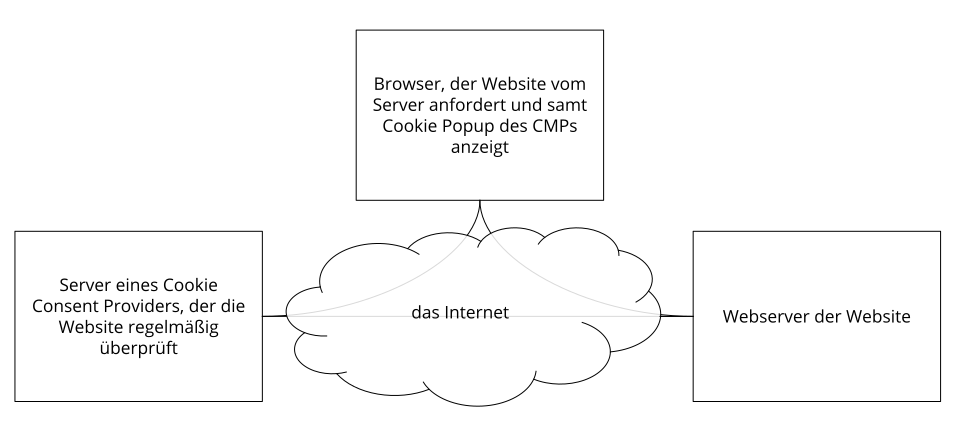
Warum verwenden wir ein Cookie-Verwaltungstool?
Unser Ziel ist es, Ihnen größtmögliche Transparenz beim Datenschutz zu bieten. Dazu sind wir auch gesetzlich verpflichtet. Wir möchten Sie so umfassend wie möglich über alle Tools und Cookies informieren, die Ihre Daten speichern und verarbeiten können. Sie haben das Recht zu entscheiden, welche Cookies Sie akzeptieren und welche nicht. Um Ihnen dieses Recht zu gewähren, müssen wir zunächst genau wissen, welche Cookies auf unserer Website platziert wurden. Dank eines Cookie-Management-Tools, das die Website regelmäßig auf alle vorhandenen Cookies überprüft, kennen wir alle Cookies und können Ihnen DSGVO-konforme Informationen darüber bereitstellen. Sie können Cookies dann über das Einwilligungssystem akzeptieren oder ablehnen.
Welche Daten werden verarbeitet?
Unser Cookie-Management-Tool ermöglicht Ihnen die individuelle Verwaltung jedes einzelnen Cookies und gibt Ihnen die volle Kontrolle über die Speicherung und Verarbeitung Ihrer Daten. Ihre Einwilligung wird gespeichert, damit wir Sie nicht bei jedem Besuch unserer Website erneut um Erlaubnis fragen müssen und diese im Bedarfsfall rechtlich nachweisen können. Die Speicherung erfolgt entweder in einem Opt-in-Cookie oder auf einem Server. Die Speicherdauer Ihrer Cookie-Einwilligung variiert je nach Anbieter des Cookie-Management-Tools. Diese Daten (wie pseudonyme Benutzer-ID, Zeitpunkt der Einwilligung, Details zu den Cookie-Kategorien oder -Tools, Browser- und Geräteinformationen) werden in der Regel bis zu zwei Jahre lang gespeichert.
Dauer der Datenverarbeitung
Wir informieren Sie im Folgenden über die Dauer der Datenverarbeitung, sofern uns weitere Informationen vorliegen. Grundsätzlich verarbeiten wir personenbezogene Daten nur so lange, wie dies für die Bereitstellung unserer Dienstleistungen und Produkte unbedingt erforderlich ist. Daten, die in Cookies gespeichert werden, werden unterschiedlich lange aufbewahrt. Einige Cookies werden gelöscht, sobald Sie die Website verlassen, während andere mehrere Jahre in Ihrem Browser gespeichert bleiben können. Die genaue Dauer der Datenverarbeitung hängt vom verwendeten Tool ab; in der Regel ist mit einer Speicherdauer von mehreren Jahren zu rechnen. Detaillierte Informationen zur Dauer der Datenverarbeitung finden Sie in der Regel in den jeweiligen Datenschutzrichtlinien der einzelnen Anbieter.
Widerspruchsrecht
Sie haben jederzeit das Recht und die Möglichkeit, Ihre Einwilligung zur Verwendung von Cookies zu widerrufen. Dies ist entweder über unser Cookie-Verwaltungstool oder über andere Opt-out-Funktionen möglich. Beispielsweise können Sie die Datenerfassung durch Cookies auch verhindern, indem Sie Cookies in Ihrem Browser verwalten, deaktivieren oder löschen.
Informationen zu spezifischen Cookie-Verwaltungstools finden Sie – sofern verfügbar – in den folgenden Abschnitten.
Rechtsgrundlage
Wenn Sie der Verwendung von Cookies zustimmen, werden Ihre personenbezogenen Daten über diese Cookies verarbeitet und gespeichert. Sofern wir aufgrund Ihrer Einwilligung (Art. 6 Abs. 1 lit. a DSGVO) berechtigt sind, Cookies zu verwenden, dient diese Einwilligung auch als Rechtsgrundlage für die Verwendung von Cookies und die Verarbeitung Ihrer Daten. Zur Verwaltung Ihrer Cookie-Einwilligung und um Ihnen deren Erteilung zu ermöglichen, nutzen wir eine Software zur Verwaltung von Cookie-Einwilligungen. Der Einsatz dieser Software ermöglicht uns den effizienten und gesetzeskonformen Betrieb der Website, was ein berechtigtes Interesse darstellt (Art. 6 Abs. 1 lit. f DSGVO).
Datenschutzrichtlinie des AdSimple Consent Managers
| AdSimple Consent Manager – Datenschutzerklärung (Zusammenfassung) 👥 Betroffene: Website-Besucher 🤝 Zweck: Einholung der Einwilligung für bestimmte Cookies und damit für die Nutzung bestimmter Tools 📓 Verarbeitete Daten: Daten zur Verwaltung Ihrer Cookie-Einstellungen, wie z. B. IP-Adresse, Zeitpunkt der Einwilligung, Art der Einwilligung und einzelne Einwilligungen. Weitere Details finden Sie weiter unten in dieser Datenschutzerklärung. 📅 Speicherdauer: Der verwendete Cookie läuft nach einem Jahr ab. ⚖️ Rechtsgrundlage: Art. 6 Abs. 1 lit. a DSGVO (Einwilligung), Art. 6 Abs. 1 lit. f DSGVO (berechtigte Interessen) |
Was ist der AdSimple Consent Manager?
Wir nutzen auf unserer Website den AdSimple Consent Manager der Softwareentwicklungs- und Online-Marketing-Firma AdSimple GmbH, Fabriksgasse 20, 2230 Gänserndorf. Der AdSimple Consent Manager ermöglicht es uns unter anderem, Ihnen einen umfassenden und DSGVO-konformen Cookie-Hinweis bereitzustellen, damit Sie entscheiden können, welche Cookies Sie zulassen und welche nicht. Durch die Nutzung dieser Software werden Ihre Daten an AdSimple übermittelt und dort gespeichert. In dieser Datenschutzerklärung informieren wir Sie darüber, warum wir den AdSimple Consent Manager verwenden, welche Daten übertragen und gespeichert werden und wie Sie diese Datenübertragung verhindern können.
Der AdSimple Consent Manager ist eine Software, die unsere Website scannt und alle vorhandenen Cookies identifiziert und kategorisiert. Darüber hinaus werden Sie als Website-Besucher über die Verwendung von Cookies mittels eines Cookie-Hinweises informiert und können selbst entscheiden, welche Cookies Sie zulassen und welche nicht.
Warum verwenden wir den AdSimple Consent Manager auf unserer Website?
Wir möchten Ihnen maximale Transparenz beim Datenschutz bieten. Um dies zu gewährleisten, müssen wir zunächst genau wissen, welche Cookies im Laufe der Zeit auf unserer Website platziert wurden. Da der Consent Manager von AdSimple unsere Website regelmäßig scannt und alle Cookies identifiziert, haben wir die volle Kontrolle über diese Cookies und können somit DSGVO-konform handeln. Dadurch können wir Sie präzise über die Verwendung von Cookies auf unserer Website informieren. Darüber hinaus erhalten Sie stets einen aktuellen und DSGVO-konformen Cookie-Hinweis und können per Kontrollkästchen selbst entscheiden, welche Cookies Sie akzeptieren oder blockieren.
Welche Daten werden vom AdSimple Consent Manager gespeichert?
Wenn Sie der Verwendung von Cookies auf unserer Website zustimmen, wird vom AdSimple Consent Manager der folgende Cookie gesetzt:
Name: acm_status
Wert: “:true,”statistics”:true,”marketing”:true,”socialmedia”:true,”settings”:true}
Zweck: Dieser Cookie speichert Ihren Einwilligungsstatus. Dadurch kann unsere Website Ihren aktuellen Status bei zukünftigen Besuchen lesen und berücksichtigen.
Ablaufdatum: nach einem Jahr
Wie lange und wo werden die Daten gespeichert?
Alle vom AdSimple Consent Manager erfassten Daten werden ausschließlich innerhalb der Europäischen Union übertragen und gespeichert. Die Daten werden auf den Servern von AdSimple bei der Hetzner GmbH in Deutschland gespeichert. Nur die AdSimple GmbH und die Hetzner GmbH haben Zugriff auf diese Daten.
Wie kann ich meine Daten löschen oder die Datenspeicherung verhindern?
Sie haben jederzeit das Recht, auf Ihre personenbezogenen Daten zuzugreifen und diese zu löschen. Sie können die Datenerfassung und -speicherung verhindern, beispielsweise indem Sie die Verwendung von Cookies über den Cookie-Hinweis ablehnen. Ihr Browser bietet Ihnen darüber hinaus weitere Möglichkeiten, die Datenverarbeitung zu verhindern oder Ihren Präferenzen entsprechend zu verwalten. Die Cookie-Verwaltung funktioniert je nach Browser etwas anders. Im Abschnitt „Cookies“ finden Sie Links zu den Anleitungen für die gängigsten Browser.
Rechtsgrundlage
Wenn Sie der Verwendung von Cookies zustimmen, werden Ihre personenbezogenen Daten über diese Cookies verarbeitet und gespeichert. Sofern wir aufgrund Ihrer Einwilligung (Art. 6 Abs. 1 lit. a DSGVO) Cookies verwenden dürfen, dient diese Einwilligung auch als Rechtsgrundlage für die Verwendung von Cookies und die Verarbeitung Ihrer Daten. Mit dem AdSimple Consent Manager verwalten Sie Ihre Cookie-Einwilligung und können diese erteilen. Die Nutzung dieser Software ermöglicht uns den effizienten und gesetzeskonformen Betrieb der Website, was ein berechtigtes Interesse darstellt (Art. 6 Abs. 1 lit. f DSGVO).
Wir hoffen, Ihnen einen guten Überblick über den Datenverkehr und die Datenverarbeitung durch den AdSimple Consent Manager gegeben zu haben. Wenn Sie mehr über dieses Tool erfahren möchten, empfehlen wir Ihnen, die Beschreibungsseite unter https://www.adsimple.at/consent-manager/ zu besuchen .
Datenschutzrichtlinie des Consent Managers
Wir nutzen auf unserer Website den Consentmanager, eine Cookie-Banner-Lösung des Händlerbundes. Dienstleister ist das deutsche Unternehmen Händlerbund Management AG, Torgauer Str. 233, ArcusPark / Haus B, 04347 Leipzig, Deutschland.
Mehr Informationen über die im Rahmen der Nutzung von consentmanager verarbeiteten Daten finden Sie in der Datenschutzerklärung unter https://www.haendlerbund.de/de/datenschutzerklaerung .
Cookiebot-Datenschutzrichtlinie
| Cookiebot-Datenschutzrichtlinie – Zusammenfassung 👥 Betroffene: Website-Besucher 🤝 Zweck: Einholung der Einwilligung für bestimmte Cookies und damit für die Nutzung bestimmter Tools 📓 Verarbeitete Daten: Daten zur Verwaltung der Cookie-Einstellungen, wie IP-Adresse, Zeitpunkt der Einwilligung, Art der Einwilligung und individuelle Einwilligungen. Weitere Details finden Sie in der Dokumentation der einzelnen Tools. 📅 Speicherdauer: Die Daten werden nach einem Jahr gelöscht. ⚖️ Rechtsgrundlage: Art. 6 Abs. 1 lit. a DSGVO (Einwilligung), Art. 6 Abs. 1 lit. f DSGVO (berechtigte Interessen) |
Was ist Cookiebot?
Wir nutzen auf unserer Website Funktionen des Anbieters Cookiebot. Cookiebot wird von Cybot A/S, Havnegade 39, 1058 Kopenhagen, Dänemark, betrieben. Cookiebot ermöglicht es uns unter anderem, Ihnen einen umfassenden Cookie-Hinweis (auch Cookie-Banner oder Cookie-Benachrichtigung genannt) anzuzeigen. Bei der Nutzung dieser Funktion können Ihre Daten an Cookiebot oder Cybot gesendet, dort gespeichert und verarbeitet werden. In dieser Datenschutzerklärung informieren wir Sie darüber, warum wir Cookiebot verwenden, welche Daten übertragen werden und wie Sie diese Datenübertragung verhindern können.
Cookiebot ist ein Softwareprodukt der Firma Cybot. Die Software generiert automatisch einen DSGVO-konformen Cookie-Hinweis für unsere Website-Besucher. Darüber hinaus scannt, überwacht und analysiert die Technologie hinter Cookiebot alle Cookies und Tracking-Maßnahmen auf unserer Website.
Warum verwenden wir Cookiebot auf unserer Website?
Wir nehmen Datenschutz sehr ernst. Wir möchten Ihnen genau zeigen, was auf unserer Website passiert und welche Ihrer Daten gespeichert werden. Cookiebot hilft uns dabei, einen klaren Überblick über alle unsere Cookies (Erstanbieter- und Drittanbieter-Cookies) zu behalten. So können wir Sie präzise und transparent über die Verwendung von Cookies auf unserer Website informieren. Sie erhalten stets einen aktuellen und datenschutzkonformen Cookie-Hinweis und können selbst entscheiden, welche Cookies Sie zulassen und welche nicht.
Welche Daten speichert Cookiebot?
Wenn Sie Cookies zulassen, werden die folgenden Daten an Cybot übertragen, dort gespeichert und verarbeitet.
- IP-Adresse (anonymisiert, die letzten 3 Ziffern sind auf 0 gesetzt)
- Datum und Uhrzeit Ihrer Zustimmung
- unsere Website-URL
- technische Browserdaten
- verschlüsselter, anonymer Schlüssel
- die von Ihnen zugelassenen Cookies (als Nachweis Ihrer Einwilligung)
Die folgenden Cookies werden von Cookiebot gesetzt, wenn Sie der Verwendung von Cookies zugestimmt haben:
Name: CookieConsent
Wert: {stamp:’P7to4eNgIHvJvDerjKneBsmJQd9113092826-2
Zweck: Dieser Cookie speichert Ihren Einwilligungsstatus. Dadurch kann unsere Website Ihren aktuellen Status bei zukünftigen Besuchen lesen und berücksichtigen.
Ablaufdatum: nach einem Jahr
Name: CookieConsentBulkTicket
Wert: kDSPWpA%2fjhljZKClPqsncfR8SveTnNWhys5NojaxdFYBPjZ2PaDnUw%3d%3113092826-6
Zweck: Dieser Cookie wird gesetzt, wenn Sie alle Cookies zulassen und somit die „kollektive Einwilligung“ aktivieren. Der Cookie speichert dann seine eigene zufällige und eindeutige ID.
Ablaufdatum: nach einem Jahr
Hinweis: Bitte beachten Sie, dass es sich hierbei um eine Beispielliste handelt, die keinen Anspruch auf Vollständigkeit erhebt. Weitere Informationen zu möglicherweise verwendeten Cookies finden Sie in der Cookie-Erklärung unter https://www.cookiebot.com/de/cookie-declaration/ .
Laut Cybots Datenschutzrichtlinie verkauft das Unternehmen keine personenbezogenen Daten. Cybot teilt jedoch Daten mit vertrauenswürdigen Dritt- oder Subunternehmen, die das Unternehmen bei der Erreichung seiner Geschäftsziele unterstützen. Die Weitergabe von Daten erfolgt auch, wenn dies gesetzlich vorgeschrieben ist.
Wie lange und wo werden die Daten gespeichert?
Alle erhobenen Daten werden ausschließlich innerhalb der Europäischen Union übertragen, gespeichert und weitergeleitet. Die Daten werden in einem Azure-Rechenzentrum (Cloud-Anbieter: Microsoft) gespeichert. Weitere Informationen zu allen Azure-Regionen finden Sie unter https://azure.microsoft.com/de-de/explore/global-infrastructure/geographies/ . Alle Nutzerdaten werden von Cookiebot 12 Monate nach der Registrierung (Cookie-Einwilligung) oder unmittelbar nach Beendigung des Cookiebot-Dienstes gelöscht.
Wie kann ich meine Daten löschen oder die Datenspeicherung verhindern?
Sie haben jederzeit das Recht, auf Ihre personenbezogenen Daten zuzugreifen und diese zu löschen. Sie können die Datenerfassung und -speicherung verhindern, beispielsweise indem Sie die Verwendung von Cookies über den Cookie-Hinweis ablehnen. Ihr Browser bietet Ihnen darüber hinaus weitere Möglichkeiten, die Datenverarbeitung zu verhindern oder Ihren Präferenzen entsprechend zu verwalten. Die Cookie-Verwaltung funktioniert je nach Browser etwas anders. Im Abschnitt „Cookies“ finden Sie Links zu den Anleitungen für die gängigsten Browser.
Rechtsgrundlage
Wenn Sie der Verwendung von Cookies zustimmen, werden Ihre personenbezogenen Daten über diese Cookies verarbeitet und gespeichert. Sofern wir aufgrund Ihrer Einwilligung (Art. 6 Abs. 1 lit. a DSGVO) berechtigt sind, Cookies zu verwenden, dient diese Einwilligung auch als Rechtsgrundlage für die Verwendung von Cookies und die Verarbeitung Ihrer Daten. Zur Verwaltung Ihrer Cookie-Einwilligung und um Ihnen deren Erteilung zu ermöglichen, verwenden wir Cookiebot. Der Einsatz dieser Software ermöglicht uns den effizienten und gesetzeskonformen Betrieb der Website, was ein berechtigtes Interesse darstellt (Art. 6 Abs. 1 lit. f DSGVO).
Wenn Sie mehr über die Datenschutzrichtlinien von „Cookiebot“ oder des dahinterstehenden Unternehmens Cybot erfahren möchten, empfehlen wir Ihnen, die Datenschutzrichtlinien unter https://www.cookiebot.com/de/privacy-policy/ zu lesen .
Cookie-Datenschutzrichtlinie
Wir verwenden auf unserer Website Cookiefirst, ein Tool zur Verwaltung von Cookie-Einwilligungen. Anbieter des Dienstes ist das niederländische Unternehmen Digital Data Solutions BV, Plantage Middenlaan 42a, 1018DH Amsterdam, Niederlande.
Weitere Informationen zu den durch die Nutzung von Cookiefirst verarbeiteten Daten finden Sie in der Datenschutzerklärung unter https://cookiefirst.com/legal/general-terms-conditions/ .
OneTrust-Datenschutzrichtlinie
Wir nutzen auf unserer Website OneTrust, ein Tool zum Datenschutzmanagement. Anbieter des Dienstes ist das italienische Unternehmen iubenda srl, Via San Raffaele, 1 – 20121 Mailand, Italien.
Weitere Informationen zu den durch die Nutzung von OneTrust verarbeiteten Daten finden Sie in der Datenschutzerklärung unter https://www.onetrust.com/privacy/ .
Sicherheit & Anti-Spam
| Zusammenfassung der Sicherheits- und Anti-Spam-Datenschutzrichtlinie 👥 Betroffene: Besucher der Website 🤝 Zweck: Cybersicherheit 📓 Verarbeitete Daten: Daten wie Ihre IP-Adresse, Ihr Name oder technische Daten wie Ihre Browserversion. Weitere Details finden Sie unten und in den einzelnen Datenschutzrichtlinien. 📅 Speicherdauer: In den meisten Fällen werden die Daten so lange gespeichert, bis sie zur Erbringung der Dienstleistung nicht mehr benötigt werden. ⚖️ Rechtsgrundlage: Art. 6 Abs. 1 lit. a DSGVO (Einwilligung), Art. 6 Abs. 1 lit. f DSGVO (berechtigte Interessen) |
Was ist Sicherheits- und Anti-Spam-Software?
Mit sogenannter Sicherheits- und Anti-Spam-Software können wir uns vor Spam- und Phishing-E-Mails sowie anderen potenziellen Cyberangriffen schützen. Spam bezeichnet unerwünschte Werbe-E-Mails, die massenhaft versendet werden. Diese E-Mails werden auch als Junk-Mail bezeichnet und können sogar Kosten verursachen. Phishing-E-Mails hingegen sind Nachrichten, die durch gefälschte Nachrichten oder Websites Ihr Vertrauen gewinnen sollen, um an Ihre persönlichen Daten zu gelangen. Anti-Spam-Software schützt typischerweise vor unerwünschten Spam-Nachrichten oder schädlichen E-Mails, die beispielsweise Viren auf Ihr System einschleusen könnten. Wir verwenden außerdem allgemeine Firewalls und Sicherheitssysteme, die unsere Computer vor unerwünschten Netzwerkangriffen schützen.
Warum verwenden wir Sicherheits- und Anti-Spam-Software?
Wir legen besonderen Wert auf die Sicherheit unserer Website. Denn es geht nicht nur um unsere Sicherheit, sondern vor allem um Ihre. Leider sind Cyberbedrohungen in der IT-Welt und im Internet mittlerweile allgegenwärtig. Hacker versuchen häufig, mithilfe von Cyberangriffen persönliche Daten aus IT-Systemen zu stehlen. Daher ist ein robustes Verteidigungssystem unerlässlich. Ein Sicherheitssystem überwacht alle ein- und ausgehenden Verbindungen zu unserem Netzwerk und unseren Computern. Um einen noch besseren Schutz vor Cyberangriffen zu gewährleisten, nutzen wir zusätzlich zu den standardmäßigen Sicherheitssystemen auf unseren Computern externe Sicherheitsdienste. Dies verhindert effektiv unautorisierten Datenverkehr und schützt uns vor Cyberkriminalität.
Welche Daten werden von Sicherheits- und Anti-Spam-Software verarbeitet?
Welche Daten genau erfasst und gespeichert werden, hängt selbstverständlich vom jeweiligen Dienst ab. Wir sind jedoch stets bestrebt, nur Programme einzusetzen, die möglichst wenige Daten erheben oder nur die für die Erbringung des angebotenen Dienstes notwendigen Daten speichern. Im Allgemeinen kann der Dienst Daten wie Name, Adresse, IP-Adresse, E-Mail-Adresse und technische Daten wie Browsertyp und -version speichern. Leistungs- und Protokolldaten können ebenfalls erfasst werden, um potenzielle Bedrohungen frühzeitig zu erkennen. Diese Daten werden im Rahmen der Dienste und in Übereinstimmung mit den geltenden Gesetzen verarbeitet. Für US-Anbieter umfasst dies die DSGVO (mittels Standardvertragsklauseln). In einigen Fällen arbeiten diese Sicherheitsdienste auch mit Drittanbietern zusammen, die Daten gemäß unseren Anweisungen und in Übereinstimmung mit Datenschutzrichtlinien und anderen Sicherheitsmaßnahmen speichern und/oder verarbeiten. Die Datenspeicherung erfolgt üblicherweise über Cookies.
Dauer der Datenverarbeitung
Wir informieren Sie im Folgenden über die Dauer der Datenverarbeitung, sofern uns weitere Informationen vorliegen. Sicherheitsprogramme speichern beispielsweise Daten, bis Sie oder wir die Einwilligung zur Datenspeicherung widerrufen. Personenbezogene Daten werden grundsätzlich nur so lange gespeichert, wie es für die Erbringung der Dienstleistungen unbedingt erforderlich ist. Leider fehlen uns in vielen Fällen genaue Angaben der Anbieter zur Speicherdauer.
Widerspruchsrecht
Sie haben jederzeit das Recht und die Möglichkeit, Ihre Einwilligung zur Verwendung von Cookies oder Sicherheitssoftware von Drittanbietern zu widerrufen. Dies ist entweder über unser Cookie-Verwaltungstool oder über andere Opt-out-Funktionen möglich. Beispielsweise können Sie die Datenerfassung durch Cookies auch verhindern, indem Sie Cookies in Ihrem Browser verwalten, deaktivieren oder löschen.
Da solche Sicherheitsdienste möglicherweise auch Cookies verwenden, empfehlen wir Ihnen, unsere allgemeine Datenschutzrichtlinie zu Cookies zu lesen. Um genau zu erfahren, welche Daten über Sie gespeichert und verarbeitet werden, sollten Sie die Datenschutzrichtlinien der jeweiligen Tools lesen.
Rechtsgrundlage
Wir nutzen Sicherheitsdienste vor allem aufgrund unserer berechtigten Interessen (Art. 6 Abs. 1 lit. f DSGVO) an einem guten Sicherheitssystem gegen diverse Cyberangriffe.
Bestimmte Datenverarbeitungsvorgänge, insbesondere die Verwendung von Cookies und Sicherheitsfunktionen, erfordern Ihre Einwilligung. Wenn Sie der Verarbeitung und Speicherung Ihrer Daten durch integrierte Sicherheitsdienste zugestimmt haben, dient diese Einwilligung als Rechtsgrundlage für die Datenverarbeitung (Art. 6 Abs. 1 lit. a DSGVO). Die meisten der von uns verwendeten Dienste platzieren Cookies in Ihrem Browser, um Daten zu speichern. Daher empfehlen wir Ihnen, unsere Datenschutzerklärung bezüglich Cookies sorgfältig zu lesen und die Datenschutzerklärung bzw. Cookie-Richtlinie des jeweiligen Dienstanbieters einzusehen.
Informationen zu spezifischen Werkzeugen – sofern verfügbar – finden Sie in den folgenden Abschnitten.
Cloud-Dienste
| Zusammenfassung der Datenschutzrichtlinie für Cloud-Dienste 👥 Betroffene Parteien: Wir als Website-Betreiber und Sie als Website-Besucher 🤝 Zweck: Sicherheit und Datenspeicherung 📓 Verarbeitete Daten: Daten wie Ihre IP-Adresse, Ihr Name oder technische Daten wie Ihre Browserversion. Weitere Details finden Sie unten und in den jeweiligen Datenschutztexten oder in den Datenschutzrichtlinien der Anbieter. 📅 Speicherdauer: In den meisten Fällen werden die Daten so lange gespeichert, bis sie zur Erbringung der Dienstleistung nicht mehr benötigt werden. ⚖️ Rechtsgrundlage: Art. 6 Abs. 1 lit. a DSGVO (Einwilligung), Art. 6 Abs. 1 lit. f DSGVO (berechtigte Interessen) |
Was sind Cloud-Dienste?
Cloud-Dienste stellen uns als Website-Betreibern Speicherplatz und Rechenleistung über das Internet zur Verfügung. Daten können über das Internet an ein externes System übertragen, dort verarbeitet und gespeichert werden. Der jeweilige Cloud-Anbieter verwaltet diese Daten. Je nach Bedarf können Privatpersonen oder Unternehmen den benötigten Speicherplatz oder die benötigte Rechenleistung auswählen. Der Zugriff auf Cloud-Speicher erfolgt über eine API oder Speicherprotokolle. API steht für Application Programming Interface (Programmierschnittstelle) und bezeichnet eine Programmierschnittstelle, die Software- und Hardwarekomponenten miteinander verbindet.
Warum nutzen wir Cloud-Dienste?
Wir nutzen Cloud-Dienste aus verschiedenen Gründen. Sie ermöglichen uns die sichere Speicherung unserer Daten. Darüber hinaus können wir von verschiedenen Standorten und Geräten darauf zugreifen, was uns mehr Flexibilität bietet und unsere Arbeitsabläufe optimiert. Cloud-Speicher spart uns außerdem Kosten, da wir keine eigene Datenspeicher- und Sicherheitsinfrastruktur aufbauen und verwalten müssen. Die zentrale Speicherung unserer Daten in der Cloud ermöglicht es uns zudem, unsere Anwendungen zu erweitern und unsere Informationen deutlich effektiver zu verwalten.
Als Websitebetreiber und Unternehmen nutzen wir Cloud-Dienste primär für unsere eigenen Zwecke. Beispielsweise verwenden wir diese Dienste zur Kalenderverwaltung und zur Speicherung von Dokumenten und anderen wichtigen Informationen in der Cloud. Dabei können jedoch auch Ihre personenbezogenen Daten gespeichert werden. Dies ist beispielsweise der Fall, wenn Sie uns Ihre Kontaktdaten (wie Name und E-Mail-Adresse) mitteilen und wir unsere Kundendaten bei einem Cloud-Anbieter speichern. Folglich können Daten, die wir von Ihnen verarbeiten, auch auf externen Servern gespeichert und verarbeitet werden. Wenn wir bestimmte Formulare oder Inhalte von Cloud-Diensten auf unserer Website anbieten, können zudem Cookies für Webanalyse- und Werbezwecke gesetzt werden. Diese Cookies speichern außerdem Ihre Einstellungen (z. B. Ihre bevorzugte Sprache), sodass Sie bei Ihrem nächsten Besuch auf unserer Website Ihre gewohnte Webumgebung vorfinden.
Welche Daten werden von Cloud-Diensten verarbeitet?
Viele der Daten, die wir in der Cloud speichern, sind nicht personenbezogen. Einige Daten fallen jedoch gemäß der DSGVO unter die Kategorie personenbezogener Daten. Dazu gehören häufig Kundendaten wie Name, Adresse, IP-Adresse oder Telefonnummer sowie technische Geräteinformationen. Auch Videos, Bilder und Audiodateien können in der Cloud gespeichert werden. Wie genau die Daten erfasst und gespeichert werden, hängt vom jeweiligen Dienst ab. Wir bemühen uns, ausschließlich Dienste zu nutzen, die Daten mit einem hohen Maß an Vertrauenswürdigkeit und Professionalität behandeln. Dienste wie Amazon Drive haben in der Regel Zugriff auf die gespeicherten Dateien, um ihre eigenen Dienste bereitzustellen. Diese Dienste benötigen jedoch Berechtigungen, beispielsweise das Recht, Dateien aus Sicherheitsgründen zu kopieren. Die Daten werden im Rahmen der Dienste und in Übereinstimmung mit den geltenden Gesetzen verarbeitet und verwaltet. Für US-Anbieter umfasst dies die DSGVO (mittels Standardvertragsklauseln). In einigen Fällen arbeiten diese Cloud-Dienste auch mit Drittanbietern zusammen, die Daten nach Anweisung und gemäß Datenschutzrichtlinien und anderen Sicherheitsmaßnahmen verarbeiten. Wir möchten nochmals betonen, dass alle bekannten Cloud-Dienste (wie Amazon Drive, Google Drive oder Microsoft OneDrive) das Recht auf Zugriff auf gespeicherte Inhalte benötigen, um ihren eigenen Service entsprechend anbieten und optimieren zu können.
Dauer der Datenverarbeitung
Wir informieren Sie im Folgenden über die Dauer der Datenverarbeitung, sofern uns weitere Informationen vorliegen. Cloud-Dienste speichern Daten in der Regel so lange, bis Sie oder wir die Einwilligung zur Datenspeicherung widerrufen oder die Daten löschen. Personenbezogene Daten werden grundsätzlich nur so lange gespeichert, wie es für die Erbringung der Dienste unbedingt erforderlich ist. Die endgültige Löschung von Daten aus der Cloud kann jedoch mehrere Monate dauern. Dies liegt daran, dass die Daten üblicherweise nicht auf einem einzigen Server, sondern auf mehreren Servern verteilt gespeichert sind.
Widerspruchsrecht
Sie haben jederzeit das Recht und die Möglichkeit, Ihre Einwilligung zur Datenspeicherung in der Cloud zu widerrufen. Auch bei Verwendung von Cookies haben Sie dieses Recht. Dies können Sie entweder über unser Cookie-Verwaltungstool oder über andere Opt-out-Funktionen tun. So können Sie beispielsweise die Datenerfassung durch Cookies verhindern, indem Sie Cookies in Ihrem Browser verwalten, deaktivieren oder löschen. Wir empfehlen Ihnen außerdem, unsere allgemeine Datenschutzerklärung zu Cookies zu lesen. Um genau zu erfahren, welche Ihrer Daten gespeichert und verarbeitet werden, sollten Sie die Datenschutzrichtlinien der jeweiligen Cloud-Anbieter lesen.
Rechtsgrundlage
Wir nutzen Cloud-Dienste vorwiegend aufgrund unserer berechtigten Interessen (Art. 6 Abs. 1 lit. f DSGVO) in einem guten Sicherheits- und Speichersystem.
Bestimmte Verarbeitungsvorgänge, insbesondere die Verwendung von Cookies und Speicherfunktionen, erfordern Ihre Einwilligung. Wenn Sie der Verarbeitung und Speicherung Ihrer Daten durch Cloud-Dienste zugestimmt haben, dient diese Einwilligung als Rechtsgrundlage für die Datenverarbeitung (Art. 6 Abs. 1 lit. a DSGVO). Die meisten der von uns genutzten Dienste platzieren Cookies in Ihrem Browser, um Daten zu speichern. Daher empfehlen wir Ihnen, unsere Datenschutzerklärung bezüglich Cookies sorgfältig zu lesen und die Datenschutzerklärung bzw. Cookie-Richtlinie des jeweiligen Dienstanbieters einzusehen.
Informationen zu spezifischen Werkzeugen – sofern verfügbar – finden Sie in den folgenden Abschnitten.
Google Cloud-Datenschutzrichtlinie
Wir nutzen für unsere Website Google Cloud, einen Online-Speicherdienst für Dateien, Fotos und Videos. Anbieter des Dienstes ist das amerikanische Unternehmen Google Inc. Für Europa ist Google Ireland Limited (Gordon House, Barrow Street, Dublin 4, Irland) für alle Google-Dienste zuständig.
Google verarbeitet Ihre Daten unter anderem in den USA. Google ist aktiver Teilnehmer des EU-US-Datenschutzrahmens, der die korrekte und sichere Übermittlung personenbezogener Daten von EU-Bürgern in die USA regelt. Weitere Informationen finden Sie unter https://commission.europa.eu/document/fa09cbad-dd7d-4684-ae60-be03fcb0fddf_en .
Google verwendet darüber hinaus sogenannte Standardvertragsklauseln (Artikel 46 Absätze 2 und 3 der DSGVO). Standardvertragsklauseln (SCCs) sind von der Europäischen Kommission bereitgestellte Musterklauseln, die sicherstellen sollen, dass Ihre Daten auch bei der Übermittlung und Speicherung in Drittländern (wie den USA) den europäischen Datenschutzstandards entsprechen. Durch das EU-US-Datenschutzabkommen und die Standardvertragsklauseln verpflichtet sich Google, bei der Verarbeitung Ihrer relevanten Daten die europäischen Datenschutzstandards einzuhalten, selbst wenn diese in den USA gespeichert, verarbeitet und verwaltet werden. Diese Klauseln basieren auf einem Durchführungsbeschluss der Europäischen Kommission. Sie finden den Beschluss und die zugehörigen Standardvertragsklauseln unter anderem hier: https://eur-lex.europa.eu/eli/dec_impl/2021/914/oj?locale=de
Google stellt eine Datenverarbeitungsvereinbarung gemäß Artikel 28 DSGVO bereit, die als Rechtsgrundlage für den Datenschutz in unserer Kundenbeziehung mit Google dient. Diese Vereinbarung bezieht sich auf die EU-Standardvertragsklauseln. Die Bedingungen der Datenverarbeitung finden Sie hier: https://business.safety.google/intl/de/adsprocessorterms/
Weitere Informationen zu den durch die Nutzung von Google Cloud verarbeiteten Daten finden Sie in der Datenschutzerklärung unter https://policies.google.com/privacy?hl=de .
Einführung in Zahlungsanbieter
| Zusammenfassung der Datenschutzerklärung des Zahlungsanbieters 👥 Betroffene: Besucher der Website 🤝 Zweck: Ermöglichung und Optimierung des Zahlungsvorgangs auf unserer Website 📓 Verarbeitete Daten: Daten wie Name, Adresse, Bankverbindung (Kontonummer, Kreditkartennummer, Passwörter, TANs usw.), IP-Adresse und Vertragsdaten. Weitere Details finden Sie im jeweiligen Tool des Zahlungsanbieters. 📅 Speicherdauer: Abhängig vom verwendeten Zahlungsanbieter ⚖️ Rechtsgrundlage: Art. 6 Abs. 1 lit. b DSGVO (Vertragserfüllung) |
Was ist ein Zahlungsanbieter?
Wir nutzen auf unserer Website Online-Zahlungssysteme, die einen sicheren und reibungslosen Zahlungsvorgang für Sie und uns gewährleisten. Dies kann die Übermittlung, Speicherung und Verarbeitung personenbezogener Daten an den jeweiligen Zahlungsanbieter beinhalten. Diese Zahlungsanbieter sind Online-Zahlungssysteme, die es Ihnen ermöglichen, Bestellungen per Online-Banking aufzugeben. Die Zahlungsabwicklung erfolgt durch Ihren gewählten Zahlungsanbieter, und wir erhalten anschließend eine Zahlungsbestätigung. Diese Methode steht allen Nutzern mit einem aktiven Online-Banking-Konto und PIN/TAN-Authentifizierung zur Verfügung. Nur noch wenige Banken bieten solche Zahlungsmethoden an oder akzeptieren sie.
Warum nutzen wir Zahlungsanbieter auf unserer Website?
Selbstverständlich möchten wir Ihnen mit unserer Website und dem integrierten Onlineshop den bestmöglichen Service bieten, damit Sie sich bei uns wohlfühlen und unsere Angebote optimal nutzen können. Wir wissen, dass Ihre Zeit wertvoll ist und insbesondere die Zahlungsabwicklung schnell und reibungslos erfolgen muss. Deshalb bieten wir Ihnen verschiedene Zahlungsanbieter an. Sie können Ihren bevorzugten Anbieter auswählen und wie gewohnt bezahlen.
Welche Daten werden verarbeitet?
Welche Daten genau verarbeitet werden, hängt selbstverständlich vom jeweiligen Zahlungsanbieter ab. In der Regel werden jedoch Daten wie Name, Adresse und Bankverbindung (Kontonummer, Kreditkartennummer, Passwörter, TANs usw.) gespeichert. Diese Daten sind für die Abwicklung einer Transaktion erforderlich. Darüber hinaus können Vertrags- und Nutzerdaten, beispielsweise wann Sie unsere Website besuchen, welche Inhalte Sie interessieren oder welche Unterseiten Sie anklicken, gespeichert werden. Die meisten Zahlungsanbieter speichern außerdem Ihre IP-Adresse und Informationen über den von Ihnen verwendeten Computer.
Die Daten werden in der Regel auf den Servern der Zahlungsanbieter gespeichert und verarbeitet. Wir als Websitebetreiber erhalten diese Daten nicht. Wir werden lediglich darüber informiert, ob die Zahlung erfolgreich war oder nicht. Zur Überprüfung der Identität und Kreditwürdigkeit können Zahlungsanbieter Daten an die zuständigen Behörden weiterleiten. Alle Zahlungsvorgänge unterliegen stets den Allgemeinen Geschäftsbedingungen und Datenschutzbestimmungen des jeweiligen Anbieters. Bitte lesen Sie daher immer die Allgemeinen Geschäftsbedingungen und die Datenschutzbestimmungen des Zahlungsanbieters. Sie haben außerdem jederzeit das Recht, Ihre Daten löschen oder berichtigen zu lassen. Bitte wenden Sie sich bezüglich Ihrer Rechte (Widerrufsrecht, Auskunftsrecht und Betroffenenrechte) an den jeweiligen Dienstanbieter.
Dauer der Datenverarbeitung
Wir informieren Sie im Folgenden über die Dauer der Datenverarbeitung, sofern uns hierzu weitere Informationen vorliegen. Grundsätzlich verarbeiten wir personenbezogene Daten nur so lange, wie dies für die Erbringung unserer Dienstleistungen und Produkte unbedingt erforderlich ist. In Fällen gesetzlicher Verpflichtungen, wie beispielsweise im Bereich der Buchhaltung, kann diese Speicherdauer überschritten werden. So bewahren wir beispielsweise Buchhaltungsunterlagen zu einem Vertrag (Rechnungen, Verträge, Kontoauszüge etc.) 10 Jahre lang (§ 147 AO) und andere relevante Geschäftsunterlagen 6 Jahre lang (§ 247 HGB) nach ihrer Erstellung auf.
Widerspruchsrecht
Sie haben jederzeit das Recht, Ihre personenbezogenen Daten einzusehen, zu berichtigen und zu löschen. Bei Fragen können Sie sich auch an die Verantwortlichen Ihres Zahlungsanbieters wenden. Die Kontaktdaten finden Sie entweder in unserer Datenschutzerklärung oder auf der Website des jeweiligen Zahlungsanbieters.
Sie können die von Zahlungsanbietern in Ihrem Browser verwendeten Cookies löschen, deaktivieren oder verwalten. Die Vorgehensweise ist je nach Browser unterschiedlich. Bitte beachten Sie jedoch, dass dies die Zahlungsabwicklung beeinträchtigen kann.
Rechtsgrundlage
Wir bieten daher Dienstleistungen zur Abwicklung vertraglicher oder rechtlicher Beziehungen an (Art. 6 Abs. 1 lit. b DSGVO). Neben traditionellen Banken und Kreditinstituten stehen Ihnen auch andere Zahlungsdienstleister zur Verfügung. Die Datenschutzrichtlinien der einzelnen Zahlungsanbieter (wie z. B. Amazon Payments, Apple Pay oder Discover) geben Ihnen einen detaillierten Überblick über die Datenverarbeitung und -speicherung. Darüber hinaus können Sie sich bei Fragen zum Datenschutz jederzeit an die jeweiligen Verantwortlichen wenden.
Informationen zu einzelnen Zahlungsanbietern finden Sie – sofern verfügbar – in den folgenden Abschnitten.
EPS-Übertragungs-Datenschutzrichtlinie
Wir nutzen auf unserer Website eps-Überweisung, einen Online-Zahlungsdienst. Anbieter ist die österreichische Firma Stuzza GmbH, Frankgasse 10/8, 1090 Wien, Österreich.
Mehr Informationen über die im Rahmen von EPS-Übertragungen verarbeiteten Daten finden Sie in der Datenschutzerklärung unter https://eservice.psa.at/de/datenschutzerklaerung.html .
Google Pay-Datenschutzrichtlinie
Wir nutzen auf unserer Website den Online-Zahlungsdienstleister Google Pay. Anbieter ist das amerikanische Unternehmen Google Inc. Für Europa ist Google Ireland Limited (Gordon House, Barrow Street, Dublin 4, Irland) für alle Google-Dienste zuständig.
Google verarbeitet Ihre Daten unter anderem in den USA. Google ist aktiver Teilnehmer des EU-US-Datenschutzrahmens, der die korrekte und sichere Übermittlung personenbezogener Daten von EU-Bürgern in die USA regelt. Weitere Informationen finden Sie unter https://commission.europa.eu/document/fa09cbad-dd7d-4684-ae60-be03fcb0fddf_en .
Google verwendet darüber hinaus sogenannte Standardvertragsklauseln (Artikel 46 Absätze 2 und 3 der DSGVO). Standardvertragsklauseln (SCCs) sind von der Europäischen Kommission bereitgestellte Musterklauseln, die sicherstellen sollen, dass Ihre Daten auch bei der Übermittlung und Speicherung in Drittländern (wie den USA) den europäischen Datenschutzstandards entsprechen. Durch das EU-US-Datenschutzabkommen und die Standardvertragsklauseln verpflichtet sich Google, bei der Verarbeitung Ihrer relevanten Daten die europäischen Datenschutzstandards einzuhalten, selbst wenn diese in den USA gespeichert, verarbeitet und verwaltet werden. Diese Klauseln basieren auf einem Durchführungsbeschluss der Europäischen Kommission. Sie finden den Beschluss und die zugehörigen Standardvertragsklauseln unter anderem hier: https://eur-lex.europa.eu/eli/dec_impl/2021/914/oj?locale=de
Die Datenverarbeitungsbedingungen für Google-Werbeprodukte (Google Ads Controller-Controller Data Protection Terms), die auf die Standardvertragsklauseln verweisen, finden Sie unter https://business.safety.google/adscontrollerterms/ .
Mehr Informationen über die im Rahmen der Nutzung von Google Pay verarbeiteten Daten finden Sie in der Datenschutzerklärung unter https://policies.google.com/privacy .
Datenschutzrichtlinie für Klarna Checkout
| Klarna Checkout Datenschutzerklärung – Zusammenfassung 👥 Betroffene: Besucher der Website 🤝 Zweck: Optimierung des Zahlungsvorgangs auf unserer Website 📓 Verarbeitete Daten: Daten wie Name, Adresse, Bankverbindung (Kontonummer, Kreditkartennummer, Passwörter, TANs usw.), IP-Adresse und Vertragsdaten. Weitere Details finden Sie unten in dieser Datenschutzerklärung. 📅 Speicherdauer: Die Daten werden so lange gespeichert, wie Klarna sie für den Verarbeitungszweck benötigt. ⚖️ Rechtsgrundlage: Art. 6 Abs. 1 lit. c DSGVO (Rechtliche Verpflichtung), Art. 6 Abs. 1 lit. f DSGVO (Berechtigte Interessen) |
Was ist Klarna Checkout?
Wir nutzen auf unserer Website das Online-Zahlungssystem Klarna Checkout der schwedischen Klarna Bank AB. Die Klarna Bank hat ihren Sitz in Sveavägen 46, 111 34 Stockholm, Schweden. Wenn Sie diesen Service nutzen, werden Ihre personenbezogenen Daten an Klarna übermittelt, dort gespeichert und verarbeitet. Diese Datenschutzerklärung gibt Ihnen einen Überblick über die Datenverarbeitungspraktiken von Klarna.
Klarna Checkout ist ein Zahlungssystem für Online-Bestellungen. Der Nutzer wählt seine Zahlungsmethode, und Klarna Checkout übernimmt den gesamten Zahlungsvorgang. Nach der ersten Zahlung und Eingabe der Daten lassen sich zukünftige Online-Einkäufe noch schneller und einfacher abwickeln. Das Klarna-System erkennt bestehende Kunden, sobald deren E-Mail-Adresse und Postleitzahl eingegeben wurden.
Warum nutzen wir Klarna Checkout für unsere Website?
Unser Ziel mit unserer Website und dem integrierten Onlineshop ist es, Ihnen den bestmöglichen Service zu bieten. Dazu gehören nicht nur ein optimales Website-Erlebnis und unsere Produkte, sondern auch eine reibungslose, schnelle und sichere Zahlungsabwicklung für Ihre Bestellungen. Um dies zu gewährleisten, nutzen wir das Zahlungssystem Klarna Checkout.
Welche Daten speichert Klarna Checkout?
Sobald Sie Klarna als Zahlungsdienst auswählen und mit Klarna Checkout bezahlen, übermitteln Sie auch personenbezogene Daten an das Unternehmen. Auf der Klarna Checkout-Seite werden technische Daten wie Browsertyp, Betriebssystem, unsere Website-Adresse, Datum und Uhrzeit, Spracheinstellungen, Zeitzoneneinstellungen und IP-Adresse erfasst und an die Server von Klarna übertragen, wo sie gespeichert werden. Diese Daten werden auch dann gespeichert, wenn Sie noch keine Bestellung abgeschlossen haben.
Wenn Sie ein Produkt oder eine Dienstleistung in unserem Shop bestellen, müssen Sie Ihre persönlichen Daten in die dafür vorgesehenen Felder eingeben. Diese Daten werden von Klarna zur Zahlungsabwicklung verarbeitet. Konkret können folgende personenbezogene Daten (sowie allgemeine Produktinformationen) von Klarna zur Bonitäts- und Identitätsprüfung gespeichert und verarbeitet werden:
- Kontaktinformationen: Name, Geburtsdatum, nationale Ausweisnummer, Titel, Rechnungs- und Lieferadresse, E-Mail-Adresse, Telefonnummer, Nationalität oder Gehalt.
- Zahlungsinformationen wie Kreditkartendaten oder Ihre Kontonummer
- Produktinformationen wie Sendungsverfolgungsnummer, Artikeltyp und Preis des Produkts
Darüber hinaus gibt es auch Daten, die optional erhoben werden können, sofern Sie sich bewusst dafür entscheiden. Dazu gehören beispielsweise politische, religiöse oder philosophische Überzeugungen oder verschiedene Gesundheitsdaten.
Zusätzlich zu den oben genannten Daten kann Klarna auch Daten über die von Ihnen gekauften oder bestellten Waren oder Dienstleistungen direkt oder über Dritte (wie uns oder öffentliche Datenbanken) erheben. Dies können beispielsweise die Sendungsnummer oder die Art des bestellten Artikels sowie Informationen zu Ihrer Kreditwürdigkeit, Ihrem Einkommen oder Ihrer Kredithistorie sein. Klarna kann Ihre personenbezogenen Daten auch an Dienstleister wie Softwareanbieter, Datenspeicheranbieter oder uns als Händler weitergeben.
Wenn Daten automatisch in ein Formular eingegeben werden, kommen immer Cookies zum Einsatz. Wenn Sie diese Funktion nicht nutzen möchten, können Sie diese Cookies jederzeit deaktivieren. Weiter unten finden Sie Anweisungen zum Löschen, Deaktivieren oder Verwalten von Cookies in Ihrem Browser. Unsere Tests haben ergeben, dass Klarna selbst keine Cookies setzt. Wenn Sie die Zahlungsart „Klarna Sofort“ auswählen und auf „Bestellen“ klicken, werden Sie auf die Sofort-Website weitergeleitet. Nach erfolgreicher Zahlung gelangen Sie auf unsere Dankesseite. Dort setzt Sofort.com folgenden Cookie:
Name : SOFUEB
Wert: e8cipp378mdscn9e17kajlfhv7113092826-4
Zweck: Dieser Cookie speichert Ihre Sitzungs-ID.
Ablaufdatum: Nach Ende der Browsersitzung
Wie lange und wo werden die Daten gespeichert?
Klarna ist bestrebt, Ihre Daten ausschließlich innerhalb der EU bzw. des Europäischen Wirtschaftsraums (EWR) zu speichern. Es ist jedoch möglich, dass Daten außerhalb der EU/des EWR übermittelt werden. In diesem Fall stellt Klarna sicher, dass der Datenschutz der DSGVO entspricht und dass für das Drittland ein Angemessenheitsbeschluss der Europäischen Union vorliegt. Die Daten werden stets so lange gespeichert, wie Klarna sie für den jeweiligen Verarbeitungszweck benötigt.
Wie kann ich meine Daten löschen oder die Datenspeicherung verhindern?
Sie können Ihre Einwilligung zur Verarbeitung Ihrer personenbezogenen Daten durch Klarna jederzeit widerrufen. Sie haben außerdem jederzeit das Recht auf Auskunft, Berichtigung und Löschung Ihrer personenbezogenen Daten. Wenden Sie sich dazu einfach per E-Mail an das Unternehmen oder dessen Datenschutzteam unter datenschutz@klarna.de . Alternativ können Sie Klarna auch direkt über den Bereich „Meine Datenschutzanfrage“ auf der Klarna-Website kontaktieren.
Sie können die von Klarna für seine Funktionen verwendeten Cookies in Ihrem Browser löschen, deaktivieren oder verwalten. Die Vorgehensweise ist je nach verwendetem Browser unterschiedlich. Im Abschnitt „Cookies“ finden Sie Links zu Anleitungen für die gängigsten Browser.
Rechtsgrundlage
Wir bieten daher Dienstleistungen zur Abwicklung vertraglicher oder rechtlicher Beziehungen an (Art. 6 Abs. 1 lit. b DSGVO). Neben traditionellen Banken/Kreditinstituten bieten wir auch den Zahlungsdienstleister Klarna Checkout an.
Wir hoffen, wir konnten Ihnen einen guten Überblick über die Datenverarbeitung durch Klarna geben. Wenn Sie mehr darüber erfahren möchten, wie Ihre Daten verarbeitet werden, empfehlen wir Ihnen, die Datenschutzrichtlinie von Klarna unter https://cdn.klarna.com/1.0/shared/content/legal/terms/0/de_at/privacy zu lesen .
PayPal-Datenschutzerklärung
| Zusammenfassung der PayPal-Datenschutzerklärung 👥 Betroffene: Besucher der Website 🤝 Zweck: Optimierung des Zahlungsvorgangs auf unserer Website 📓 Verarbeitete Daten: Es können Daten wie Name, Adresse, Bankverbindung (Kontonummer, Kreditkartennummer, Passwörter, TANs usw.), IP-Adresse und Vertragsdaten verarbeitet werden. Weitere Details finden Sie weiter unten in dieser Datenschutzerklärung. 📅 Speicherdauer: Die Daten werden grundsätzlich bis zur Beendigung der Zusammenarbeit mit PayPal gespeichert. ⚖️ Rechtsgrundlage: Art. 6 Abs. 1 lit. b DSGVO (Vertragserfüllung), Art. 6 Abs. 1 lit. a DSGVO (Einwilligung) |
Was ist PayPal?
Wir nutzen auf unserer Website den Online-Zahlungsdienst PayPal. Anbieter des Zahlungsdienstes ist das amerikanische Unternehmen PayPal Inc. Für die europäische Region ist PayPal Europe (S.à rl et Cie, SCA, 22-24 Boulevard Royal, L-2449 Luxemburg) zuständig.
PayPal ermöglicht es allen Nutzern, Geld elektronisch zu senden und zu empfangen. Das 1998 gegründete Unternehmen hat heute über 325 Millionen aktive Kunden und ist einer der weltweit größten und bekanntesten Online-Zahlungsanbieter.
Warum nutzen wir PayPal für unsere Website?
Es gibt mehrere Gründe, warum wir PayPal auf unserer Website anbieten. Da PayPal einer der bekanntesten Online-Zahlungsanbieter ist, nutzen und vertrauen viele unserer Website-Besucher diesem Service. PayPal bietet zudem hohe Sicherheitsstandards für digitale Geldtransfers. Der Dienst verwendet verschiedene Verschlüsselungsmethoden, um Ihre persönlichen Daten bestmöglich zu schützen. Wir schätzen außerdem die einfache Bedienung von PayPal und die Möglichkeit, internationale Zahlungen in verschiedenen Währungen durchzuführen. Transaktionen werden in der Regel sehr schnell abgewickelt, was ein weiterer Vorteil für uns und Sie als Kunde ist.
Welche Daten verarbeitet PayPal?
Die Datenschutzrichtlinie von PayPal unterscheidet verschiedene Kategorien personenbezogener Daten, die bei der Nutzung des Dienstes verarbeitet werden können. Dazu gehören Registrierungs- und Kontaktinformationen, Identifikations- und Unterschriftsdaten, Zahlungsinformationen, Informationen über importierte Kontakte, Daten aus Ihrem Kontoprofil, Gerätedaten wie Ihre IP-Adresse, Standortdaten und sogenannte abgeleitete Daten. Abgeleitete Daten sind Informationen, die aus Transaktionen oder anderen Daten erschlossen werden können. Dies können Kaufgewohnheiten, Verhaltensmuster, Kreditwürdigkeit oder persönliche Präferenzen sein.
Hinzu kommen personenbezogene Daten, die von Dritten (wie beispielsweise Unternehmen zur Identitätsprüfung, Anbietern von Betrugserkennungsdiensten oder Ihrer Bank) erhoben werden. Diese Daten umfassen Informationen von Kreditauskunfteien, Transaktionsdaten, Informationen zu gesetzlichen Bestimmungen, technische Nutzungsdaten, Standortdaten sowie abgeleitete Daten.
PayPal und seine Partner verwenden außerdem Tracking-Technologien wie Cookies, Pixel-Tags, Web-Beacons und Widgets, um Sie als Nutzer zu erkennen, Inhalte zu personalisieren und Analysen für interessenbezogene Werbung durchzuführen.
Wie lange und wo werden die Daten gespeichert?
PayPal speichert Daten grundsätzlich so lange, wie es zur Erfüllung seiner Verpflichtungen und im Rahmen des Zwecks, für den sie erhoben wurden, erforderlich ist. Personenbezogene Daten, die für die Kundenbeziehung notwendig sind, werden bis zu 10 Jahre nach Beendigung der Beziehung aufbewahrt. Unterliegt PayPal einer gesetzlichen Aufbewahrungspflicht, richtet sich die Aufbewahrungsfrist für personenbezogene Daten nach dem anwendbaren Recht (z. B. Insolvenzrecht). PayPal speichert personenbezogene Daten auch so lange, wie es im Zusammenhang mit Rechtsstreitigkeiten ratsam ist.
Da PayPal ein global agierendes Unternehmen ist, verfügt es auch über Rechenzentren weltweit, in denen Ihre Daten gespeichert werden können. Dies bedeutet, dass Ihre Daten auf PayPal-Servern außerhalb Ihres Landes und sogar außerhalb des Geltungsbereichs der DSGVO gespeichert werden können.
Wie kann ich meine Daten löschen oder die Datenspeicherung verhindern?
Sie haben jederzeit das Recht auf Auskunft, Berichtigung, Löschung und Einschränkung der Verarbeitung Ihrer personenbezogenen Daten. Sie können Ihre Einwilligung zur Datenverarbeitung jederzeit widerrufen.
Wenn Sie Cookies deaktivieren, löschen oder allgemein verwalten möchten, finden Sie die entsprechenden Links zu den jeweiligen Anleitungen für die bekanntesten Browser im Abschnitt „Cookies“.
Rechtsgrundlage
Wir haben ein berechtigtes Interesse daran, PayPal als externen Zahlungsdienst zu integrieren, um unser Angebot attraktiver zu gestalten und es technisch und wirtschaftlich zu verbessern. Rechtsgrundlage hierfür ist Art. 6 Abs. 1 lit. f DSGVO (berechtigte Interessen). Bitte beachten Sie, dass Sie PayPal nur nutzen können, wenn Sie ein Vertragsverhältnis mit PayPal eingehen. Dies kann weitere datenschutzrechtliche und vertragliche Erklärungen Ihrerseits erfordern (z. B. Ihre Einwilligung).
PayPal verarbeitet Ihre Daten unter anderem auch in den USA. Wir möchten darauf hinweisen, dass laut Europäischem Gerichtshof derzeit kein angemessenes Schutzniveau für Datenübermittlungen in die USA besteht. Dies kann verschiedene Risiken für die Rechtmäßigkeit und Sicherheit der Datenverarbeitung mit sich bringen.
PayPal verwendet sogenannte Standardvertragsklauseln (Artikel 46 Absätze 2 und 3 der DSGVO) als Grundlage für die Datenverarbeitung mit Empfängern in Drittländern (außerhalb der Europäischen Union, Islands, Liechtensteins und Norwegens, insbesondere in den USA) oder für die Übermittlung von Daten in solche Länder. Standardvertragsklauseln (SCCs) sind von der Europäischen Kommission bereitgestellte Mustervereinbarungen, die sicherstellen sollen, dass Ihre Daten auch bei Übermittlung und Speicherung in Drittländern (wie den USA) den europäischen Datenschutzstandards entsprechen. Diese Klauseln verpflichten PayPal, das europäische Datenschutzniveau bei der Verarbeitung Ihrer relevanten Daten aufrechtzuerhalten, selbst wenn diese in den USA gespeichert, verarbeitet und verwaltet werden. Die Klauseln basieren auf einem Durchführungsbeschluss der Europäischen Kommission. Sie finden den Beschluss und die zugehörigen Standardvertragsklauseln hier: https://eur-lex.europa.eu/eli/dec_impl/2021/914/oj?locale=de
Weitere Informationen zu den Standardvertragsklauseln und den durch die Nutzung von PayPal verarbeiteten Daten finden Sie in der Datenschutzerklärung unter https://www.paypal.com/webapps/mpp/ua/privacy-full .
Shop Pay Datenschutzrichtlinie
Wir nutzen auf unserer Website Shop Pay, einen Online-Zahlungsdienstleister. Anbieter ist das amerikanische Unternehmen Shopify Inc. Für Europa ist Shopify International Limited (Victoria Buildings, 2nd Floor, 1-2 Haddington Road, Dublin 4, D04 XN32, Irland) zuständig.
Bitte beachten Sie, dass laut Europäischem Gerichtshof derzeit kein angemessenes Datenschutzniveau für Datenübermittlungen in die USA besteht. Die Datenverarbeitung erfolgt primär durch Shop Pay. Dies kann dazu führen, dass Daten nicht anonymisiert verarbeitet und gespeichert werden. Darüber hinaus können US-Behörden potenziell auf einzelne Daten zugreifen. Es ist auch möglich, dass diese Daten mit Daten aus anderen Shop Pay-Diensten verknüpft werden, für die Sie ein Benutzerkonto besitzen.
Weitere Informationen zu den durch die Nutzung von Shop Pay verarbeiteten Daten finden Sie in der Datenschutzerklärung unter https://www.shopify.de/legal/datenschutz .
Visa-Datenschutzrichtlinie
Wir nutzen Visa, einen globalen Zahlungsanbieter, auf unserer Website. Der Zahlungsdienstleister ist das amerikanische Unternehmen Visa Inc. Für die europäische Region ist Visa Europe Services Inc. (1 Sheldon Square, London W2 6TT, Vereinigtes Königreich) zuständig.
Visa verarbeitet Ihre Daten unter anderem in den USA. Wir möchten darauf hinweisen, dass laut Europäischem Gerichtshof derzeit kein angemessenes Schutzniveau für Datenübermittlungen in die USA besteht. Dies kann verschiedene Risiken für die Rechtmäßigkeit und Sicherheit der Datenverarbeitung mit sich bringen.
Visa verwendet sogenannte Standardvertragsklauseln (Artikel 46 Absätze 2 und 3 der DSGVO) als Grundlage für die Datenverarbeitung mit Empfängern in Drittländern (außerhalb der Europäischen Union, Islands, Liechtensteins, Norwegens und insbesondere der USA) oder für die Übermittlung von Daten in solche Länder. Standardvertragsklauseln (SCCs) sind von der Europäischen Kommission bereitgestellte Mustervereinbarungen, die sicherstellen sollen, dass Ihre Daten auch bei Übermittlung und Speicherung in Drittländern (wie den USA) den europäischen Datenschutzstandards entsprechen. Diese Klauseln verpflichten Visa, das europäische Datenschutzniveau bei der Verarbeitung Ihrer relevanten Daten aufrechtzuerhalten, selbst wenn diese in den USA gespeichert, verarbeitet und verwaltet werden. Diese Klauseln basieren auf einem Durchführungsbeschluss der Europäischen Kommission. Sie finden den Beschluss und die entsprechenden Standardvertragsklauseln hier: https://eur-lex.europa.eu/eli/dec_impl/2021/914/oj?locale=de
Weitere Informationen zu den Standardvertragsklauseln von Visa finden Sie unter https://www.visa.de/nutzungsbedingungen/visa-globale-datenschutzmitteilung/mitteilung-zu-zustandigkeitsfragen-fur-den-ewr.html .
Weitere Informationen zu den durch die Nutzung von Visa verarbeiteten Daten finden Sie in der Datenschutzerklärung unter https://www.visa.de/nutzungsbedingungen/visa-privacy-center.html .
Audio- und Videoeinführung
| Zusammenfassung der Datenschutzrichtlinie für Audio- und Videoinhalte 👥 Betroffene: Besucher der Website 🤝 Zweck: Optimierung unserer Serviceleistung 📓 Verarbeitete Daten: Es können Daten wie Kontaktdaten, Nutzerverhalten, Geräteinformationen und Ihre IP-Adresse gespeichert werden. Weitere Details finden Sie unten in den entsprechenden Datenschutzrichtlinien. 📅 Speicherdauer: Daten werden grundsätzlich so lange gespeichert, wie es für den jeweiligen Servicezweck erforderlich ist. ⚖️ Rechtsgrundlage: Art. 6 Abs. 1 lit. a DSGVO (Einwilligung), Art. 6 Abs. 1 lit. f DSGVO (berechtigte Interessen) |
Was sind Audio- und Videoelemente?
Wir haben Audio- und Videoelemente in unsere Website integriert, sodass Sie Videos ansehen oder Musik/Podcasts direkt über unsere Website anhören können. Die Inhalte werden von Dienstanbietern bereitgestellt. Daher werden alle Inhalte von den jeweiligen Servern dieser Anbieter abgerufen.
Hierbei handelt es sich um eingebettete Funktionen von Plattformen wie YouTube, Vimeo oder Spotify. Die Nutzung dieser Plattformen ist in der Regel kostenlos, es werden aber auch kostenpflichtige Inhalte angeboten. Mithilfe dieser eingebetteten Funktionen können Sie die jeweiligen Inhalte direkt auf unserer Website anhören oder ansehen.
Wenn Sie Audio- oder Videoelemente auf unserer Website verwenden, können Ihre personenbezogenen Daten auch an die Dienstanbieter übermittelt, von diesen verarbeitet und gespeichert werden.
Warum verwenden wir Audio- und Videoelemente auf unserer Website?
Selbstverständlich möchten wir Ihnen das bestmögliche Erlebnis auf unserer Website bieten. Wir wissen, dass Inhalte heutzutage nicht mehr nur durch Text und statische Bilder vermittelt werden. Anstatt einfach nur einen Link zu einem Video bereitzustellen, bieten wir Ihnen Audio- und Videoformate direkt auf unserer Website an, die unterhaltsam, informativ oder idealerweise beides sind. Dadurch erweitern wir unser Angebot und erleichtern Ihnen den Zugriff auf interessante Inhalte. Neben Texten und Bildern bieten wir Ihnen daher auch Video- und/oder Audioinhalte an.
Welche Daten werden über Audio- und Videoelemente gespeichert?
Wenn Sie eine Seite unserer Website besuchen, die beispielsweise ein eingebettetes Video enthält, stellt Ihr Gerät eine Verbindung zum Server des Dienstanbieters her. Dabei werden Ihre Daten an den Drittanbieter übermittelt und dort gespeichert. Einige Daten werden unabhängig davon erfasst und gespeichert, ob Sie ein Konto beim Drittanbieter besitzen oder nicht. Dies umfasst in der Regel Ihre IP-Adresse, Ihren Browsertyp, Ihr Betriebssystem und weitere allgemeine Informationen zu Ihrem Gerät. Darüber hinaus erfassen die meisten Anbieter auch Informationen über Ihre Webaktivitäten. Dazu gehören beispielsweise die Sitzungsdauer, die Absprungrate, welche Schaltflächen Sie angeklickt haben und von welcher Website Sie auf den Dienst zugegriffen haben. All diese Informationen werden üblicherweise über Cookies oder Pixel-Tags (auch Web-Beacons genannt) gespeichert. Pseudonymisierte Daten werden in der Regel in Cookies in Ihrem Browser gespeichert. Welche Daten genau gespeichert und verarbeitet werden, können Sie jederzeit der Datenschutzerklärung des jeweiligen Anbieters entnehmen.
Dauer der Datenverarbeitung
Wie lange Daten auf Servern von Drittanbietern gespeichert werden, erfahren Sie entweder weiter unten in der Datenschutzerklärung des jeweiligen Tools oder in der Datenschutzerklärung des Anbieters. Personenbezogene Daten werden grundsätzlich nur so lange verarbeitet, wie es für die Bereitstellung unserer Dienste oder Produkte unbedingt erforderlich ist. Dies gilt in der Regel auch für Drittanbieter. Sie können davon ausgehen, dass bestimmte Daten mehrere Jahre lang auf Servern von Drittanbietern gespeichert werden. Die Speicherdauer von Daten kann variieren, insbesondere bei Cookies. Einige Cookies werden gelöscht, sobald Sie die Website verlassen, während andere mehrere Jahre lang in Ihrem Browser gespeichert bleiben können.
Widerspruchsrecht
Sie haben jederzeit das Recht und die Möglichkeit, Ihre Einwilligung zur Verwendung von Cookies oder Drittanbietern zu widerrufen. Dies ist entweder über unser Cookie-Verwaltungstool oder über andere Opt-out-Funktionen möglich. Beispielsweise können Sie die Datenerfassung durch Cookies auch verhindern, indem Sie Cookies in Ihrem Browser verwalten, deaktivieren oder löschen. Die Rechtmäßigkeit der Verarbeitung bis zum Zeitpunkt des Widerrufs bleibt davon unberührt.
Da die integrierten Audio- und Videofunktionen auf unserer Website in der Regel auch Cookies verwenden, sollten Sie zusätzlich unsere allgemeine Datenschutzerklärung zu Cookies lesen. Die Datenschutzrichtlinien der jeweiligen Drittanbieter enthalten detailliertere Informationen darüber, wie diese Ihre Daten verarbeiten und speichern.
Rechtsgrundlage
Wenn Sie der Verarbeitung und Speicherung Ihrer Daten über eingebettete Audio- und Videoelemente zugestimmt haben, dient diese Einwilligung als Rechtsgrundlage für die Datenverarbeitung (Art. 6 Abs. 1 lit. a DSGVO) . Ihre Daten werden grundsätzlich auch aufgrund unseres berechtigten Interesses (Art. 6 Abs. 1 lit. f DSGVO) an einer schnellen und effektiven Kommunikation mit Ihnen oder anderen Kunden und Geschäftspartnern gespeichert und verarbeitet. Wir verwenden die eingebetteten Audio- und Videoelemente jedoch nur, wenn Sie Ihre Einwilligung dazu erteilt haben.
YouTube-Datenschutzrichtlinie
| YouTube-Datenschutzrichtlinie – Zusammenfassung 👥 Betroffene: Besucher der Website 🤝 Zweck: Optimierung unserer Serviceleistung 📓 Verarbeitete Daten: Es können Daten wie Kontaktdaten, Nutzerverhalten, Geräteinformationen und Ihre IP-Adresse gespeichert werden. Weitere Details finden Sie unten in dieser Datenschutzrichtlinie. 📅 Speicherdauer: Daten werden grundsätzlich so lange gespeichert, wie sie für den Servicezweck erforderlich sind. ⚖️ Rechtsgrundlage: Art. 6 Abs. 1 lit. a DSGVO (Einwilligung), Art. 6 Abs. 1 lit. f DSGVO (berechtigte Interessen) |
Was ist YouTube?
Wir haben YouTube-Videos auf unserer Website eingebunden. Dadurch können wir Ihnen interessante Videos direkt auf unserer Seite präsentieren. YouTube ist ein Videoportal und seit 2006 eine Tochtergesellschaft von Google. Betrieben wird es von YouTube, LLC, 901 Cherry Ave., San Bruno, CA 94066, USA. Wenn Sie eine Seite unserer Website mit einem eingebetteten YouTube-Video besuchen, stellt Ihr Browser automatisch eine Verbindung zu den Servern von YouTube oder Google her. Je nach Ihren Einstellungen werden dabei verschiedene Daten übertragen. Google Ireland Limited (Gordon House, Barrow Street, Dublin 4, Irland) ist für die gesamte Datenverarbeitung innerhalb des Europäischen Wirtschaftsraums verantwortlich.
Im Folgenden möchten wir genauer erläutern, welche Daten verarbeitet werden, warum wir YouTube-Videos eingebettet haben und wie Sie Ihre Daten verwalten oder löschen können.
Auf YouTube können Nutzer kostenlos Videos ansehen, bewerten, kommentieren und hochladen. In den letzten Jahren hat sich YouTube zu einem der wichtigsten Social-Media-Kanäle weltweit entwickelt. Um Videos auf unserer Website einbinden zu können, stellt YouTube uns einen Code-Schnipsel zur Verfügung, den wir in unsere Website integriert haben.
Warum verwenden wir YouTube-Videos auf unserer Website?
YouTube ist die Videoplattform mit den meisten Besuchern und den besten Inhalten. Wir möchten Ihnen auf unserer Website ein optimales Nutzererlebnis bieten. Interessante Videos sind dabei natürlich ein wesentlicher Bestandteil. Mit unseren eingebetteten Videos stellen wir Ihnen neben Texten und Bildern zusätzliche hilfreiche Inhalte zur Verfügung. Außerdem verbessern die eingebetteten Videos die Auffindbarkeit unserer Website in der Google-Suche. Selbst wenn wir Anzeigen über Google Ads schalten, kann Google – dank der gesammelten Daten – diese Anzeigen nur Nutzern anzeigen, die tatsächlich an unseren Angeboten interessiert sind.
Welche Daten speichert YouTube?
Sobald Sie eine unserer Seiten mit einem eingebetteten YouTube-Video besuchen, setzt YouTube mindestens einen Cookie, der Ihre IP-Adresse und unsere URL speichert. Wenn Sie in Ihrem YouTube-Konto angemeldet sind, kann YouTube Ihre Interaktionen auf unserer Website mithilfe von Cookies in der Regel Ihrem Profil zuordnen. Dies umfasst Daten wie Sitzungsdauer, Absprungrate, ungefähren Standort und technische Informationen wie Browsertyp, Bildschirmauflösung und Ihren Internetanbieter. Weitere Daten können Kontaktinformationen, Bewertungen, das Teilen von Inhalten in sozialen Medien oder das Hinzufügen von Videos zu Ihren YouTube-Favoriten umfassen.
Wenn Sie nicht in einem Google- oder YouTube-Konto angemeldet sind, speichert Google Daten mit einer eindeutigen Kennung, die mit Ihrem Gerät, Browser oder Ihrer App verknüpft ist. Dadurch bleibt beispielsweise Ihre bevorzugte Spracheinstellung erhalten. Viele Interaktionsdaten können jedoch nicht gespeichert werden, da weniger Cookies gesetzt werden.
Die folgende Liste zeigt Cookies, die in einem Browsertest gesetzt wurden. Wir zeigen Cookies, die sowohl gesetzt wurden, als kein Nutzer in einem YouTube-Konto angemeldet war, als auch, als ein Nutzer angemeldet war. Diese Liste ist nicht vollständig, da Nutzerdaten stets von Interaktionen auf YouTube abhängen.
Name: YSC
Wert: b9-CV6ojI5Y113092826-1
Zweck: Dieser Cookie registriert eine eindeutige ID, um Statistiken über das angesehene Video zu speichern.
Ablaufdatum: nach Ende der Sitzung
Name: PREF
Wert: f1=50000000
Zweck: Dieser Cookie speichert Ihre eindeutige ID. Google erhält über PREF Statistiken darüber, wie Sie YouTube-Videos auf unserer Website nutzen.
Ablaufdatum: nach 8 Monaten
Name: GPS
Wert: 1
Zweck: Dieser Cookie registriert Ihre eindeutige ID auf Mobilgeräten, um Ihren GPS-Standort zu verfolgen.
Ablaufdatum: nach 30 Minuten
Name: VISITOR_INFO1_LIVE
Wert: 95Chz8bagyU
Zweck: Dieser Cookie versucht, die Bandbreite des Nutzers auf unseren Webseiten (mit eingebettetem YouTube-Video) zu schätzen.
Ablaufdatum: nach 8 Monaten
Weitere Cookies, die gesetzt werden, wenn Sie mit Ihrem YouTube-Konto angemeldet sind:
Name: APISID
Wert: zILlvClZSkqGsSwI/AU1aZI6HY7113092826-
Zweck: Dieser Cookie dient der Erstellung eines Profils Ihrer Interessen. Die Daten werden für personalisierte Werbung verwendet.
Ablaufdatum: nach 2 Jahren
Name: CONSENT
Wert: YES+AT.de+20150628-20-0
Zweck: Dieser Cookie speichert den Einwilligungsstatus eines Nutzers für die Nutzung verschiedener Google-Dienste. CONSENT dient außerdem der Sicherheit, indem er Nutzer verifiziert und Nutzerdaten vor unberechtigtem Zugriff schützt.
Ablaufdatum: nach 19 Jahren
Name: HSID
Wert: AcRwpgUik9Dveht0I
Zweck: Dieser Cookie dient der Erstellung eines Profils Ihrer Interessen. Diese Daten helfen dabei, personalisierte Werbung anzuzeigen.
Ablaufdatum: nach 2 Jahren
Name: LOGIN_INFO
Wert: AFmmF2swRQIhALLl6aL…
Zweck: Dieser Cookie speichert Informationen zu Ihren Anmeldedaten.
Ablaufdatum: nach 2 Jahren
Name: SAPISID
Wert: 7oaPxoG-pZsJuuF5/AnUdDUIsJ9iJz2vdM
Zweck: Dieser Cookie identifiziert Ihren Browser und Ihr Gerät eindeutig. Er dient der Erstellung eines Profils Ihrer Interessen.
Ablaufdatum: nach 2 Jahren
Name: SID
Wert: oQfNKjAsI113092826-
Zweck: Dieser Cookie speichert Ihre Google-Konto-ID und Ihren letzten Anmeldezeitpunkt digital signiert und verschlüsselt.
Ablaufdatum: nach 2 Jahren
Name: SIDCC
Wert: AN0-TYuqub2JOcDTyL
Zweck: Dieser Cookie speichert Informationen darüber, wie Sie die Website nutzen und welche Werbung Sie vor Ihrem Besuch auf unserer Website gesehen haben.
Ablaufdatum: nach 3 Monaten
Wie lange und wo werden die Daten gespeichert?
Die Daten, die YouTube von Ihnen empfängt und verarbeitet, werden auf Google-Servern gespeichert. Die meisten dieser Server befinden sich in Amerika. Die genauen Standorte der Google-Rechenzentren finden Sie unter https://datacenters.google/ . Ihre Daten werden auf diese Server verteilt. Dies ermöglicht einen schnelleren Datenabruf und einen besseren Schutz vor Manipulation.
Google speichert die gesammelten Daten unterschiedlich lange. Einige Daten können jederzeit gelöscht werden, andere werden nach einer bestimmten Zeit automatisch gelöscht, und wieder andere werden von Google länger gespeichert. Bestimmte Daten (z. B. Einträge aus „Meine Aktivitäten“, Fotos, Dokumente und Produkte), die in Ihrem Google-Konto gespeichert sind, bleiben so lange gespeichert, bis Sie sie löschen. Auch wenn Sie nicht in einem Google-Konto angemeldet sind, können Sie bestimmte Daten löschen, die mit Ihrem Gerät, Browser oder Ihrer App verknüpft sind.
Wie kann ich meine Daten löschen oder die Datenspeicherung verhindern?
Sie können Daten manuell aus Ihrem Google-Konto löschen. Die 2019 eingeführte automatische Löschfunktion für Standort- und Aktivitätsdaten speichert Ihre Daten jedoch je nach Ihrer Auswahl entweder 3 oder 18 Monate lang und löscht sie anschließend.
Unabhängig davon, ob Sie ein Google-Konto besitzen, können Sie Ihren Browser so konfigurieren, dass Google-Cookies gelöscht oder deaktiviert werden. Die Vorgehensweise ist je nach verwendetem Browser unterschiedlich. Im Abschnitt „Cookies“ finden Sie Anleitungen für die gängigsten Browser.
Wenn Sie Cookies generell nicht zulassen möchten, können Sie Ihren Browser so konfigurieren, dass er Sie immer benachrichtigt, wenn ein Cookie gesetzt werden soll. So können Sie entscheiden, ob Sie jeden einzelnen Cookie zulassen möchten oder nicht.
Rechtsgrundlage
Wenn Sie der Verarbeitung und Speicherung Ihrer Daten über eingebettete YouTube-Elemente zugestimmt haben, dient diese Einwilligung als Rechtsgrundlage für die Datenverarbeitung (Art. 6 Abs. 1 lit. a DSGVO) . Ihre Daten werden generell auch aufgrund unseres berechtigten Interesses (Art. 6 Abs. 1 lit. f DSGVO) an einer schnellen und effektiven Kommunikation mit Ihnen oder anderen Kunden und Geschäftspartnern gespeichert und verarbeitet. Wir verwenden die eingebetteten YouTube-Elemente jedoch nur, wenn Sie Ihre Einwilligung dazu erteilt haben. YouTube verwendet außerdem Cookies in Ihrem Browser, um Daten zu speichern. Daher empfehlen wir Ihnen, unsere Datenschutzerklärung bezüglich Cookies sowie die Datenschutzerklärung oder Cookie-Richtlinie des jeweiligen Dienstanbieters sorgfältig zu lesen.
YouTube verarbeitet Ihre Daten unter anderem in den USA. YouTube, bzw. Google, ist aktiver Teilnehmer des EU-US-Datenschutzrahmens, der die korrekte und sichere Übermittlung personenbezogener Daten von EU-Bürgern in die USA regelt. Weitere Informationen finden Sie unter https://commission.europa.eu/document/fa09cbad-dd7d-4684-ae60-be03fcb0fddf_en .
Google verwendet darüber hinaus sogenannte Standardvertragsklauseln (Artikel 46 Absätze 2 und 3 der DSGVO). Standardvertragsklauseln (SCCs) sind von der Europäischen Kommission bereitgestellte Musterklauseln, die sicherstellen sollen, dass Ihre Daten auch bei der Übermittlung und Speicherung in Drittländern (wie den USA) den europäischen Datenschutzstandards entsprechen. Durch das EU-US-Datenschutzabkommen und die Standardvertragsklauseln verpflichtet sich Google, bei der Verarbeitung Ihrer relevanten Daten die europäischen Datenschutzstandards einzuhalten, selbst wenn diese in den USA gespeichert, verarbeitet und verwaltet werden. Diese Klauseln basieren auf einem Durchführungsbeschluss der Europäischen Kommission. Sie finden den Beschluss und die zugehörigen Standardvertragsklauseln unter anderem hier: https://eur-lex.europa.eu/eli/dec_impl/2021/914/oj?locale=de
Die Google Ads-Datenverarbeitungsbedingungen, die auf die Standardvertragsklauseln verweisen, finden Sie unter https://business.safety.google/intl/de/adsprocessorterms/ .
Da YouTube eine Tochtergesellschaft von Google ist, gelten für beide die gleichen Datenschutzbestimmungen. Wenn Sie mehr darüber erfahren möchten, wie Ihre Daten verarbeitet werden, empfehlen wir Ihnen, die Datenschutzbestimmungen unter https://policies.google.com/privacy?hl=de zu lesen.
Datenschutzbestimmungen für den YouTube-Abonnieren-Button
Wir haben den YouTube-Abonnieren-Button in unsere Website integriert. Sie erkennen den Button üblicherweise am klassischen YouTube-Logo. Dieses zeigt die Wörter „Abonnieren“ oder „YouTube“ in weißer Schrift auf rotem Hintergrund, links daneben das weiße Wiedergabesymbol. Der Button kann jedoch auch in einem anderen Design angezeigt werden.
Unser YouTube-Kanal bietet Ihnen regelmäßig lustige, interessante und spannende Videos. Mit dem integrierten „Abonnieren“-Button können Sie unseren Kanal direkt von unserer Website aus abonnieren, ohne die YouTube-Website separat besuchen zu müssen. Wir möchten Ihnen den Zugriff auf unsere umfangreichen Inhalte so einfach wie möglich gestalten. Bitte beachten Sie, dass YouTube Ihre Daten dabei möglicherweise speichert und verarbeitet.
Wenn Sie auf unserer Website einen integrierten Abonnieren-Button sehen, setzt YouTube – laut Google – mindestens einen Cookie. Dieser Cookie speichert Ihre IP-Adresse und unsere URL. YouTube kann außerdem Informationen über Ihren Browser, Ihren ungefähren Standort und Ihre bevorzugte Sprache erfahren. In unserem Test wurden die folgenden vier Cookies gesetzt, ohne dass wir bei YouTube angemeldet waren:
Name: YSC
Wert: b9-CV6ojI5113092826Y
Zweck: Dieser Cookie registriert eine eindeutige ID, um Statistiken über das angesehene Video zu speichern.
Ablaufdatum: nach Ende der Sitzung
Name: PREF
Wert: f1=50000000
Zweck: Dieser Cookie speichert Ihre eindeutige ID. Google erhält über PREF Statistiken darüber, wie Sie YouTube-Videos auf unserer Website nutzen.
Ablaufdatum: nach 8 Monaten
Name: GPS
Wert: 1
Zweck: Dieser Cookie registriert Ihre eindeutige ID auf Mobilgeräten, um Ihren GPS-Standort zu verfolgen.
Ablaufdatum: nach 30 Minuten
Name: VISITOR_INFO1_LIVE
Wert: 11309282695Chz8bagyU
Zweck: Dieser Cookie versucht, die Bandbreite des Nutzers auf unseren Webseiten (mit eingebettetem YouTube-Video) zu schätzen.
Ablaufdatum: nach 8 Monaten
Hinweis: Diese Cookies wurden nach einem Test festgelegt und erheben keinen Anspruch auf Vollständigkeit.
Wenn Sie in Ihrem YouTube-Konto angemeldet sind, kann YouTube Cookies verwenden, um viele Ihrer Aktionen/Interaktionen auf unserer Website zu speichern und Ihrem YouTube-Konto zuzuordnen. Dadurch erhält YouTube Informationen wie Ihre Verweildauer auf unserer Website, Ihren Browsertyp, Ihre bevorzugte Bildschirmauflösung und weitere von Ihnen durchgeführte Aktionen.
YouTube nutzt diese Daten erstens, um seine eigenen Dienste und Angebote zu verbessern, und zweitens, um Analysen und Statistiken für Werbetreibende (die Google Ads nutzen) bereitzustellen.
YouTube-Datenschutzrichtlinie für ähnliche Zielgruppen
Wir nutzen außerdem das Werbetool „YouTube Similar Audiences“. Anbieter des Dienstes ist das amerikanische Unternehmen Google LLC. Für die europäische Region ist Google Ireland Limited (Gordon House, Barrow Street, Dublin 4, Irland) zuständig.
YouTube verarbeitet Ihre Daten unter anderem in den USA. YouTube ist aktiver Teilnehmer des EU-US-Datenschutzrahmens, der die korrekte und sichere Übermittlung personenbezogener Daten von EU-Bürgern in die USA regelt. Weitere Informationen finden Sie hier:
https://commission.europa.eu/document/fa09cbad-dd7d-4684-ae60-be03fcb0fddf_en
Darüber hinaus verwendet YouTube – wie Google – Standardvertragsklauseln (Artikel 46 Absätze 2 und 3 der DSGVO). Diese von der Europäischen Kommission bereitgestellten Vorlagen gewährleisten, dass Ihre Daten auch bei der Übermittlung und Speicherung in Drittländern (z. B. den USA) den europäischen Datenschutzstandards entsprechen. Durch das EU-US-Datenschutzabkommen und die Standardvertragsklauseln verpflichtet sich YouTube, die europäischen Datenschutzstandards bei der Verarbeitung Ihrer relevanten Daten einzuhalten, selbst wenn diese in den USA gespeichert, verarbeitet und verwaltet werden. Den entsprechenden Durchführungsbeschluss und die Standardvertragsklauseln finden Sie unter anderem hier:
https://eur-lex.europa.eu/eli/dec_impl/2021/914/oj?locale=de
Weitere Informationen zu den Daten, die durch die Nutzung von YouTube Similar Audiences verarbeitet werden, finden Sie in der Datenschutzerklärung unter https://policies.google.com/privacy .
Einführung in Umfrage- und Abstimmungssysteme
| Datenschutzerklärung für Umfrage- und Abstimmungssysteme – Zusammenfassung 👥 Betroffene: Besucher der Website 🤝 Zweck: Auswertung von Umfragen auf der Website 📓 Verarbeitete Daten: Kontaktdaten, Gerätedaten, Zugriffsdauer und -zeit, IP-Adressen. Weitere Details finden Sie in der Dokumentation des jeweiligen Umfrage- und Fragebogensystems. 📅 Speicherdauer: abhängig vom verwendeten Tool ⚖️ Rechtsgrundlage: Art. 6 Abs. 1 lit. a DSGVO (Einwilligung), Art. 6 Abs. 1 lit. f DSGVO (berechtigte Interessen) |
Was sind Umfrage- und Abstimmungssysteme?
Wir führen regelmäßig verschiedene Umfragen und Fragebögen über unsere Website durch. Die Ergebnisse werden stets anonym ausgewertet. Ein Umfrage- oder Fragebogensystem ist ein in unsere Website integriertes Tool, das Ihnen Fragen stellt (z. B. zu unseren Produkten oder Dienstleistungen), die Sie bei Interesse beantworten können. Ihre Antworten werden immer anonym ausgewertet. Mit Ihrer Einwilligung zur Datenverarbeitung können jedoch auch personenbezogene Daten gespeichert und verarbeitet werden.
Warum nutzen wir Umfrage- und Abstimmungssysteme?
Wir möchten Ihnen die besten Produkte und Dienstleistungen unserer Branche bieten. Umfragen liefern uns wertvolles Feedback und helfen uns, Ihre Erwartungen an uns und unsere Leistungen zu verstehen. Basierend auf diesen anonymen Bewertungen können wir unsere Produkte und Dienstleistungen präzise auf Ihre Bedürfnisse und Vorlieben abstimmen. Darüber hinaus ermöglicht uns diese Information, unsere Werbe- und Marketingmaßnahmen gezielter auf diejenigen auszurichten, die sich wirklich für unser Angebot interessieren.
Welche Daten werden verarbeitet?
Personenbezogene Daten werden nur verarbeitet, wenn dies für die technische Durchführung erforderlich ist oder Sie in die Verarbeitung Ihrer personenbezogenen Daten eingewilligt haben. In solchen Fällen wird beispielsweise Ihre IP-Adresse gespeichert, damit die Umfrage in Ihrem Browser angezeigt werden kann. Cookies können auch verwendet werden, um Ihnen die Fortsetzung der Umfrage zu einem späteren Zeitpunkt zu ermöglichen.
Wenn Sie der Datenverarbeitung zugestimmt haben, können neben Ihrer IP-Adresse auch Kontaktdaten wie Ihre E-Mail-Adresse oder Telefonnummer verarbeitet werden. Daten, die Sie beispielsweise in ein Online-Formular eingeben, werden ebenfalls gespeichert und verarbeitet. Einige Anbieter speichern zudem Informationen über die von Ihnen besuchten Webseiten (auf unserer Webseite), den Zeitpunkt Ihres Teilnahmes an der Umfrage sowie verschiedene technische Informationen über Ihren Computer.
Wie lange werden die Daten gespeichert?
Wie lange Daten verarbeitet und gespeichert werden, hängt primär von den verwendeten Tools ab. Weitere Informationen zu den Datenverarbeitungspraktiken der einzelnen Tools finden Sie weiter unten. Die Datenschutzrichtlinien der Anbieter legen in der Regel genau fest, welche Daten wie lange gespeichert und verarbeitet werden. Personenbezogene Daten werden grundsätzlich nur so lange verarbeitet, wie es für die Erbringung unserer Dienstleistungen erforderlich ist. Werden Daten in Cookies gespeichert, variiert die Speicherdauer erheblich. Die Daten können unmittelbar nach Verlassen einer Website gelöscht werden oder mehrere Jahre gespeichert bleiben. Daher sollten Sie jeden einzelnen Cookie detailliert prüfen, wenn Sie mehr über die Datenspeicherung erfahren möchten. Detaillierte Informationen zu den einzelnen Cookies finden Sie üblicherweise in den Datenschutzrichtlinien der jeweiligen Anbieter.
Widerspruchsrecht
Sie haben jederzeit das Recht und die Möglichkeit, Ihre Einwilligung zur Verwendung von Cookies oder eingebetteten Umfragesystemen zu widerrufen. Dies ist entweder über unser Cookie-Verwaltungstool oder über andere Opt-out-Funktionen möglich. Beispielsweise können Sie die Datenerfassung durch Cookies auch verhindern, indem Sie Cookies in Ihrem Browser verwalten, deaktivieren oder löschen.
Da Umfragesysteme Cookies verwenden können, empfehlen wir Ihnen außerdem, unsere allgemeine Datenschutzerklärung zu Cookies zu lesen. Um genau zu erfahren, welche Daten über Sie gespeichert und verarbeitet werden, sollten Sie die Datenschutzrichtlinien der jeweiligen Tools lesen.
Rechtsgrundlage
Die Nutzung von Umfragesystemen erfordert Ihre Einwilligung, die wir über unser Cookie-Popup eingeholt haben. Gemäß Art. 6 Abs. 1 lit. a DSGVO (Einwilligung) stellt diese Einwilligung die Rechtsgrundlage für die Verarbeitung personenbezogener Daten dar, wie sie bei der Datenerhebung durch Umfrage- und Fragebogensysteme erfolgen kann.
Neben Ihrer Einwilligung haben wir ein berechtigtes Interesse daran, Umfragen zu unserem Thema durchzuführen. Rechtsgrundlage hierfür ist Art. 6 Abs. 1 lit. f DSGVO (berechtigte Interessen) . Wir werden die Tools jedoch nur einsetzen, wenn Sie Ihre Einwilligung dazu erteilt haben.
Da Umfragesysteme Cookies verwenden, empfehlen wir Ihnen außerdem, unsere allgemeine Datenschutzrichtlinie bezüglich Cookies zu lesen. Um genau zu erfahren, welche Ihrer Daten gespeichert und verarbeitet werden, sollten Sie die Datenschutzrichtlinien der jeweiligen Tools lesen.
Informationen zu den einzelnen Erhebungssystemen finden Sie – sofern verfügbar – in den folgenden Abschnitten.
Datenschutzerklärung von Google Forms
Wir nutzen auf unserer Website Google Forms, einen Dienst von Google Cloud Forms. Anbieter des Dienstes ist das amerikanische Unternehmen Google Inc. Für Europa ist Google Ireland Limited (Gordon House, Barrow Street, Dublin 4, Irland) für alle Google-Dienste zuständig.
Google verarbeitet Ihre Daten unter anderem in den USA. Google ist aktiver Teilnehmer des EU-US-Datenschutzrahmens, der die korrekte und sichere Übermittlung personenbezogener Daten von EU-Bürgern in die USA regelt. Weitere Informationen finden Sie unter https://commission.europa.eu/document/fa09cbad-dd7d-4684-ae60-be03fcb0fddf_en .
Google verwendet darüber hinaus sogenannte Standardvertragsklauseln (Artikel 46 Absätze 2 und 3 der DSGVO). Standardvertragsklauseln (SCCs) sind von der Europäischen Kommission bereitgestellte Musterklauseln, die sicherstellen sollen, dass Ihre Daten auch bei der Übermittlung und Speicherung in Drittländern (wie den USA) den europäischen Datenschutzstandards entsprechen. Durch das EU-US-Datenschutzabkommen und die Standardvertragsklauseln verpflichtet sich Google, bei der Verarbeitung Ihrer relevanten Daten die europäischen Datenschutzstandards einzuhalten, selbst wenn diese in den USA gespeichert, verarbeitet und verwaltet werden. Diese Klauseln basieren auf einem Durchführungsbeschluss der Europäischen Kommission. Sie finden den Beschluss und die zugehörigen Standardvertragsklauseln unter anderem hier: https://eur-lex.europa.eu/eli/dec_impl/2021/914/oj?locale=de
Die Google Ads-Datenverarbeitungsbedingungen, die den Standardvertragsklauseln entsprechen und auch für Google Forms gelten, finden Sie unter https://business.safety.google/adsprocessorterms/ .
Mehr Informationen über die durch die Nutzung von Google verarbeiteten Daten finden Sie in der Datenschutzerklärung unter https://policies.google.com/privacy .
Datenverarbeitungsvereinbarung (DPA) Google-Formular
Gemäß Artikel 28 der Datenschutz-Grundverordnung (DSGVO) haben wir mit Google eine Vereinbarung zur Auftragsverarbeitung (AVV) abgeschlossen. Was genau eine AVV ist und vor allem, was sie enthalten muss, erfahren Sie in unserem allgemeinen Abschnitt „Vereinbarung zur Auftragsverarbeitung (AVV)“.
Diese Vereinbarung ist rechtlich erforderlich, da Google in unserem Auftrag personenbezogene Daten verarbeitet. Sie legt fest, dass Google die von uns erhaltenen Daten nur gemäß unseren Anweisungen verarbeiten darf und die Bestimmungen der DSGVO einhalten muss. Den Link zur Datenverarbeitungsvereinbarung (DPA) finden Sie unter https://workspace.google.com/terms/dpa_terms.html .
Datenschutzrichtlinie von SurveyMonkey
Wir nutzen SurveyMonkey, eine Umfragemanagement-Software, für unsere Website. Der Dienstleister ist das amerikanische Unternehmen Momentive Inc. Für den Europäischen Wirtschaftsraum ist das irische Unternehmen Momentive Europe UC (2. Stock, 2 Shelbourne Buildings, Shelbourne Road, Dublin, Irland) zuständig.
SurveyMonkey verarbeitet auch Daten in den USA. Wir möchten darauf hinweisen, dass laut Europäischem Gerichtshof derzeit kein angemessenes Schutzniveau für Datenübermittlungen in die USA besteht. Dies kann verschiedene Risiken für die Rechtmäßigkeit und Sicherheit der Datenverarbeitung mit sich bringen.
SurveyMonkey verwendet von der EU-Kommission genehmigte Standardvertragsklauseln (Artikel 46 Absätze 2 und 3 DSGVO) als Grundlage für die Datenverarbeitung mit Empfängern in Drittländern (außerhalb der Europäischen Union, Island, Liechtenstein und Norwegen, insbesondere in den USA) sowie für die Datenübermittlung in solche Länder. Diese Klauseln verpflichten SurveyMonkey, das EU-Datenschutzniveau auch bei der Verarbeitung relevanter Daten außerhalb der EU einzuhalten. Sie basieren auf einem Durchführungsbeschluss der EU-Kommission. Den Beschluss und die Klauseln finden Sie unter anderem hier: https://eur-lex.europa.eu/eli/dec_impl/2021/914/oj?locale=de
Weitere Informationen zu den durch die Nutzung von SurveyMonkey verarbeiteten Daten finden Sie in der Datenschutzerklärung unter https://www.surveymonkey.de/mp/legal/privacy/ .
Einführung in Bewertungsplattformen
| Zusammenfassung der Bewertungsplattformen 👥 Betroffene: Besucher der Website oder einer Bewertungsplattform 🤝 Zweck: Feedback zu unseren Produkten und/oder Dienstleistungen 📓 Verarbeitete Daten: Einschließlich IP-Adresse, E-Mail-Adresse und Name. Weitere Details finden Sie unten oder auf den jeweiligen Bewertungsplattformen. 📅 Speicherdauer: abhängig von der jeweiligen Plattform ⚖️ Rechtsgrundlage: Art. 6 Abs. 1 lit. a DSGVO (Einwilligung), Art. 6 Abs. 1 lit. f DSGVO (berechtigte Interessen) |
Was sind Bewertungsplattformen?
Sie können unsere Produkte oder Dienstleistungen auf verschiedenen Bewertungsplattformen bewerten. Wir sind auf einigen dieser Plattformen vertreten, um Ihr Feedback zu erhalten und unser Angebot zu verbessern. Wenn Sie uns über eine Bewertungsplattform bewerten, gelten die Datenschutzbestimmungen und Nutzungsbedingungen des jeweiligen Bewertungsdienstes. Häufig ist für die Abgabe einer Bewertung eine Registrierung erforderlich. Bewertungstechnologien (Widgets) können auch in unsere Website integriert sein. Bei der Nutzung eines solchen Tools werden Daten an den jeweiligen Anbieter übertragen, von diesem verarbeitet und gespeichert.
Viele dieser integrierten Programme funktionieren nach einem ähnlichen Prinzip. Nachdem Sie ein Produkt bestellt oder eine Dienstleistung von uns in Anspruch genommen haben, werden Sie gebeten, eine Bewertung abzugeben – entweder per E-Mail oder über unsere Website. In der Regel werden Sie über einen Link auf eine Bewertungsseite weitergeleitet, wo Sie schnell und einfach eine Bewertung verfassen können. Einige Bewertungssysteme bieten zudem eine Schnittstelle zu verschiedenen Social-Media-Kanälen, um Ihr Feedback einem breiteren Publikum zugänglich zu machen.
Warum nutzen wir Bewertungsplattformen?
Bewertungsplattformen sammeln Feedback und Bewertungen zu unseren Angeboten. Ihre Bewertungen liefern uns schnelles und wertvolles Feedback, wodurch wir unsere Produkte und/oder Dienstleistungen deutlich effizienter verbessern können. Diese Bewertungen helfen uns somit, unser Angebot zu optimieren und geben Ihnen und allen zukünftigen Kunden einen guten Überblick über die Qualität unserer Produkte und Dienstleistungen.
Welche Daten werden verarbeitet?
Mit Ihrer Einwilligung übermitteln wir Informationen über Sie und die von Ihnen genutzten Dienste an die entsprechende Bewertungsplattform. Dies dient der Sicherstellung, dass Sie tatsächlich einen unserer Dienste genutzt haben, da nur so authentisches Feedback möglich ist. Die übermittelten Daten werden ausschließlich zur Nutzeridentifizierung verwendet. Welche Daten konkret gespeichert und verarbeitet werden, hängt selbstverständlich von den jeweiligen Anbietern ab. In den meisten Fällen erhalten Bewertungsplattformen auch personenbezogene Daten wie Ihre IP-Adresse, E-Mail-Adresse oder Ihren Namen. Selbst nach Abgabe Ihrer Bewertung werden Bestellinformationen, wie beispielsweise die Bestellnummer eines gekauften Artikels, an die Plattform weitergeleitet. Ihre E-Mail-Adresse wird übermittelt, damit Ihnen die Bewertungsplattform nach Ihrem Kauf eine E-Mail senden kann. Um Ihre Bewertung in unsere Website einbinden zu können, informieren wir die Anbieter außerdem über Ihren Besuch auf unserer Website. Die jeweilige Bewertungsplattform ist für die erhobenen personenbezogenen Daten verantwortlich.
Wie lange und wo werden die Daten gespeichert?
Detailliertere Informationen zur Dauer der Datenverarbeitung finden Sie in der untenstehenden Datenschutzerklärung des Anbieters, sofern uns hierzu weitere Informationen vorliegen. Grundsätzlich verarbeiten wir personenbezogene Daten nur so lange, wie es für die Bereitstellung unserer Dienstleistungen und Produkte unbedingt erforderlich ist. Personenbezogene Daten, die in einer Bewertung erwähnt werden, werden in der Regel von Mitarbeitern der verwendeten Plattform anonymisiert und sind daher nur für die Unternehmensadministratoren einsehbar. Die erhobenen Daten werden auf den Servern der Anbieter gespeichert und in den meisten Fällen nach Abschluss der Bestellung gelöscht.
Widerspruchsrecht
Sie haben jederzeit das Recht und die Möglichkeit, Ihre Einwilligung zur Verwendung von Cookies oder Drittanbietern zu widerrufen. Dies ist entweder über unser Cookie-Verwaltungstool oder über andere Opt-out-Funktionen möglich. Beispielsweise können Sie die Datenerfassung durch Cookies auch verhindern, indem Sie Cookies in Ihrem Browser verwalten, deaktivieren oder löschen.
Rechtsgrundlage
Wenn Sie der Nutzung einer Bewertungsplattform zugestimmt haben, ist diese Einwilligung die Rechtsgrundlage für die entsprechende Datenverarbeitung. Gemäß Art. 6 Abs. 1 lit. a DSGVO (Einwilligung) stellt diese Einwilligung die Rechtsgrundlage für die Verarbeitung personenbezogener Daten dar, wie sie beispielsweise bei der Erhebung durch ein Bewertungsportal erfolgen können.
Wir haben auch ein berechtigtes Interesse daran, eine Bewertungsplattform zur Optimierung unseres Online-Angebots zu nutzen. Die entsprechende Rechtsgrundlage hierfür ist Art. 6 Abs. 1 lit. f DSGVO (berechtigte Interessen). Wir nutzen eine Bewertungsplattform jedoch nur, wenn Sie Ihre Einwilligung dazu erteilt haben.
Wir hoffen, Ihnen die wichtigsten allgemeinen Informationen zur Datenverarbeitung durch Bewertungsplattformen bereitgestellt zu haben. Weitere Details finden Sie unten in den Datenschutztexten oder in den verlinkten Datenschutzerklärungen der Unternehmen.
Datenschutzrichtlinie für Google-Kundenrezensionen
Wir nutzen für unsere Website auch die Plattform Google Kundenrezensionen. Anbieter ist das amerikanische Unternehmen Google Inc. Für Europa ist Google Ireland Limited (Gordon House, Barrow Street, Dublin 4, Irland) für alle Google-Dienste zuständig.
Google verarbeitet Ihre Daten unter anderem in den USA. Google ist aktiver Teilnehmer des EU-US-Datenschutzrahmens, der die korrekte und sichere Übermittlung personenbezogener Daten von EU-Bürgern in die USA regelt. Weitere Informationen finden Sie unter https://commission.europa.eu/document/fa09cbad-dd7d-4684-ae60-be03fcb0fddf_en .
Google verwendet darüber hinaus sogenannte Standardvertragsklauseln (Artikel 46 Absätze 2 und 3 der DSGVO). Standardvertragsklauseln (SCCs) sind von der Europäischen Kommission bereitgestellte Musterklauseln, die sicherstellen sollen, dass Ihre Daten auch bei der Übermittlung und Speicherung in Drittländern (wie den USA) den europäischen Datenschutzstandards entsprechen. Durch das EU-US-Datenschutzabkommen und die Standardvertragsklauseln verpflichtet sich Google, bei der Verarbeitung Ihrer relevanten Daten die europäischen Datenschutzstandards einzuhalten, selbst wenn diese in den USA gespeichert, verarbeitet und verwaltet werden. Diese Klauseln basieren auf einem Durchführungsbeschluss der Europäischen Kommission. Sie finden den Beschluss und die zugehörigen Standardvertragsklauseln unter anderem hier: https://eur-lex.europa.eu/eli/dec_impl/2021/914/oj?locale=de
Die Datenverarbeitungsbedingungen für Google-Werbeprodukte (Google Ads-Verantwortlicher – Datenschutzbestimmungen für Verantwortliche), die auf die Standardvertragsklauseln verweisen, finden Sie unter https://business.safety.google/intl/de/adsprocessorterms/
Weitere Informationen zu den durch die Nutzung von Google verarbeiteten Daten finden Sie in der Datenschutzerklärung unter https://policies.google.com/privacy?hl=de .
Datenschutzrichtlinie von Trusted Shops
Wir nutzen für unsere Website auch die Bewertungsplattform Trusted Shops. Anbieter ist die deutsche Firma Trusted Shops GmbH, Subbelrather Straße 15c, 50823 Köln, Deutschland.
Mehr Informationen über die im Rahmen der Nutzung von Trusted Shops verarbeiteten Daten finden Sie in der Datenschutzerklärung unter https://www.trustedshops.de/impressum-datenschutz/#datenschutz .
Einführung in das Webdesign
| Zusammenfassung der Datenschutzrichtlinie für Webdesign 👥 Betroffene: Besucher der Website 🤝 Zweck: Verbesserung der Benutzerfreundlichkeit 📓 Verarbeitete Daten: Die verarbeiteten Daten hängen stark von den verwendeten Diensten ab. Typischerweise umfassen sie IP-Adresse, technische Daten, Spracheinstellungen, Browserversion, Bildschirmauflösung und Browsername. Weitere Details finden Sie in der Dokumentation des jeweiligen Webdesign-Tools. 📅 Speicherdauer: Abhängig von den verwendeten Tools ⚖️ Rechtsgrundlage: Art. 6 Abs. 1 lit. a DSGVO (Einwilligung), Art. 6 Abs. 1 lit. f DSGVO (berechtigte Interessen) |
Was ist Webdesign?
Wir nutzen verschiedene Tools auf unserer Website, um unser Webdesign zu optimieren. Anders als oft angenommen, geht es beim Webdesign nicht nur um ein ansprechendes Aussehen, sondern auch um Funktionalität und Performance. Natürlich ist eine optisch attraktive Website auch ein zentrales Ziel professionellen Webdesigns. Webdesign ist ein Teilgebiet des Mediendesigns und befasst sich mit den visuellen, strukturellen und funktionalen Aspekten einer Website. Ziel des Webdesigns ist es, Ihre Nutzererfahrung auf unserer Website zu verbessern. Im Webdesign-Jargon spricht man von User Experience (UX) und Usability. Die User Experience umfasst alle Eindrücke und Erfahrungen, die ein Website-Besucher auf unserer Website macht. Usability ist ein Teilbereich der User Experience und konzentriert sich auf die Benutzerfreundlichkeit einer Website. Hierbei liegt der Fokus darauf, dass Inhalte, Unterseiten und Produkte klar strukturiert sind, sodass Sie schnell und einfach finden, wonach Sie suchen. Um Ihnen die bestmögliche Erfahrung auf unserer Website zu bieten, nutzen wir auch Webdesign-Tools von Drittanbietern. Daher umfasst die Kategorie „Webdesign“ in dieser Datenschutzerklärung alle Dienstleistungen, die das Design unserer Website verbessern. Dies könnte beispielsweise Schriftarten, verschiedene Plugins oder andere integrierte Webdesign-Funktionen umfassen.
Warum verwenden wir Webdesign-Tools?
Wie Sie Informationen von einer Website aufnehmen, hängt maßgeblich von deren Struktur, Funktionalität und Optik ab. Daher ist gutes und professionelles Webdesign für uns immer wichtiger geworden. Wir arbeiten kontinuierlich an der Verbesserung unserer Website und sehen dies als zusätzlichen Service für Sie als Besucher. Darüber hinaus bietet uns eine ansprechende und funktionale Website auch wirtschaftliche Vorteile. Letztendlich besuchen Sie uns und nutzen unsere Services nur, wenn Sie sich rundum wohlfühlen.
Welche Daten werden von Webdesign-Tools gespeichert?
Beim Besuch unserer Website können Webdesign-Elemente in unsere Seiten eingebunden sein, die ebenfalls Daten verarbeiten. Welche Daten genau verarbeitet werden, hängt stark von den verwendeten Tools ab. Nachfolgend sehen Sie, welche Tools wir für unsere Website einsetzen. Für detailliertere Informationen zur Datenverarbeitung empfehlen wir Ihnen, die jeweiligen Datenschutzrichtlinien der verwendeten Tools zu lesen. Diese Richtlinien erklären in der Regel, welche Daten verarbeitet werden, ob Cookies verwendet werden und wie lange die Daten gespeichert werden. Beispielsweise übermitteln Schriftarten wie Google Fonts automatisch Informationen wie Spracheinstellungen, IP-Adresse, Browserversion, Bildschirmauflösung und Browsername an Google-Server.
Dauer der Datenverarbeitung
Die Dauer der Datenverarbeitung variiert stark und hängt von den verwendeten Webdesign-Elementen ab. Werden beispielsweise Cookies verwendet, kann die Speicherdauer von nur einer Minute bis zu mehreren Jahren reichen. Bitte informieren Sie sich darüber. Wir empfehlen Ihnen, unseren allgemeinen Abschnitt zu Cookies sowie die Datenschutzrichtlinien der verwendeten Tools zu lesen. Dort finden Sie in der Regel Informationen darüber, welche Cookies verwendet werden und welche Daten gespeichert werden. Google Fonts werden beispielsweise ein Jahr lang gespeichert. Dies dient der Verbesserung der Ladezeiten der Website. Generell werden Daten nur so lange gespeichert, wie es für die Bereitstellung des Dienstes erforderlich ist. Eine längere Speicherung ist gesetzlich vorgeschrieben.
Widerspruchsrecht
Sie haben jederzeit das Recht und die Möglichkeit, Ihre Einwilligung zur Verwendung von Cookies oder Drittanbietern zu widerrufen. Dies ist entweder über unser Cookie-Management-Tool oder über andere Opt-out-Funktionen möglich. Sie können die Datenerfassung durch Cookies auch verhindern, indem Sie Cookies in Ihrem Browser verwalten, deaktivieren oder löschen. Einige Webdesign-Elemente (hauptsächlich Schriftarten) enthalten jedoch Daten, die sich nicht so einfach löschen lassen. Dies ist der Fall, wenn Daten automatisch erfasst und direkt beim Seitenaufruf an einen Drittanbieter (z. B. Google) übermittelt werden. In diesem Fall wenden Sie sich bitte an den Support des jeweiligen Anbieters. Den Google-Support erreichen Sie unter https://support.google.com/?hl=de .
Rechtsgrundlage
Wenn Sie der Nutzung von Webdesign-Tools zugestimmt haben, ist diese Einwilligung die Rechtsgrundlage für die entsprechende Datenverarbeitung. Gemäß Art. 6 Abs. 1 lit. a DSGVO (Einwilligung) bildet diese Einwilligung die Rechtsgrundlage für die Verarbeitung personenbezogener Daten, wie sie beispielsweise durch Webdesign-Tools erfasst werden. Wir haben zudem ein berechtigtes Interesse daran, das Webdesign unserer Website zu verbessern. Nur so können wir Ihnen eine attraktive und professionelle Website bieten. Die entsprechende Rechtsgrundlage hierfür ist Art. 6 Abs. 1 lit. f DSGVO (berechtigte Interessen). Wir nutzen Webdesign-Tools jedoch nur mit Ihrer Einwilligung. Diesen Punkt möchten wir nochmals betonen.
Informationen zu spezifischen Webdesign-Tools finden Sie – sofern verfügbar – in den folgenden Abschnitten.
Datenschutzrichtlinie von Adobe Fonts
Wir nutzen auf unserer Website Adobe Fonts, einen Webfont-Hosting-Dienst. Anbieter ist das amerikanische Unternehmen Adobe Inc. Für Europa ist das irische Unternehmen Adobe Systems Software Ireland Companies, 4-6 Riverwalk, Citywest Business Campus, Dublin 24, Irland, zuständig.
Adobe verarbeitet Ihre Daten unter anderem in den USA. Adobe ist aktiver Teilnehmer des EU-US-Datenschutzrahmens, der die korrekte und sichere Übermittlung personenbezogener Daten von EU-Bürgern in die USA regelt. Weitere Informationen finden Sie unter https://commission.europa.eu/document/fa09cbad-dd7d-4684-ae60-be03fcb0fddf_en .
Adobe verwendet darüber hinaus sogenannte Standardvertragsklauseln (Artikel 46 Absätze 2 und 3 der DSGVO). Standardvertragsklauseln (SCCs) sind von der Europäischen Kommission bereitgestellte Musterklauseln, die sicherstellen sollen, dass Ihre Daten auch bei der Übermittlung und Speicherung in Drittländern (wie den USA) den europäischen Datenschutzstandards entsprechen. Mithilfe des EU-US-Datenschutzrahmens und der Standardvertragsklauseln verpflichtet sich Adobe, die europäischen Datenschutzstandards bei der Verarbeitung Ihrer relevanten Daten einzuhalten, selbst wenn diese in den USA gespeichert, verarbeitet und verwaltet werden. Diese Klauseln basieren auf einem Durchführungsbeschluss der Europäischen Kommission. Sie finden den Beschluss und die zugehörigen Standardvertragsklauseln hier: https://eur-lex.europa.eu/eli/dec_impl/2021/914/oj?locale=de
Weitere Informationen zu den Standardvertragsklauseln von Adobe finden Sie unter https://www.adobe.com/at/privacy/eudatatransfers.html .
Weitere Informationen zu den durch die Nutzung von Adobe Fonts verarbeiteten Daten finden Sie in der Datenschutzerklärung unter https://www.adobe.com/at/privacy.html .
Datenschutzrichtlinie von Font Awesome
| Zusammenfassung der Datenschutzrichtlinie von Font Awesome 👥 Betroffene: Besucher der Website 🤝 Zweck: Optimierung unserer Serviceleistung 📓 Verarbeitete Daten: z. B. IP-Adresse und geladene Symboldateien. Weitere Details finden Sie unten in dieser Datenschutzrichtlinie. 📅 Speicherdauer: Dateien in identifizierbarer Form werden einige Wochen gespeichert. ⚖️ Rechtsgrundlage: Art. 6 Abs. 1 lit. a DSGVO (Einwilligung), Art. 6 Abs. 1 lit. f DSGVO (berechtigte Interessen) |
Was ist Font Awesome?
Wir verwenden auf unserer Website Font Awesome der amerikanischen Firma Fonticons (307 S. Main St., Suite 202, Bentonville, AR 72712, USA). Beim Besuch einer unserer Webseiten werden die Font Awesome-Webfonts (insbesondere die Icons) über das Font Awesome Content Delivery Network (CDN) geladen. Dadurch wird sichergestellt, dass Text, Schriftarten und Icons auf jedem Gerät korrekt angezeigt werden. Diese Datenschutzerklärung erläutert die Datenspeicherung und -verarbeitung durch diesen Dienst detaillierter.
Icons spielen auf Websites eine immer wichtigere Rolle. Font Awesome ist eine Webfont, die speziell für Webdesigner und -entwickler entwickelt wurde. Mit Font Awesome lassen sich Icons mithilfe von CSS-Stylesheets beliebig skalieren und farblich anpassen und ersetzen so herkömmliche Bild-Icons. Das Font Awesome CDN ist die einfachste Möglichkeit, diese Icons und Fonts auf Ihrer Website einzubinden. Wir mussten lediglich eine kleine Codezeile zu unserer Website hinzufügen.
Warum verwenden wir Font Awesome auf unserer Website?
Font Awesome ermöglicht uns eine bessere Formatierung der Inhalte unserer Website. Dadurch wird die Navigation und das Verständnis der Inhalte für Sie erleichtert. Die Icons können sogar ganze Wörter ersetzen und so Platz sparen. Dies ist besonders nützlich bei der Optimierung von Inhalten für Smartphones. Die Icons werden als HTML-Code und nicht als Bilder eingebunden. Dadurch können wir sie mit CSS exakt nach unseren Wünschen bearbeiten. Gleichzeitig verbessert Font Awesome die Ladezeit, da ausschließlich HTML-Elemente und keine Bild-Icons verwendet werden. All diese Vorteile tragen dazu bei, dass die Website für Sie noch übersichtlicher, moderner und schneller ist.
Welche Daten speichert Font Awesome?
Das Content Delivery Network (CDN) von Font Awesome lädt Icons und Symbole. CDNs sind weltweit verteilte Servernetzwerke, die es ermöglichen, Dateien schnell von Servern in der Nähe zu laden. Dadurch wird sichergestellt, dass die entsprechenden Icons von Font Awesome sofort nach dem Besuch einer unserer Seiten verfügbar sind.
Damit die Webfonts geladen werden können, muss Ihr Browser eine Verbindung zu den Servern von Fonticons, Inc. herstellen. Ihre IP-Adresse wird dabei erfasst. Font Awesome sammelt außerdem Daten darüber, welche Symboldateien wann heruntergeladen werden. Darüber hinaus werden technische Daten wie Ihre Browserversion, Bildschirmauflösung und der Zeitpunkt des Seitenaufrufs übermittelt.
Diese Daten werden aus folgenden Gründen erhoben und gespeichert:
- zur Optimierung von Content-Delivery-Netzwerken
- technische Fehler identifizieren und beheben
- um CDNs vor Missbrauch und Angriffen zu schützen
- um Gebühren von Font Awesome Pro-Kunden erheben zu können
- um die Popularität von Symbolen herauszufinden
- um zu erfahren, welchen Computer und welche Software Sie verwenden
Falls Ihr Browser keine Webfonts zulässt, wird automatisch eine Standardschriftart Ihres Computers verwendet. Unseres Wissens werden keine Cookies gesetzt. Wir stehen mit der Datenschutzabteilung von Font Awesome in Kontakt und informieren Sie, sobald wir weitere Informationen erhalten.
Wie lange und wo werden die Daten gespeichert?
Font Awesome speichert Daten zur Nutzung seines Content Delivery Networks (CDN) auf Servern in den USA. Die CDN-Server selbst befinden sich jedoch weltweit und speichern Nutzerdaten standortbezogen. Diese Daten werden in der Regel nur wenige Wochen in identifizierbarer Form gespeichert. Aggregierte Statistiken zur CDN-Nutzung können länger gespeichert werden. Es werden keine personenbezogenen Daten erfasst.
Wie kann ich meine Daten löschen oder die Datenspeicherung verhindern?
Unseres Wissens speichert Font Awesome keine personenbezogenen Daten über Content Delivery Networks. Wenn Sie nicht möchten, dass Daten über die verwendeten Icons gespeichert werden, können Sie unsere Website leider nicht besuchen. Falls Ihr Browser keine Webfonts zulässt, werden keine Daten übertragen oder gespeichert. In diesem Fall wird einfach die Standardschriftart Ihres Computers verwendet.
Rechtsgrundlage
Wenn Sie der Nutzung von Font Awesome zugestimmt haben, ist diese Einwilligung die Rechtsgrundlage für die entsprechende Datenverarbeitung. Gemäß Art. 6 Abs. 1 lit. a DSGVO (Einwilligung) stellt diese Einwilligung die Rechtsgrundlage für die Verarbeitung personenbezogener Daten dar, wie sie beispielsweise bei der Erhebung durch Font Awesome anfallen können.
Wir haben ein berechtigtes Interesse daran, Font Awesome zur Optimierung unseres Online-Dienstes einzusetzen. Rechtsgrundlage hierfür ist Art. 6 Abs. 1 lit. f DSGVO (berechtigte Interessen) . Wir verwenden Font Awesome jedoch nur mit Ihrer Einwilligung.
Bitte beachten Sie, dass laut Europäischem Gerichtshof derzeit kein angemessenes Datenschutzniveau für Datentransfers in die USA besteht. Die Datenverarbeitung erfolgt primär durch Font Awesome. Dies kann dazu führen, dass Daten nicht anonymisiert verarbeitet und gespeichert werden. Darüber hinaus können US-Behörden potenziell auf einzelne Daten zugreifen. Es ist auch möglich, dass diese Daten mit Daten aus anderen Font Awesome-Diensten verknüpft werden, bei denen Sie ein Benutzerkonto besitzen.
Wenn Sie mehr über Font Awesome und deren Umgang mit Daten erfahren möchten, empfehlen wir Ihnen, die Datenschutzrichtlinie unter https://fontawesome.com/privacy und die Hilfeseite unter https://fontawesome.com/support zu lesen .
Datenschutzrichtlinie von Google Fonts
| Google Fonts Datenschutzerklärung – Zusammenfassung 👥 Betroffene: Besucher der Website 🤝 Zweck: Optimierung unserer Serviceleistung 📓 Verarbeitete Daten: Daten wie IP-Adresse sowie CSS- und Schriftartanfragen. Weitere Details finden Sie unten in dieser Datenschutzerklärung. 📅 Speicherdauer: Schriftartdateien werden ein Jahr lang bei Google gespeichert. ⚖️ Rechtsgrundlage: Art. 6 Abs. 1 lit. a DSGVO (Einwilligung), Art. 6 Abs. 1 lit. f DSGVO (berechtigte Interessen) |
Was sind Google Fonts?
Wir verwenden auf unserer Website Google Fonts. Dabei handelt es sich um die „Google Fonts“ von Google Inc. Für die europäische Region ist Google Ireland Limited (Gordon House, Barrow Street, Dublin 4, Irland) für alle Google-Dienste verantwortlich.
Für die Nutzung von Google Fonts ist weder eine Registrierung noch ein Passwort erforderlich. Es werden auch keine Cookies in Ihrem Browser gespeichert. Die Dateien (CSS, Schriftarten) werden über die Google-Domains fonts.googleapis.com und fonts.gstatic.com angefordert. Laut Google sind Anfragen für CSS und Schriftarten vollständig von allen anderen Google-Diensten getrennt. Wenn Sie ein Google-Konto besitzen, müssen Sie sich keine Sorgen machen, dass Ihre Google-Kontodaten bei der Nutzung von Google Fonts an Google übertragen werden. Google erfasst Daten zur Nutzung von CSS (Cascading Style Sheets) und den verwendeten Schriftarten und speichert diese Daten sicher. Die Details dieser Datenspeicherung werden wir später genauer betrachten.
Google Fonts (früher Google Web Fonts) ist ein Verzeichnis mit über 800 Schriftarten, die Google seinen Nutzern kostenlos zur Verfügung stellt.
Viele dieser Schriftarten werden unter der SIL Open Font License veröffentlicht, andere unter der Apache License. Beides sind freie Softwarelizenzen.
Warum verwenden wir Google Fonts auf unserer Website?
Mit Google Fonts können wir Schriftarten auf unserer eigenen Website verwenden, ohne sie auf unseren Server hochladen zu müssen. Google Fonts ist ein wichtiger Bestandteil für die hohe Qualität unserer Website. Alle Google Fonts sind automatisch für das Web optimiert, was Datenvolumen spart und insbesondere für die Nutzung auf Mobilgeräten ein großer Vorteil ist. Beim Besuch unserer Website sorgt die geringe Dateigröße für kurze Ladezeiten. Darüber hinaus sind Google Fonts sichere Webfonts. Unterschiedliche Rendering-Systeme in verschiedenen Browsern, Betriebssystemen und Mobilgeräten können zu Fehlern führen. Solche Fehler können mitunter Texte oder sogar ganze Webseiten verzerren. Dank des schnellen Content Delivery Networks (CDN) gibt es mit Google Fonts keine plattformübergreifenden Probleme. Google Fonts unterstützt alle gängigen Browser (Google Chrome, Mozilla Firefox, Apple Safari, Opera) und funktioniert zuverlässig auf den meisten modernen mobilen Betriebssystemen, einschließlich Android 2.2+ und iOS 4.2+ (iPhone, iPad, iPod). Wir verwenden Google Fonts, um unseren gesamten Online-Service so ansprechend und einheitlich wie möglich zu präsentieren.
Welche Daten speichert Google?
Beim Besuch unserer Website werden die Schriftarten von einem Google-Server geladen. Diese externe Anfrage übermittelt Daten an die Server von Google. Dadurch kann Google erkennen, dass Sie – genauer gesagt Ihre IP-Adresse – unsere Website besucht haben. Die Google Fonts API wurde entwickelt, um die Nutzung, Speicherung und Erfassung von Endnutzerdaten auf das für die korrekte Bereitstellung der Schriftarten notwendige Maß zu beschränken. API steht für „Application Programming Interface“ (Programmierschnittstelle für Anwendungen) und dient unter anderem als Datenübermittler in der Softwareentwicklung.
Google Fonts speichert CSS- und Schriftartanfragen sicher bei Google und schützt sie so. Die gesammelten Nutzungsstatistiken ermöglichen es Google, die Beliebtheit einzelner Schriftarten zu ermitteln. Google veröffentlicht diese Ergebnisse auf internen Analyseseiten wie Google Analytics. Zusätzlich verwendet Google Daten seines eigenen Webcrawlers, um festzustellen, welche Websites Google Fonts nutzen. Diese Daten werden in der Google Fonts BigQuery-Datenbank veröffentlicht. Unternehmen und Entwickler nutzen den Google-Webdienst BigQuery, um große Datensätze zu analysieren und zu bearbeiten.
Es ist jedoch zu beachten, dass jede Anfrage an Google Fonts automatisch Informationen wie Spracheinstellungen, IP-Adresse, Browserversion, Bildschirmauflösung und Browsername an Google-Server übermittelt. Ob diese Daten auch gespeichert werden, ist unklar und wird von Google nicht explizit mitgeteilt.
Wie lange und wo werden die Daten gespeichert?
Google speichert Anfragen nach CSS-Dateien für einen Tag auf seinen Servern, die sich hauptsächlich außerhalb der EU befinden. Dadurch können wir die Schriftarten mit einem Google-Stylesheet verwenden. Ein Stylesheet ist eine Formatvorlage, mit der sich beispielsweise das Design oder die Schriftart einer Website einfach und schnell ändern lässt.
Die Schriftdateien werden ein Jahr lang bei Google gespeichert. Googles Ziel ist es, die Ladezeiten von Websites allgemein zu verbessern. Wenn Millionen von Websites dieselben Schriftarten verwenden, werden diese nach dem ersten Besuch zwischengespeichert und bei allen weiteren Besuchen sofort angezeigt. Google aktualisiert Schriftdateien gelegentlich, um die Dateigröße zu reduzieren, die Sprachabdeckung zu erweitern und das Design zu verbessern.
Wie kann ich meine Daten löschen oder die Datenspeicherung verhindern?
Die von Google für einen Tag oder ein Jahr gespeicherten Daten lassen sich nicht ohne Weiteres löschen. Diese Daten werden automatisch an Google übermittelt, sobald Sie unsere Website besuchen. Um diese Daten vorzeitig zu löschen, müssen Sie den Google-Support unter https://support.google.com/?hl=de&tid=113092826 kontaktieren . In diesem Fall können Sie die Datenspeicherung nur verhindern, indem Sie unsere Website nicht mehr besuchen.
Im Gegensatz zu anderen Webfonts bietet Google Fonts uneingeschränkten Zugriff auf alle seine Schriftarten. Dadurch steht uns eine riesige Auswahl zur Verfügung, sodass wir die perfekte Schriftart für unsere Website auswählen können. Weitere Informationen zu Google Fonts und Antworten auf häufig gestellte Fragen finden Sie unter https://developers.google.com/fonts/faq?tid=113092826 . Google geht dort zwar auf Datenschutzfragen ein, detaillierte Informationen zur Datenspeicherung fehlen jedoch. Genaue Angaben zu den von Google gespeicherten Daten sind relativ schwer zu erhalten.
Rechtsgrundlage
Wenn Sie der Nutzung von Google Fonts zugestimmt haben, ist diese Einwilligung die Rechtsgrundlage für die entsprechende Datenverarbeitung. Gemäß Art. 6 Abs. 1 lit. a DSGVO (Einwilligung) stellt diese Einwilligung die Rechtsgrundlage für die Verarbeitung personenbezogener Daten dar, wie sie beispielsweise bei der Erhebung durch Google Fonts erfolgen kann.
Wir haben auch ein berechtigtes Interesse daran, Google Fonts zur Optimierung unseres Online-Angebots zu nutzen. Rechtsgrundlage hierfür ist Art. 6 Abs. 1 lit. f DSGVO (berechtigte Interessen) . Wir verwenden Google Fonts jedoch nur, wenn Sie Ihre Einwilligung dazu erteilt haben.
Google verarbeitet Ihre Daten unter anderem in den USA. Google ist aktiver Teilnehmer des EU-US-Datenschutzrahmens, der die korrekte und sichere Übermittlung personenbezogener Daten von EU-Bürgern in die USA regelt. Weitere Informationen finden Sie unter https://commission.europa.eu/document/fa09cbad-dd7d-4684-ae60-be03fcb0fddf_en .
Google verwendet darüber hinaus sogenannte Standardvertragsklauseln (Artikel 46 Absätze 2 und 3 der DSGVO). Standardvertragsklauseln (SCCs) sind von der Europäischen Kommission bereitgestellte Musterklauseln, die sicherstellen sollen, dass Ihre Daten auch bei der Übermittlung und Speicherung in Drittländern (wie den USA) den europäischen Datenschutzstandards entsprechen. Durch das EU-US-Datenschutzabkommen und die Standardvertragsklauseln verpflichtet sich Google, bei der Verarbeitung Ihrer relevanten Daten die europäischen Datenschutzstandards einzuhalten, selbst wenn diese in den USA gespeichert, verarbeitet und verwaltet werden. Diese Klauseln basieren auf einem Durchführungsbeschluss der Europäischen Kommission. Sie finden den Beschluss und die zugehörigen Standardvertragsklauseln unter anderem hier: https://eur-lex.europa.eu/eli/dec_impl/2021/914/oj?locale=de
Die Google Ads-Datenverarbeitungsbedingungen, die auf die Standardvertragsklauseln verweisen, finden Sie unter https://business.safety.google/intl/de/adsprocessorterms/ .
Sie können auch unter https://www.google.com/intl/de/policies/privacy/ nachlesen, welche Daten Google sammelt und wozu diese Daten verwendet werden .
Datenschutzrichtlinie von Google Fonts (lokal)
Unsere Website verwendet Google Fonts von Google Inc. Für Europa ist Google Ireland Limited (Gordon House, Barrow Street, Dublin 4, Irland) zuständig. Wir haben die Google Fonts lokal, d. h. auf unserem Webserver, eingebunden – nicht auf den Servern von Google. Daher besteht keine Verbindung zu Google-Servern und folglich auch kein Datentransfer oder keine Datenspeicherung.
Was sind Google Fonts?
Google Fonts, ehemals Google Web Fonts, ist ein interaktives Verzeichnis mit über 800 Schriftarten, die von Google kostenlos zur Verfügung gestellt werden . Nutzer können Google Fonts verwenden, ohne die Schriftarten auf eigene Server hochladen zu müssen. Um jedoch jegliche Datenübertragung an Google-Server zu vermeiden, haben wir die Schriftarten auf unseren eigenen Server heruntergeladen. Dies gewährleistet die Einhaltung der Datenschutzbestimmungen und verhindert, dass wir Daten an Google Fonts senden.
Einführung in Online-Kartendienste
| Zusammenfassung der Datenschutzrichtlinie für Online-Kartendienste 👥 Betroffene: Besucher der Website 🤝 Zweck: Verbesserung der Benutzerfreundlichkeit 📓 Verarbeitete Daten: Die verarbeiteten Daten hängen stark von den verwendeten Diensten ab. Typischerweise umfassen sie IP-Adresse, Standortdaten, Suchbegriffe und/oder technische Daten. Weitere Details finden Sie in den Beschreibungen der jeweiligen Tools. 📅 Speicherdauer: Abhängig von den verwendeten Tools ⚖️ Rechtsgrundlage: Art. 6 Abs. 1 lit. a DSGVO (Einwilligung), Art. 6 Abs. 1 lit. f DSGVO (berechtigte Interessen) |
Was sind Online-Kartendienste?
Wir nutzen Online-Kartendienste als erweiterten Service auf unserer Website. Google Maps ist Ihnen wahrscheinlich der bekannteste Dienst, aber es gibt auch andere Anbieter, die sich auf die Erstellung digitaler Karten spezialisiert haben. Mit diesen Diensten können wir Standorte, Routenplanungen und andere geografische Informationen direkt auf unserer Website anzeigen. Dank eines integrierten Kartendienstes müssen Sie unsere Website beispielsweise nicht mehr verlassen, um eine Wegbeschreibung zu einem bestimmten Ort zu erhalten. Kartenabschnitte werden mithilfe von HTML-Code eingebettet, um die Online-Karte auf unserer Website nutzbar zu machen. Diese Dienste können dann Straßenkarten, die Erdoberfläche oder Luft- und Satellitenbilder anzeigen. Wenn Sie den eingebetteten Kartendienst nutzen, werden Daten an das verwendete Tool übertragen und dort gespeichert. Diese Daten können auch personenbezogene Daten enthalten.
Warum nutzen wir Online-Kartendienste auf unserer Website?
Generell ist es unser Ziel, Ihnen ein angenehmes Erlebnis auf unserer Website zu bieten. Und Ihre Zeit ist nur dann wirklich angenehm, wenn Sie sich auf unserer Website problemlos zurechtfinden und alle benötigten Informationen schnell und einfach finden können. Deshalb sind wir überzeugt, dass ein Online-Kartensystem unseren Website-Service deutlich verbessern kann. Ohne unsere Website zu verlassen, können Sie mithilfe des Kartensystems ganz einfach Wegbeschreibungen, Standorte oder Sehenswürdigkeiten einsehen. Besonders praktisch ist auch, dass Sie auf einen Blick sehen, wo sich unsere Firmenzentrale befindet, sodass Sie uns schnell und einfach finden. Wie Sie sehen, bietet dies viele Vorteile, und wir betrachten Online-Kartendienste auf unserer Website als einen wichtigen Bestandteil unseres Kundenservices.
Welche Daten speichern Online-Kartendienste?
Wenn Sie eine Seite unserer Website öffnen, die eine Online-Kartenfunktion enthält, werden möglicherweise personenbezogene Daten an den jeweiligen Dienst übermittelt und dort gespeichert. Dies umfasst in der Regel Ihre IP-Adresse, die auch zur Bestimmung Ihres ungefähren Standorts verwendet werden kann. Zusätzlich zur IP-Adresse werden Daten wie eingegebene Suchbegriffe sowie Längen- und Breitengradkoordinaten gespeichert. Wenn Sie eine Adresse für die Routenplanung eingeben, werden auch diese Daten gespeichert. Die Daten werden nicht auf unseren Servern, sondern auf den Servern der integrierten Tools gespeichert. Stellen Sie sich das so vor: Sie befinden sich zwar auf unserer Website, aber die Interaktion mit einem Kartendienst findet tatsächlich auf dessen Website statt. Damit der Dienst korrekt funktioniert, wird in der Regel mindestens ein Cookie in Ihrem Browser platziert. Google Maps verwendet beispielsweise auch Cookies, um das Nutzerverhalten zu erfassen und so den eigenen Dienst zu optimieren und personalisierte Werbung anzuzeigen. Weitere Informationen zu Cookies finden Sie in unserem Abschnitt „Cookies“.
Wie lange und wo werden die Daten gespeichert?
Jeder Online-Kartendienst verarbeitet unterschiedliche Nutzerdaten. Sofern uns weitere Informationen vorliegen, informieren wir Sie in den entsprechenden Abschnitten der einzelnen Tools über die Dauer der Datenverarbeitung. Generell werden personenbezogene Daten nur so lange gespeichert, wie es für die Bereitstellung des Dienstes erforderlich ist. Google Maps speichert beispielsweise bestimmte Daten für einen festgelegten Zeitraum, während Sie andere Daten selbst löschen müssen. Mapbox speichert beispielsweise die IP-Adresse 30 Tage lang und löscht sie anschließend. Wie Sie sehen, speichert jedes Tool Daten unterschiedlich lange. Daher empfehlen wir Ihnen, die Datenschutzrichtlinien der verwendeten Tools sorgfältig zu lesen.
Die Anbieter verwenden außerdem Cookies, um Daten über Ihr Nutzerverhalten im Kartendienst zu speichern. Weitere allgemeine Informationen zu Cookies finden Sie in unserem Abschnitt „Cookies“. Welche Cookies verwendet werden, erfahren Sie in den Datenschutzrichtlinien der einzelnen Anbieter. Diese Listen sind jedoch in der Regel nur beispielhaft und nicht vollständig.
Widerspruchsrecht
Sie haben jederzeit das Recht, auf Ihre personenbezogenen Daten zuzugreifen und deren Nutzung und Verarbeitung zu widersprechen. Ihre Einwilligung können Sie jederzeit widerrufen. Am einfachsten geht dies in der Regel über das Cookie-Einwilligungstool. Es stehen Ihnen jedoch auch andere Opt-out-Tools zur Verfügung. Sie können die von den Anbietern gesetzten Cookies mit wenigen Klicks verwalten, löschen oder deaktivieren. Dies kann jedoch dazu führen, dass einige Funktionen nicht mehr wie erwartet funktionieren. Die Verwaltung von Cookies in Ihrem Browser hängt vom verwendeten Browser ab. Im Abschnitt „Cookies“ finden Sie außerdem Links zu Anleitungen für die gängigsten Browser.
Rechtsgrundlage
Wenn Sie der Nutzung eines Online-Kartendienstes zugestimmt haben, ist diese Einwilligung die Rechtsgrundlage für die entsprechende Datenverarbeitung. Gemäß Art. 6 Abs. 1 lit. a DSGVO (Einwilligung) stellt diese Einwilligung die Rechtsgrundlage für die Verarbeitung personenbezogener Daten dar, wie sie beispielsweise bei der Erhebung durch einen Online-Kartendienst anfallen können.
Wir haben ein berechtigtes Interesse daran, einen Online-Kartendienst zur Optimierung unserer Website zu nutzen. Rechtsgrundlage hierfür ist Art. 6 Abs. 1 lit. f DSGVO (berechtigte Interessen). Wir nutzen einen Online-Kartendienst jedoch nur mit Ihrer Einwilligung. Dies möchten wir an dieser Stelle nochmals betonen.
Informationen zu spezifischen Online-Kartendiensten finden Sie – sofern verfügbar – in den folgenden Abschnitten.
Datenschutzrichtlinie von Google Maps
| Google Maps Datenschutzerklärung – Zusammenfassung 👥 Betroffene: Besucher der Website 🤝 Zweck: Optimierung unserer Serviceleistung 📓 Verarbeitete Daten: Daten wie eingegebene Suchbegriffe, Ihre IP-Adresse sowie Längen- und Breitengradkoordinaten. Weitere Details finden Sie unten in dieser Datenschutzerklärung. 📅 Speicherdauer: abhängig von den gespeicherten Daten ⚖️ Rechtsgrundlage: Art. 6 Abs. 1 lit. a DSGVO (Einwilligung), Art. 6 Abs. 1 lit. f DSGVO (berechtigte Interessen) |
Was ist Google Maps?
Wir nutzen auf unserer Website Google Maps von Google Inc. Für Europa ist Google Ireland Limited (Gordon House, Barrow Street, Dublin 4, Irland) für alle Google-Dienste verantwortlich. Google Maps ermöglicht es uns, Ihnen Standorte übersichtlicher darzustellen und unseren Service so besser auf Ihre Bedürfnisse abzustimmen. Bei der Nutzung von Google Maps werden Daten an Google übertragen und auf Google-Servern gespeichert. Im Folgenden erklären wir Ihnen genauer, was Google Maps ist, warum wir diesen Google-Dienst nutzen, welche Daten gespeichert werden und wie Sie dies verhindern können.
Google Maps ist ein Online-Kartendienst von Google. Mit Google Maps können Sie mithilfe eines PCs, Tablets oder einer App online nach genauen Standorten von Städten, Sehenswürdigkeiten, Unterkünften oder Unternehmen suchen. Sind Unternehmen bei Google My Business gelistet, werden neben dem Standort zusätzliche Informationen angezeigt. Um Wegbeschreibungen anzuzeigen, können Kartenausschnitte eines Standorts mithilfe von HTML-Code in eine Website eingebettet werden. Google Maps stellt die Erdoberfläche als Straßenkarte oder als Luft- bzw. Satellitenbild dar. Dank Street View und hochauflösender Satellitenbilder sind sehr detaillierte Darstellungen möglich.
Warum nutzen wir Google Maps auf unserer Website?
Alle unsere Bemühungen auf dieser Seite zielen darauf ab, Ihnen ein nützliches und informatives Erlebnis auf unserer Website zu bieten. Durch die Integration von Google Maps können wir Ihnen wichtige Informationen zu unseren verschiedenen Standorten bereitstellen. Sie sehen auf einen Blick, wo sich unsere Firmenzentrale befindet. Die Wegbeschreibungen zeigen Ihnen stets den besten und schnellsten Weg zu uns. Sie können Wegbeschreibungen für die Anreise mit dem Auto, öffentlichen Verkehrsmitteln, zu Fuß oder mit dem Fahrrad abrufen. Für uns ist die Bereitstellung von Google Maps Teil unseres Kundenservices.
Welche Daten speichert Google Maps?
Damit Google Maps seinen Service vollständig anbieten kann, muss das Unternehmen Ihre Daten erfassen und speichern. Dazu gehören unter anderem Ihre Suchbegriffe, Ihre IP-Adresse sowie Ihre geografischen Koordinaten (Breiten- und Längengrad). Wenn Sie die Routenplanungsfunktion nutzen, wird auch Ihre Startadresse gespeichert. Diese Datenspeicherung erfolgt jedoch auf den Webseiten von Google Maps. Wir können Sie darüber lediglich informieren, haben aber keinen Einfluss darauf. Da wir Google Maps in unsere Webseite eingebunden haben, platziert Google mindestens einen Cookie (Name: NID) in Ihrem Browser. Dieser Cookie speichert Daten über Ihr Nutzerverhalten. Google verwendet diese Daten hauptsächlich, um seine eigenen Dienste zu optimieren und Ihnen personalisierte Werbung anzuzeigen.
Aufgrund der Integration von Google Maps wird folgender Cookie in Ihrem Browser gesetzt:
Name: NID
Wert: 188=h26c1Ktha7fCQTx8rXgLyATyITJ113092826-5
Zweck: NID wird von Google verwendet, um Anzeigen basierend auf Ihren Google-Suchanfragen zu personalisieren. Mithilfe dieses Cookies „merkt“ sich Google Ihre häufigsten Suchanfragen oder Ihre vorherigen Interaktionen mit Anzeigen. Dadurch erhalten Sie stets maßgeschneiderte Werbung. Der Cookie enthält eine eindeutige ID, die Google verwendet, um Ihre persönlichen Präferenzen für Werbezwecke zu erfassen.
Ablaufdatum: nach 6 Monaten
Hinweis: Wir können die Vollständigkeit der gespeicherten Daten nicht garantieren. Änderungen sind jederzeit möglich, insbesondere bei der Verwendung von Cookies. Um den NID-Cookie zu identifizieren, wurde eine separate Testseite erstellt, die ausschließlich Google Maps enthielt.
Wie lange und wo werden die Daten gespeichert?
Die Server von Google befinden sich in Rechenzentren weltweit. Die meisten Server stehen jedoch in den Vereinigten Staaten. Daher werden auch Ihre Daten hauptsächlich in den USA gespeichert. Detaillierte Informationen zu den Standorten der Google-Rechenzentren finden Sie hier: https://datacenters.google/
Google verteilt die Daten auf verschiedene Speichermedien. Dadurch sind die Daten schneller zugänglich und besser vor Manipulationsversuchen geschützt. Jedes Rechenzentrum verfügt zudem über spezifische Notfallpläne. Selbst bei Hardwareproblemen oder Serverausfällen durch Naturkatastrophen bleiben die Daten weitgehend sicher.
Google speichert einige Daten für einen festgelegten Zeitraum. Andere Daten können nur manuell gelöscht werden. Darüber hinaus anonymisiert das Unternehmen Informationen (wie beispielsweise Werbedaten) in Serverprotokollen, indem es nach 9 oder 18 Monaten einen Teil der IP-Adresse und Cookie-Informationen löscht.
Wie kann ich meine Daten löschen oder die Datenspeicherung verhindern?
Mit der 2019 eingeführten automatischen Löschfunktion für Standort- und Aktivitätsdaten werden Informationen zu Ihrem Standort und Ihren Web-/App-Aktivitäten je nach Ihrer Auswahl 3 oder 18 Monate lang gespeichert und anschließend gelöscht. Sie können diese Daten auch jederzeit manuell über Ihr Google-Konto aus Ihrem Verlauf löschen. Wenn Sie die Standortverfolgung vollständig unterbinden möchten, müssen Sie die Option „Web- & App-Aktivitäten“ in Ihrem Google-Konto deaktivieren. Klicken Sie dazu auf „Daten & Personalisierung“ und anschließend auf „Aktivitätssteuerung“. Hier können Sie die Aktivitätsverfolgung aktivieren oder deaktivieren.
In Ihrem Browser können Sie Cookies deaktivieren, löschen oder einzelne Cookies verwalten. Die Vorgehensweise variiert je nach verwendetem Browser. Unter „Cookies“ finden Sie Links zu Anleitungen für die gängigsten Browser.
Wenn Sie Cookies generell nicht zulassen möchten, können Sie Ihren Browser so konfigurieren, dass er Sie immer benachrichtigt, wenn ein Cookie gesetzt werden soll. So können Sie entscheiden, ob Sie jeden einzelnen Cookie zulassen möchten oder nicht.
Rechtsgrundlage
Wenn Sie der Nutzung von Google Maps zugestimmt haben, ist diese Einwilligung die Rechtsgrundlage für die entsprechende Datenverarbeitung. Gemäß Art. 6 Abs. 1 lit. a DSGVO (Einwilligung) stellt diese Einwilligung die Rechtsgrundlage für die Verarbeitung personenbezogener Daten dar, wie sie beispielsweise von Google Maps erfasst werden.
Wir haben auch ein berechtigtes Interesse daran, Google Maps zur Optimierung unseres Online-Angebots zu nutzen. Rechtsgrundlage hierfür ist Art. 6 Abs. 1 lit. f DSGVO (berechtigte Interessen) . Wir verwenden Google Maps jedoch nur, wenn Sie Ihre Einwilligung dazu erteilt haben.
Google verarbeitet Ihre Daten unter anderem in den USA. Google ist aktiver Teilnehmer des EU-US-Datenschutzrahmens, der die korrekte und sichere Übermittlung personenbezogener Daten von EU-Bürgern in die USA regelt. Weitere Informationen finden Sie unter https://commission.europa.eu/document/fa09cbad-dd7d-4684-ae60-be03fcb0fddf_en .
Google verwendet darüber hinaus sogenannte Standardvertragsklauseln (Artikel 46 Absätze 2 und 3 der DSGVO). Standardvertragsklauseln (SCCs) sind von der Europäischen Kommission bereitgestellte Musterklauseln, die sicherstellen sollen, dass Ihre Daten auch bei der Übermittlung und Speicherung in Drittländern (wie den USA) den europäischen Datenschutzstandards entsprechen. Durch das EU-US-Datenschutzabkommen und die Standardvertragsklauseln verpflichtet sich Google, bei der Verarbeitung Ihrer relevanten Daten die europäischen Datenschutzstandards einzuhalten, selbst wenn diese in den USA gespeichert, verarbeitet und verwaltet werden. Diese Klauseln basieren auf einem Durchführungsbeschluss der Europäischen Kommission. Sie finden den Beschluss und die zugehörigen Standardvertragsklauseln unter anderem hier: https://eur-lex.europa.eu/eli/dec_impl/2021/914/oj?locale=de
Die Google Ads-Datenverarbeitungsbedingungen, die auf die Standardvertragsklauseln verweisen, finden Sie unter https://business.safety.google/intl/de/adsprocessorterms/ .
Wenn Sie mehr über die Datenverarbeitung durch Google erfahren möchten, empfehlen wir Ihnen, die Datenschutzerklärung des Unternehmens unter https://policies.google.com/privacy?hl=de einzusehen .
Einführung eines Anbieters für Inhaltssuche
| Datenschutzerklärung des Anbieters von Inhaltssuchdiensten – Zusammenfassung 👥 Betroffene: Besucher der Website 🤝 Zweck: Verbesserung der Nutzererfahrung 📓 Verarbeitete Daten: Die verarbeiteten Daten hängen stark von den verwendeten Diensten ab. Dies umfasst in der Regel IP-Adresse, Suchinteressen und/oder technische Daten. Weitere Details finden Sie in den Beschreibungen der jeweiligen Tools. 📅 Speicherdauer: Abhängig von den verwendeten Tools ⚖️ Rechtsgrundlage: Art. 6 Abs. 1 lit. a DSGVO (Einwilligung), Art. 6 Abs. 1 lit. f DSGVO (berechtigte Interessen) |
Was ist ein Anbieter für Inhaltssuche?
Wir haben bereits viele Inhalte auf unserer Website veröffentlicht. Natürlich möchten wir nicht, dass diese in Vergessenheit geraten, nur weil sie nicht gefunden werden können. Deshalb nutzen wir auf unserer Website einen Content-Search-Anbieter. Sie kennen wahrscheinlich die großen Suchmaschinen wie Google. Ein Content-Search-Anbieter ist im Prinzip auch eine Suchmaschine, durchsucht aber im Gegensatz zu Google nicht das gesamte Web nach Inhalten, sondern nur die Website, die Sie gerade besuchen. Sie können in einem Textfeld Begriffe eingeben, die mit den gesuchten Inhalten zusammenhängen, und die Suchmaschine findet die benötigten Artikel. Bitte beachten Sie, dass die Nutzung der integrierten Suchfunktion die Verarbeitung Ihrer personenbezogenen Daten beinhalten kann.
Warum nutzen wir einen Anbieter für Inhaltssuche?
Beim Stöbern auf unserer Website werden Sie schnell feststellen, wie viele nützliche Inhalte wir im Laufe der Jahre veröffentlicht haben. Darunter befinden sich einige echte Perlen, und wir möchten, dass Sie diese schnell und unkompliziert finden. Mit unserer Inhaltssuchfunktion direkt auf der Website können Sie mithilfe von relevanten Schlüsselwörtern schnell und einfach die gewünschten Inhalte finden. Diese Funktion ist äußerst praktisch, und wir sehen es als unsere Aufgabe, Ihre Nutzung unserer Website so angenehm und hilfreich wie möglich zu gestalten. Deshalb haben wir uns entschieden, eine Inhaltssuchfunktion in unsere Website zu integrieren.
Welche Daten werden verarbeitet?
Wenn Sie die Suchfunktion auf unserer Website nutzen, kann der integrierte Suchanbieter (z. B. Algolia Places oder Giphy) automatisch Daten von Ihnen empfangen und speichern. Dazu gehören technische Daten über Ihren Browser sowie Daten wie Ihre IP-Adresse, Geräte-ID und die eingegebenen Suchbegriffe. Bitte beachten Sie, dass IP-Adressen als personenbezogene Daten gelten. Die Datenschutzrichtlinien der Anbieter geben an, dass diese Informationen zur Erhöhung der Sicherheit und zur Verbesserung ihrer Dienste erhoben und gespeichert werden. Die automatisch erfassten Nutzungsdaten, die keine personenbezogenen Daten enthalten und anonymisiert verarbeitet werden, können auch zu Analysezwecken verwendet werden. Einige Anbieter geben diese anonymisierten Daten auch an Dritte weiter. Um mehr darüber zu erfahren, empfehlen wir Ihnen, die jeweiligen Datenschutzrichtlinien der Anbieter sorgfältig zu lesen. In der Regel werden auch Cookies in Ihrem Browser platziert, um die korrekte Funktion der Dienste zu gewährleisten. Mehr über Cookies erfahren Sie in unserem allgemeinen Abschnitt „Cookies“. Ob und welche Cookies die einzelnen Suchwerkzeuge verwenden, finden Sie – sofern verfügbar – weiter unten oder in den jeweiligen Datenschutzrichtlinien der integrierten Werkzeuge.
Wie lange und wo werden die Daten gespeichert?
Grundsätzlich verarbeitet jeder Anbieter von Inhaltssuchdiensten unterschiedliche Daten. Daher kann dieser allgemeine Abschnitt nicht detailliert auf die Datenverarbeitung einzelner Tools eingehen. Dienste speichern personenbezogene Daten jedoch in der Regel nur so lange, wie es für die ordnungsgemäße Funktion der Tools erforderlich ist. Einige Dienste (wie z. B. Giphy) speichern personenbezogene Daten auch länger, wenn dies gesetzlich vorgeschrieben ist. Die meisten Anbieter speichern anonymisierte Daten ebenfalls länger. Anbieter von Inhaltssuchdiensten können zudem Cookies verwenden, um verschiedene Arten von Daten zu speichern. Mehr dazu erfahren Sie in unserem allgemeinen Abschnitt über Cookies. Wenn Sie wissen möchten, welche spezifischen Cookies ein Suchanbieter verwendet, empfehlen wir Ihnen, die Datenschutzrichtlinien der von uns genutzten Anbieter einzusehen. Dort finden Sie in der Regel eine beispielhafte Liste der verwendeten Cookies.
Widerspruchsrecht
Bitte beachten Sie: Ohne Ihre Einwilligung dürfen keine personenbezogenen Daten von Ihnen verarbeitet werden. Sie haben jederzeit das Recht, auf Ihre personenbezogenen Daten zuzugreifen und deren Verwendung zu widersprechen. Sie können Ihre Einwilligung jederzeit über das Cookie-Einwilligungstool oder andere Opt-out-Optionen widerrufen. Cookies können Sie ganz einfach selbst über Ihren Browser verwalten, löschen oder deaktivieren. Wenn Sie Cookies löschen, funktionieren einige Funktionen des Tools möglicherweise nicht mehr. Die Vorgehensweise zur Cookie-Verwaltung in Ihrem Browser hängt vom verwendeten Browser ab. Im Abschnitt „Cookies“ finden Sie außerdem Links zu Anleitungen für die gängigsten Browser.
Rechtsgrundlage
Wenn Sie der Nutzung eines Inhaltssuchanbieters zugestimmt haben, ist diese Einwilligung die Rechtsgrundlage für die entsprechende Datenverarbeitung. Gemäß Art. 6 Abs. 1 lit. a DSGVO (Einwilligung) stellt diese Einwilligung die Rechtsgrundlage für die Verarbeitung personenbezogener Daten dar, wie sie beispielsweise von einem Inhaltssuchanbieter erhoben werden.
Wir haben ein berechtigtes Interesse daran, einen Anbieter für Inhaltssuche zur Optimierung unseres Angebots auf unserer Website einzusetzen. Die entsprechende Rechtsgrundlage hierfür ist Art. 6 Abs. 1 lit. f DSGVO (berechtigte Interessen). Wir nutzen einen solchen Anbieter jedoch nur, wenn Sie Ihre Einwilligung dazu erteilt haben. Dies möchten wir an dieser Stelle nochmals betonen.
Informationen zu spezifischen Anbietern von Inhaltssuchdiensten finden Sie – sofern verfügbar – in den folgenden Abschnitten.
Datenschutzrichtlinie für die benutzerdefinierte Google-Suche
| Datenschutzerklärung für die benutzerdefinierte Google-Suche – Zusammenfassung 👥 Betroffene: Besucher der Website 🤝 Zweck: Optimierung unserer Serviceleistung 📓 Verarbeitete Daten: Google speichert Daten wie IP-Adresse und eingegebene Suchbegriffe. Weitere Details finden Sie unten in dieser Datenschutzerklärung. 📅 Speicherdauer: Die Speicherdauer variiert je nach Art der gespeicherten Daten. ⚖️ Rechtsgrundlage: Art. 6 Abs. 1 lit. a DSGVO (Einwilligung), Art. 6 Abs. 1 lit. f DSGVO (berechtigte Interessen) |
Was ist eine benutzerdefinierte Google-Suche?
Wir haben das Google Custom Search-Plugin in unsere Website integriert. Google ist die weltweit größte und bekannteste Suchmaschine und wird vom US-amerikanischen Unternehmen Google Inc. betrieben. Für Europa ist Google Ireland Limited (Gordon House, Barrow Street, Dublin 4, Irland) zuständig. Durch die Nutzung von Google Custom Search können Ihre Daten an Google übertragen werden. In dieser Datenschutzerklärung informieren wir Sie darüber, warum wir dieses Plugin verwenden, welche Daten verarbeitet werden und wie Sie diese Datenübertragung verwalten oder verhindern können.
Das benutzerdefinierte Google-Such-Plugin ist eine Google-Suchleiste direkt auf unserer Website. Die Suche funktioniert genauso wie auf www.google.com , die Suchergebnisse sind jedoch auf unsere Inhalte und Produkte oder einen begrenzten Suchbereich ausgerichtet.
Warum nutzen wir die Google-Benutzersuche auf unserer Website?
Eine Website mit vielen interessanten Inhalten kann schnell so umfangreich werden, dass man leicht den Überblick verliert. Auch wir haben im Laufe der Zeit viele wertvolle Inhalte gesammelt und möchten Ihnen im Rahmen unseres Services die Suche so einfach und schnell wie möglich ermöglichen. Die benutzerdefinierte Google-Suche macht das Auffinden interessanter Inhalte zum Kinderspiel. Das integrierte Google-Plugin verbessert die Gesamtqualität unserer Website und erleichtert Ihnen die Suche.
Welche Daten werden von der benutzerdefinierten Suche von Google gespeichert?
Die benutzerdefinierte Google-Suche übermittelt Ihre Daten nur dann an Google, wenn Sie die in unsere Website integrierte Google-Suchfunktion aktiv nutzen. Das bedeutet: Nur wenn Sie einen Suchbegriff in die Suchleiste eingeben und diesen bestätigen (z. B. durch Klicken auf „Enter“), wird Ihre IP-Adresse an Google gesendet, gespeichert und verarbeitet. Anhand der verwendeten Cookies (z. B. 1P_JAR) ist davon auszugehen, dass Google auch Daten über die Website-Nutzung erhält. Wenn Sie während Ihres Besuchs auf unserer Website über die integrierte Google-Suchfunktion nach Inhalten suchen und gleichzeitig in Ihrem Google-Konto angemeldet sind, kann Google die erhobenen Daten Ihrem Google-Konto zuordnen. Wir als Website-Betreiber haben keinen Einfluss darauf, was Google mit den erhobenen Daten macht oder wie Google diese verarbeitet.
Die folgenden Cookies werden in Ihrem Browser gesetzt, wenn Sie die benutzerdefinierte Suche von Google verwenden und nicht mit einem Google-Konto angemeldet sind:
Name: 1P_JAR
Wert: 2020-01-27-13113092826-5
Zweck: Dieser Cookie erfasst Nutzungsstatistiken der Website und misst Conversions. Eine Conversion liegt beispielsweise vor, wenn ein Nutzer zum Käufer wird. Der Cookie wird außerdem verwendet, um Nutzern relevante Werbung anzuzeigen.
Ablaufdatum: nach einem Monat
Name: CONSENT
Wert: WP.282f52113092826-9
Zweck: Dieser Cookie speichert den Einwilligungsstatus eines Nutzers für die Nutzung verschiedener Google-Dienste. CONSENT dient außerdem der Sicherheit, indem er Nutzer verifiziert und Nutzerdaten vor unberechtigtem Zugriff schützt.
Ablaufdatum: nach 18 Jahren
Name: NID
Wert: 196=pwIo3B5fHR-8
Zweck: NID wird von Google verwendet, um Werbung auf Ihre Google-Suchanfragen zuzuschneiden. Mithilfe dieses Cookies „merkt“ sich Google Ihre Suchanfragen oder Ihre vorherigen Interaktionen mit Anzeigen. Dadurch erhalten Sie stets personalisierte Werbung.
Ablaufdatum: nach 6 Monaten
Hinweis: Diese Liste ist nicht vollständig, da Google seine Cookie-Auswahl häufig ändert.
Wie lange und wo werden die Daten gespeichert?
Die Server von Google sind weltweit verteilt. Da Google ein amerikanisches Unternehmen ist, werden die meisten Daten auf amerikanischen Servern gespeichert. Die genauen Standorte der Google-Server finden Sie unter https://www.google.com/about/datacenters/locations/?hl=de .
Ihre Daten sind auf verschiedenen physischen Speichermedien verteilt. Dadurch sind sie schneller zugänglich und besser vor Manipulationen geschützt. Google verfügt außerdem über entsprechende Notfallprogramme für Ihre Daten. Selbst bei internen technischen Problemen und Serverausfällen ist das Risiko von Serviceunterbrechungen und Datenverlust gering.
Je nach Datentyp speichert Google Ihre Daten unterschiedlich lange. Sie können einige Daten selbst löschen, während andere automatisch von Google gelöscht oder anonymisiert werden. Google speichert manche Daten jedoch auch länger, wenn dies aus rechtlichen oder geschäftlichen Gründen erforderlich ist.
Wie kann ich meine Daten löschen oder die Datenspeicherung verhindern?
Nach EU-Datenschutzrecht haben Sie das Recht, auf Ihre Daten zuzugreifen, diese zu aktualisieren, zu löschen oder deren Verarbeitung einzuschränken. Einige Daten können jederzeit gelöscht werden. Wenn Sie ein Google-Konto besitzen, können Sie dort Daten zu Ihren Webaktivitäten löschen oder deren automatische Löschung nach einer bestimmten Zeit festlegen.
Ihr Browser ermöglicht es Ihnen außerdem, Cookies gemäß Ihren Präferenzen zu deaktivieren, zu löschen oder zu verwalten. Im Abschnitt „Cookies“ finden Sie Anleitungen für die gängigsten Browser.
Rechtsgrundlage
Wenn Sie der Nutzung der Google-Suche zugestimmt haben, ist diese Einwilligung die Rechtsgrundlage für die entsprechende Datenverarbeitung. Gemäß Art. 6 Abs. 1 lit. a DSGVO (Einwilligung) stellt diese Einwilligung die Rechtsgrundlage für die Verarbeitung personenbezogener Daten dar, wie sie beispielsweise bei der Datenerhebung durch die Google-Suche anfallen kann.
Wir haben auch ein berechtigtes Interesse daran, die Google-Suche zur Optimierung unseres Online-Angebots zu nutzen. Rechtsgrundlage hierfür ist Art. 6 Abs. 1 lit. f DSGVO (berechtigte Interessen) . Wir verwenden die Google-Suche jedoch nur, wenn Sie Ihre Einwilligung dazu erteilt haben.
Google verarbeitet Ihre Daten unter anderem in den USA. Google ist aktiver Teilnehmer des EU-US-Datenschutzrahmens, der die korrekte und sichere Übermittlung personenbezogener Daten von EU-Bürgern in die USA regelt. Weitere Informationen finden Sie unter https://commission.europa.eu/document/fa09cbad-dd7d-4684-ae60-be03fcb0fddf_en .
Google verwendet darüber hinaus sogenannte Standardvertragsklauseln (Artikel 46 Absätze 2 und 3 der DSGVO). Standardvertragsklauseln (SCCs) sind von der Europäischen Kommission bereitgestellte Musterklauseln, die sicherstellen sollen, dass Ihre Daten auch bei der Übermittlung und Speicherung in Drittländern (wie den USA) den europäischen Datenschutzstandards entsprechen. Durch das EU-US-Datenschutzabkommen und die Standardvertragsklauseln verpflichtet sich Google, bei der Verarbeitung Ihrer relevanten Daten die europäischen Datenschutzstandards einzuhalten, selbst wenn diese in den USA gespeichert, verarbeitet und verwaltet werden. Diese Klauseln basieren auf einem Durchführungsbeschluss der Europäischen Kommission. Sie finden den Beschluss und die zugehörigen Standardvertragsklauseln unter anderem hier: https://eur-lex.europa.eu/eli/dec_impl/2021/914/oj?locale=de
Die Google Ads-Datenverarbeitungsbedingungen, die sich auf die Standardvertragsklauseln beziehen, finden Sie unter https://business.safety.google/intl/de/adsprocessorterms/
Wir hoffen, wir konnten Ihnen die wichtigsten Informationen zur Datenverarbeitung durch Google bereitstellen. Für weitere Informationen empfehlen wir Ihnen die ausführliche Datenschutzerklärung von Google unter https://policies.google.com/privacy?hl=de .
Giphy-Datenschutzrichtlinie
Wir nutzen Giphy, eine Online-Datenbank und Suchmaschine, für unsere Website. Anbieter des Dienstes ist das amerikanische Unternehmen Giphy, Inc., 416 West 13th Street, New York, NY 10014, USA.
Giphy verarbeitet Ihre Daten unter anderem in den USA. Giphy ist aktiver Teilnehmer des EU-US-Datenschutzrahmens, der die korrekte und sichere Übermittlung personenbezogener Daten von EU-Bürgern in die USA regelt. Weitere Informationen finden Sie unter https://commission.europa.eu/document/fa09cbad-dd7d-4684-ae60-be03fcb0fddf_en .
Weitere Informationen zu den durch die Nutzung von Giphy verarbeiteten Daten finden Sie in der Datenschutzerklärung unter https://support.giphy.com/hc/en-us/articles/360032872931 .
Weitere Einleitung
| Weitere Datenschutzerklärung 👥 Betroffene: Besucher der Website 🤝 Zweck: Verbesserung der Benutzerfreundlichkeit 📓 Verarbeitete Daten: Die verarbeiteten Daten hängen stark von den verwendeten Diensten ab. In der Regel handelt es sich um IP-Adresse und/oder technische Daten. Weitere Details finden Sie in den Beschreibungen der jeweiligen Tools. 📅 Speicherdauer: Abhängig von den verwendeten Tools ⚖️ Rechtsgrundlage: Art. 6 Abs. 1 lit. a DSGVO (Einwilligung), Art. 6 Abs. 1 lit. f DSGVO (berechtigte Interessen) |
Was fällt unter „Sonstiges“?
Die Kategorie „Sonstige“ umfasst Dienste, die keiner der oben genannten Kategorien zugeordnet werden können. Dabei handelt es sich typischerweise um verschiedene Plugins und eingebettete Elemente, die unsere Website erweitern. Diese Funktionen werden in der Regel von Drittanbietern bereitgestellt und in unsere Website integriert. Beispiele hierfür sind Websuchdienste wie Algolia Place, Giphy, Programmable Search Engine oder Online-Wetterdatendienste wie OpenWeather.
Warum nutzen wir andere Drittanbieter?
Wir möchten Ihnen mit unserer Website die beste Online-Präsenz unserer Branche bieten. Eine Website ist längst nicht mehr nur eine Visitenkarte für Unternehmen. Sie soll Ihnen vielmehr helfen, das zu finden, wonach Sie suchen. Um unsere Website für Sie immer interessanter und hilfreicher zu gestalten, nutzen wir verschiedene Drittanbieterdienste.
Welche Daten werden verarbeitet?
Wenn Elemente in unsere Website eingebunden werden, wird Ihre IP-Adresse an den jeweiligen Provider übermittelt, dort gespeichert und verarbeitet. Dies ist notwendig, da die Inhalte sonst nicht an Ihren Browser gesendet und somit nicht korrekt angezeigt würden. Provider können auch Pixel-Tags oder Web-Beacons verwenden. Dabei handelt es sich um kleine Grafiken auf Websites, die eine Protokolldatei erstellen und diese analysieren können. Die gewonnenen Informationen ermöglichen es den Providern, ihre Marketingmaßnahmen zu optimieren. Neben Pixel-Tags können solche Informationen (z. B. welcher Button oder welche Seite Sie wann besuchen) auch in Cookies gespeichert werden. Diese können neben Analysedaten zu Ihrem Surfverhalten auch technische Informationen wie Ihren Browsertyp oder Ihr Betriebssystem enthalten. Einige Provider verknüpfen die gesammelten Daten möglicherweise auch mit anderen internen Diensten oder mit Drittanbietern. Jeder Provider geht unterschiedlich mit Ihren Daten um. Daher empfehlen wir Ihnen, die Datenschutzrichtlinien der jeweiligen Dienste sorgfältig zu lesen. Wir bemühen uns generell, nur Dienste zu nutzen, die einen besonders hohen Datenschutzstandard gewährleisten.
Dauer der Datenverarbeitung
Wir werden Sie weiter unten über die Dauer der Datenverarbeitung informieren, sofern uns hierzu weitere Informationen vorliegen. Grundsätzlich verarbeiten wir personenbezogene Daten nur so lange, wie dies für die Erbringung unserer Dienstleistungen und Produkte unbedingt erforderlich ist.
Rechtsgrundlage
Wenn wir Sie um Ihre Einwilligung bitten und Sie der Nutzung des Dienstes zustimmen, dient dies als Rechtsgrundlage für die Verarbeitung Ihrer Daten (Art. 6 Abs. 1 lit. a DSGVO). Zusätzlich zu Ihrer Einwilligung haben wir ein berechtigtes Interesse daran, das Verhalten von Website-Besuchern zu analysieren und unsere Dienste dadurch technisch und wirtschaftlich zu verbessern. Rechtsgrundlage hierfür ist Art. 6 Abs. 1 lit. f DSGVO (berechtigte Interessen). Wir nutzen diese Tools jedoch nur, wenn Sie Ihre Einwilligung dazu erteilt haben.
Informationen zu den einzelnen Werkzeugen finden Sie – sofern verfügbar – in den folgenden Abschnitten.
Erläuterung der verwendeten Begriffe
Wir sind stets bemüht, unsere Datenschutzrichtlinie so klar und verständlich wie möglich zu gestalten. Dies ist jedoch nicht immer einfach, insbesondere bei technischen und rechtlichen Themen. Oft ist es sinnvoll, juristische Begriffe (wie „personenbezogene Daten“) oder bestimmte technische Ausdrücke (wie „Cookies“ oder „IP-Adresse“) zu verwenden. Wir möchten diese jedoch nicht ohne Erläuterung einsetzen. Nachfolgend finden Sie eine alphabetische Liste wichtiger Begriffe, die wir in der vorherigen Datenschutzrichtlinie möglicherweise nicht ausreichend erklärt haben. Sofern diese Begriffe aus der DSGVO stammen und Definitionen darstellen, fügen wir hier auch die entsprechenden DSGVO-Texte ein und ergänzen diese gegebenenfalls um unsere eigenen Erläuterungen.
Aufsichtsbehörde
Begriffsbestimmungen gemäß Artikel 4 der DSGVO
Im Sinne dieser Verordnung bedeutet der Begriff:
„Aufsichtsbehörde“ bezeichnet eine unabhängige öffentliche Behörde, die von einem Mitgliedstaat gemäß Artikel 51 eingerichtet wurde;
Erläuterung: „Aufsichtsbehörden“ sind stets unabhängige staatliche Institutionen, die in bestimmten Fällen auch Weisungsbefugnisse besitzen. Sie dienen der staatlichen Aufsicht und sind in Ministerien, Sonderabteilungen oder anderen Behörden angesiedelt. In Österreich gibt es die Österreichische Datenschutzbehörde , während in Deutschland jedes Bundesland über eine eigene Datenschutzbehörde verfügt.
Datenverarbeiter
Begriffsbestimmungen gemäß Artikel 4 der DSGVO
Im Sinne dieser Verordnung bedeutet der Begriff:
„Auftragsverarbeiter“ bezeichnet eine natürliche oder juristische Person, Behörde, Einrichtung oder andere Stelle, die personenbezogene Daten im Auftrag des Verantwortlichen verarbeitet;
Erläuterung: Als Unternehmen und Website-Betreiber sind wir für alle Daten verantwortlich, die wir von Ihnen verarbeiten. Neben dem Verantwortlichen für die Datenverarbeitung können auch sogenannte Auftragsverarbeiter beteiligt sein. Dies sind alle Unternehmen oder Einzelpersonen, die personenbezogene Daten in unserem Auftrag verarbeiten. Zu den Auftragsverarbeitern zählen daher neben Dienstleistern wie Steuerberatern, Hosting- oder Cloud-Anbietern, Zahlungs- oder Newsletter-Anbietern auch große Unternehmen wie Google oder Microsoft.
Zustimmung
Begriffsbestimmungen gemäß Artikel 4 der DSGVO
Im Sinne dieser Verordnung bedeutet der Begriff:
„Einwilligung“ der betroffenen Person bedeutet jede freiwillig für den konkreten Fall, in informierter Weise und unmissverständlich abgegebene Willensbekundung, mit der die betroffene Person durch eine Erklärung oder eine eindeutige bestätigende Handlung ihr Einverständnis zur Verarbeitung der sie betreffenden personenbezogenen Daten erklärt;
Erläuterung: Websites holen diese Einwilligung üblicherweise über ein Cookie-Einwilligungstool ein. Sie kennen das wahrscheinlich bereits. Wenn Sie eine Website zum ersten Mal besuchen, werden Sie in der Regel über ein Banner gefragt, ob Sie der Datenverarbeitung zustimmen. In den meisten Fällen können Sie Ihre Einstellungen anpassen und somit selbst entscheiden, welche Datenverarbeitung Sie erlauben und welche nicht. Wenn Sie nicht einwilligen, dürfen keine personenbezogenen Daten verarbeitet werden. Selbstverständlich kann die Einwilligung auch schriftlich, also nicht über ein Tool, erteilt werden.
Personenbezogene Daten
Begriffsbestimmungen gemäß Artikel 4 der DSGVO
Im Sinne dieser Verordnung bedeutet der Begriff:
„Personenbezogene Daten“ sind alle Informationen, die sich auf eine identifizierte oder identifizierbare natürliche Person (nachfolgend „betroffene Person“ genannt) beziehen; als identifizierbar wird eine natürliche Person angesehen, die direkt oder indirekt, insbesondere mittels Zuordnung zu einer Kennung wie einem Namen, einer Kennnummer, Standortdaten, einer Online-Kennung oder zu einem oder mehreren besonderen Merkmalen, die Ausdruck der physischen, physiologischen, genetischen, psychischen, wirtschaftlichen, kulturellen oder sozialen Identität dieser natürlichen Person sind, identifiziert werden kann;
Erläuterung: Personenbezogene Daten sind demnach alle Daten, die Sie als Person identifizieren können. Dies sind in der Regel Daten wie:
- Name
- Adresse
- E-Mail-Adresse
- Postanschrift
- Telefonnummer
- Geburtsdatum
- Identifikationsnummern wie Sozialversicherungsnummer, Steueridentifikationsnummer, Personalausweisnummer oder Matrikelnummer
- Bankdaten wie Kontonummer, Kreditinformationen, Kontostände usw.
Laut dem Europäischen Gerichtshof (EuGH) zählt auch Ihre IP-Adresse zu den personenbezogenen Daten . IT-Experten können anhand Ihrer IP-Adresse zumindest den ungefähren Standort Ihres Geräts und somit auch Sie als Inhaber des Internetanschlusses ermitteln. Daher bedarf die Speicherung einer IP-Adresse auch einer Rechtsgrundlage gemäß der DSGVO. Darüber hinaus gibt es sogenannte „besondere Kategorien“ personenbezogener Daten, die besonders schutzwürdig sind. Dazu gehören:
- rassische und ethnische Herkunft
- politische Meinungen
- religiöse oder philosophische Überzeugungen
- Gewerkschaftszugehörigkeit
- genetische Daten, wie zum Beispiel Daten, die aus Blut- oder Speichelproben gewonnen werden
- Biometrische Daten (d. h. Informationen über psychologische, physische oder verhaltensbezogene Merkmale, die eine Person identifizieren können).
Gesundheitsdaten - Daten zur sexuellen Orientierung oder zum Sexualleben
Profilerstellung
Begriffsbestimmungen gemäß Artikel 4 der DSGVO
Im Sinne dieser Verordnung bedeutet der Begriff:
„Profiling“ bezeichnet jede Form der automatisierten Verarbeitung personenbezogener Daten, die darin besteht, dass personenbezogene Daten dazu verwendet werden, bestimmte persönliche Aspekte einer natürlichen Person zu bewerten, insbesondere um Aspekte zu analysieren oder vorherzusagen, die die Arbeitsleistung, die wirtschaftliche Lage, die Gesundheit, die persönlichen Vorlieben, die Interessen, die Zuverlässigkeit, das Verhalten, den Aufenthaltsort oder die Bewegungen dieser natürlichen Person betreffen;
Erläuterung: Profiling bezeichnet das Sammeln verschiedener Informationen über eine Person, um mehr über sie zu erfahren. Im Internet wird Profiling häufig für Werbezwecke oder Bonitätsprüfungen eingesetzt. Webanalyseprogramme erfassen beispielsweise Daten über Ihr Verhalten und Ihre Interessen auf einer Website. Daraus entsteht ein spezifisches Nutzerprofil, das anschließend für gezielte Werbung genutzt werden kann.
Verantwortlich
Begriffsbestimmungen gemäß Artikel 4 der DSGVO
Im Sinne dieser Verordnung bedeutet der Begriff:
„Verantwortlicher“ bezeichnet die natürliche oder juristische Person, Behörde, Einrichtung oder andere Stelle, die allein oder gemeinsam mit anderen über die Zwecke und Mittel der Verarbeitung personenbezogener Daten entscheidet; werden die Zwecke und Mittel dieser Verarbeitung durch das Unionsrecht oder das Recht eines Mitgliedstaats festgelegt, so kann der Verantwortliche oder die spezifischen Kriterien für seine Benennung durch das Unionsrecht oder das Recht eines Mitgliedstaats vorgesehen werden;
Erläuterung: In unserem Fall sind wir für die Verarbeitung Ihrer personenbezogenen Daten verantwortlich und somit der „Verantwortliche“. Wenn wir erhobene Daten zur Verarbeitung an andere Dienstleister weitergeben, sind diese „Auftragsverarbeiter“. Hierfür ist ein „Auftragsverarbeitungsvertrag“ erforderlich.
Verarbeitung
Begriffsbestimmungen gemäß Artikel 4 der DSGVO
Im Sinne dieser Verordnung bedeutet der Begriff:
„Verarbeitung“ bezeichnet jeden mit oder ohne Hilfe automatisierter Verfahren ausgeführten Vorgang oder jede Vorgangsreihe im Zusammenhang mit personenbezogenen Daten oder Datensätzen personenbezogener Daten wie das Erheben, das Erfassen, die Organisation, das Ordnen, die Speicherung, die Anpassung oder Veränderung, das Auslesen, das Abfragen, die Verwendung, die Offenlegung durch Übermittlung, Verbreitung oder eine andere Form der Bereitstellung, den Abgleich oder die Verknüpfung, die Einschränkung, das Löschen oder die Vernichtung;
Hinweis: Wenn wir in unserer Datenschutzerklärung von Verarbeitung sprechen, meinen wir jede Art der Datenverarbeitung. Wie bereits in der ursprünglichen DSGVO-Erklärung erwähnt, umfasst dies nicht nur die Erhebung, sondern auch die Speicherung und Verarbeitung von Daten.
Verbindliche interne Datenschutzbestimmungen
Begriffsbestimmungen gemäß Artikel 4 der DSGVO
Im Sinne dieser Verordnung bedeutet der Begriff:
„Verbindliche Unternehmensregeln“ sind Maßnahmen zum Schutz personenbezogener Daten, zu deren Einhaltung sich ein im Hoheitsgebiet eines Mitgliedstaats niedergelassener Verantwortlicher oder Auftragsverarbeiter im Hinblick auf Übermittlungen oder Kategorien von Übermittlungen personenbezogener Daten an einen Verantwortlichen oder Auftragsverarbeiter innerhalb derselben Unternehmensgruppe oder an eine Unternehmensgruppe, die in einem oder mehreren Drittländern eine gemeinsame wirtschaftliche Tätigkeit ausübt, verpflichtet;
Erläuterung: Sie haben vielleicht schon einmal den Begriff „Binding Corporate Rules“ gehört oder gelesen. Dieser Begriff taucht am häufigsten im Zusammenhang mit verbindlichen internen Datenschutzrichtlinien auf. Solche internen Richtlinien sind insbesondere für Unternehmen (wie Google) empfehlenswert, die Daten in Drittländern verarbeiten, da sie das Unternehmen im Wesentlichen zur Einhaltung der Datenschutzbestimmungen verpflichten. Diese Richtlinien regeln den Umgang mit personenbezogenen Daten, die in Drittländer übermittelt und dort verarbeitet werden.
Datenschutzverletzung
Begriffsbestimmungen gemäß Artikel 4 der DSGVO
Im Sinne dieser Verordnung bedeutet der Begriff:
„Verletzung des Schutzes personenbezogener Daten“ bedeutet eine Sicherheitsverletzung, die zur versehentlichen oder unrechtmäßigen Vernichtung, zum Verlust, zur Veränderung, zur unbefugten Offenlegung oder zum unbefugten Zugriff auf übermittelte, gespeicherte oder anderweitig verarbeitete personenbezogene Daten führt;
Erläuterung: Ein „Datenschutzverstoß“ kann beispielsweise durch ein Datenleck, d. h. ein technisches Problem oder einen Cyberangriff, entstehen. Stellt der Verstoß ein Risiko für die Rechte und Freiheiten natürlicher Personen dar, muss der Verantwortliche den Vorfall unverzüglich der zuständigen Aufsichtsbehörde melden. Darüber hinaus müssen die betroffenen Personen informiert werden, wenn der Verstoß ein hohes Risiko für ihre Rechte und Freiheiten birgt.
Schlussbemerkungen
Herzlichen Glückwunsch! Wenn Sie dies lesen, haben Sie unsere gesamte Datenschutzerklärung gelesen oder zumindest bis hierher gescrollt. Wie Sie der Länge unserer Datenschutzerklärung entnehmen können, nehmen wir den Schutz Ihrer personenbezogenen Daten sehr ernst.
Es ist uns wichtig, Sie nach bestem Wissen und Gewissen über die Verarbeitung Ihrer personenbezogenen Daten zu informieren. Wir möchten Ihnen nicht nur mitteilen, welche Daten verarbeitet werden, sondern auch die Gründe für den Einsatz verschiedener Softwareprogramme erläutern. Datenschutzerklärungen klingen oft sehr technisch und juristisch. Da die meisten von Ihnen keine Webentwickler oder Juristen sind, wollten wir einen anderen Ansatz wählen und die Angelegenheit in einfacher und verständlicher Sprache erklären. Aufgrund der Komplexität des Themas ist dies natürlich nicht immer möglich. Daher werden die wichtigsten Begriffe am Ende dieser Datenschutzerklärung ausführlicher erläutert.
Sollten Sie Fragen zum Datenschutz auf unserer Website haben, zögern Sie bitte nicht, uns oder den Verantwortlichen zu kontaktieren. Wir wünschen Ihnen eine angenehme Zeit und hoffen, Sie bald wieder auf unserer Website begrüßen zu dürfen.
Alle Texte sind urheberrechtlich geschützt.